posted in Technology

Apple One and Apple TV subscription prices increase by up to 20 percent
arstechnica.com/gadgets/2026/08/apple-one-and-apple-tv-subscription-prices-increase-by-up-to-20-percent/posted in Technology
Apple One and Apple TV subscription prices increase by up to 20 percent
arstechnica.com/gadgets/2026/08/apple-one-and-apple-tv-subscription-prices-increase-by-up-to-20-percent/
Replying to @return2ozma@lemmy.world
If Streamers were smart, they’d lock pricing and change it for new signups.
Their problem is numbers retention. People would hesitate to cancel if their $8 plan would have to be 15/month or more to restart.
Moving everyone up, just pushes people to cancel, and they’ll be even more unlikely to come back if prices keep going up
Replying to @givesomefucks@lemmy.world
That sounds like terrible economics when you have hundreds of millions of customers who will likely just accept it
Replying to @dudeface@lemmy.world
The cost in electronic services is in acquisition; the nominal cost to deliver services to a paying subscriber is lower than acquiring a new one.
Yes you would flatten your margin with existing customers by not hiking their rates (or not as much) but pretending there won’t be defection assumes near monopoly–which the US has permitted largely for the last 4 decades.
Cell phone companies made it super easy to leave by only offering good discounts to new customers.
Replying to @pdxfed@lemmy.world
Netflix are saturated, let’s not pretend they need new subscribers
Replying to @dudeface@lemmy.world
Jesus…
This is a couple years old but:
Shares of Netflix closed down more than 35% Wednesday after the streamer reported earnings Tuesday evening that showed it lost subscribers for the first time in more than 10 years.
cnbc.com/…/netflix-plunges-trading-subscriber-los…
The product is the stock price.
Amount of subscribers effects stock price.
They raise price as a reaction to not meeting aubscriber goals.
Which is a short term fix that needs to be done over and over again.
Replying to @dudeface@lemmy.world
Then you don’t understand why long term reliable customers are better than intermittent ones…
Which means you don’t know anything else about business, and are just going off vibes
Replying to @givesomefucks@lemmy.world
You said basically nothing that counters anything I said
Enjoy getting back to high school
Replying to @dudeface@lemmy.world
Upvote because you are right. Doenvote for the unnecessary insult.
Replying to @Blue_Morpho@lemmy.world
Downvote more then
Replying to @givesomefucks@lemmy.world
I’m sure they tested it and found that enough customers would stay to make it profitable.
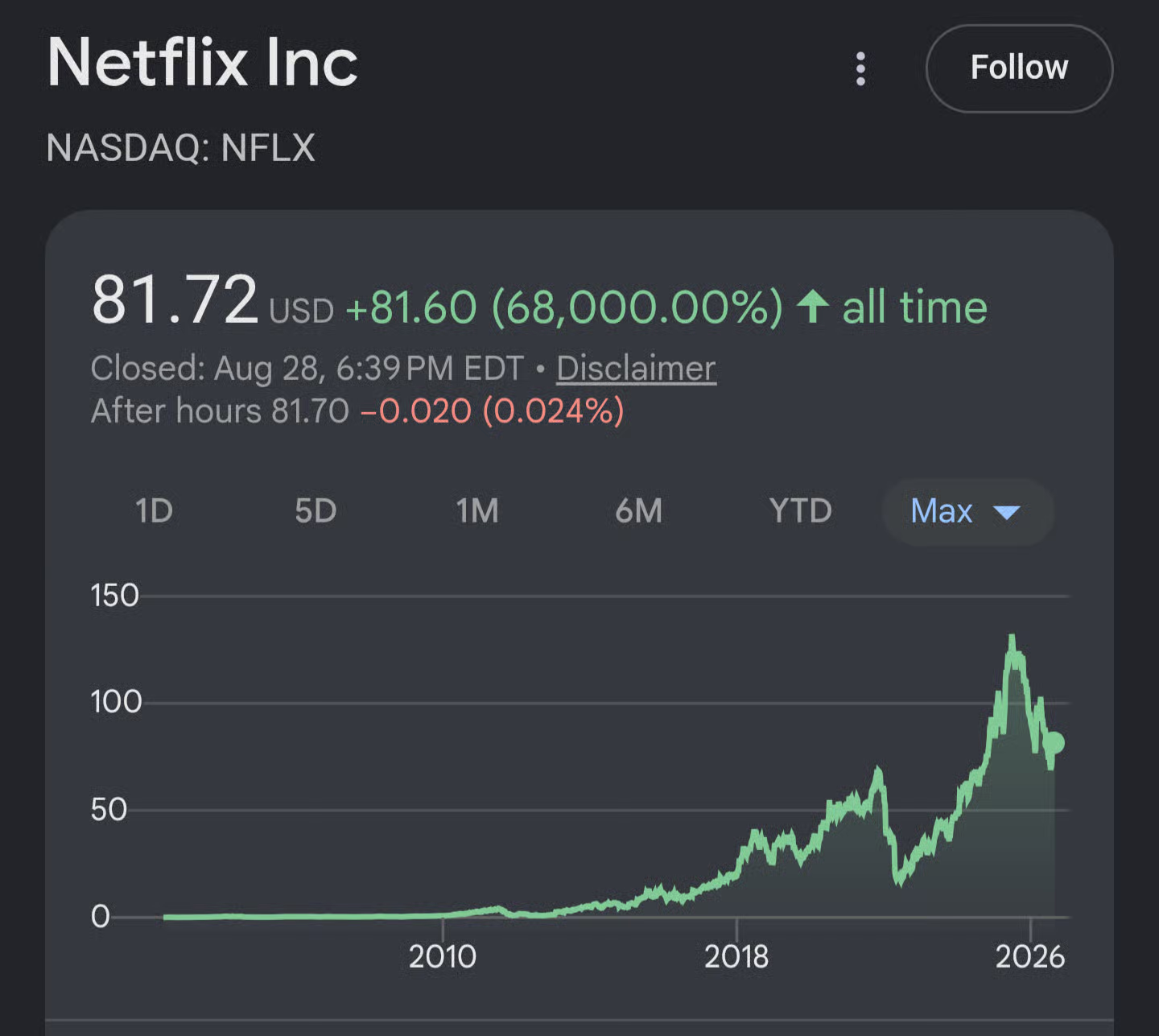
Consumers, especially Apple users, accept higher prices. It’s baffling to me but true.
In 2014, Netflix was $8/month. It’s now 12 years later and Netflix is $20/month.
Replying to @givesomefucks@lemmy.world
Then you don’t understand why long term reliable customers are better than intermittent ones…
It’s a numbers game. Are there so many? Why else would a company care?
Replying to @givesomefucks@lemmy.world
That’s what Dropout does, and while I’m not likely to cancel anyway because I love their content, I’m even less likely knowing if I left and came back not would be on the higher sub price
Replying to @vladmech@lemmy.world
I did not know that, but I just signed up a little over a month ago.
But yeah, even if I run out of their backlog, I’m probably going to keep that active anyways
Super weird it’s basically College Humor legally, but they’re doing a really good job.
Super weird it’s basically College Humor legally, but they’re doing a really good job.
Yeah, the transformation from College Humor to Dropout is honestly a masterclass in business (and marketing) management. I fully believe that it’s the kind of thing that college marketing majors will be writing papers on in the future.
Replying to @Carl@anarchist.nexus
Nice user name/instance combo. Now get out there and post, post, post!
I think you’re actually the first person to notice (or at least the first to mention) the reference! Always good to see another crawler in the wild.
Replying to @Carl@anarchist.nexus
Well I’m happy to be the one to make the observation! I’m surprised that no one else has said anything. You know how I feel about no one else saying anything, Carl
Replying to @givesomefucks@lemmy.world
It’s not like they don’t know what they’re doing. They studied all kinds of business strategies diurig their “International business studies” or whatever the fuck they did. The C-suite simply doesn’t care about long term retention, they want their bonuses for this year and the next. They know perfectly well they will be replaced in a few years time anyway, whether it’s because profits are not increasing as much as the shareholders want or whether the profits have gone up because of price raises, but down again because customers left.
But in the second scenario they will get a whole lot more bonuses than in the first. So this is what consumers get: enshittification.
Replying to @givesomefucks@lemmy.world
The problem is that everyone who wants a subscription probably already has one. New customers aren’t born fast enough to keep up with line go up.
And they’re relying on people not noticing the price increases because of autopay.
Replying to @givesomefucks@lemmy.world
Most streamers at least have annual subscriptions at a discount. Netflix is month-to-month only, which is just asking for churn.
This is what they do instead. The long term agreement discount encourages people to stay subscribed rather than discouraging people from (re)starting a subscription.
Replying to @ninja@lemmy.world
Payment processors take a cut of every transaction, so it is better for the provider too. And if they are small, not applicable to Netflix, it is nice to have a baseline of income every year.
Replying to @givesomefucks@lemmy.world
It’s a 2$ increase from 13$ to 15$. I feel like most people don’t care and it’s more of a boiled frog situation than anything else. I doubt anyone is seriously going to cancel for an extra 2$ unless they were already planning too tbh.
Replying to @Grimy@lemmy.world
It’s also included in the Apple one subscription that comes with Apple News, Apple Music, iCloud storage, etc. people might cancel their subscription to one of those, but not want to lose the others.

Replying to @Grimy@lemmy.world
Also, don't most people mentally round that up anyways? $13 was already $15 as far as I was concerned, so, this is just raising it what what I basically thought I was already paying. If they raise it again though, it's going to $20 which is gonna be a tougher pill to swallow.
Replying to @givesomefucks@lemmy.world
It’s been a while since I do on and off, watch stuff that interest me on service X then cancel, watch stuff on service Y then cancel, and so on. There are just too many services to be subscribed to all.
Quality of content being the thing that keeps me.
Replying to @givesomefucks@lemmy.world
i used to do the one-month binge on one service. then awhile later, do a different one.
prices kept going up. i don’t even do that any more.
it’s been over two years now without anything but what i already have in my library, or the occasional free streamer through pihole or a ubo-backed browser.
i just don’t care about new ‘tv’ or movies anymore.