posted in Technology

Side of slop? Bizarre AI food images jump from online to IRL menus
www.nbcnews.com/tech/tech-news/side-slop-bizarre-ai-food-images-jump-online-irl-menus-rcna594786posted in Technology
Side of slop? Bizarre AI food images jump from online to IRL menus
www.nbcnews.com/tech/tech-news/side-slop-bizarre-ai-food-images-jump-online-irl-menus-rcna594786
Replying to @return2ozma@lemmy.world
You presumably make the food nearly every day.
I would imagine you probably have a phone with a built in camera.
.
.
.
Do I have to spell it out?

Food photography is actually an entire branch of photography, and a lot of the photos you have historically seen haven’t been real edible food. For example, the milk in the bowl of cereal on your cereal box? That’s usually white Elmers Glue. Because real milk won’t sit below the cereal, and will be too watery. It also allows them to precisely set the individual cereal pieces (rings, flakes, etc) in place and the glue will help prevent it from floating around.
The ketchup on a burger is usually thick red paint, applied around the edges of the rubber pickle with a syringe. Because they want to make sure the ketchup looks like it’s squeezed around the pickle (rather than being squished into the burger bun), and they want to make sure the ketchup is showing around the pickle juuuust enough to be obvious, without obscuring the pickle.
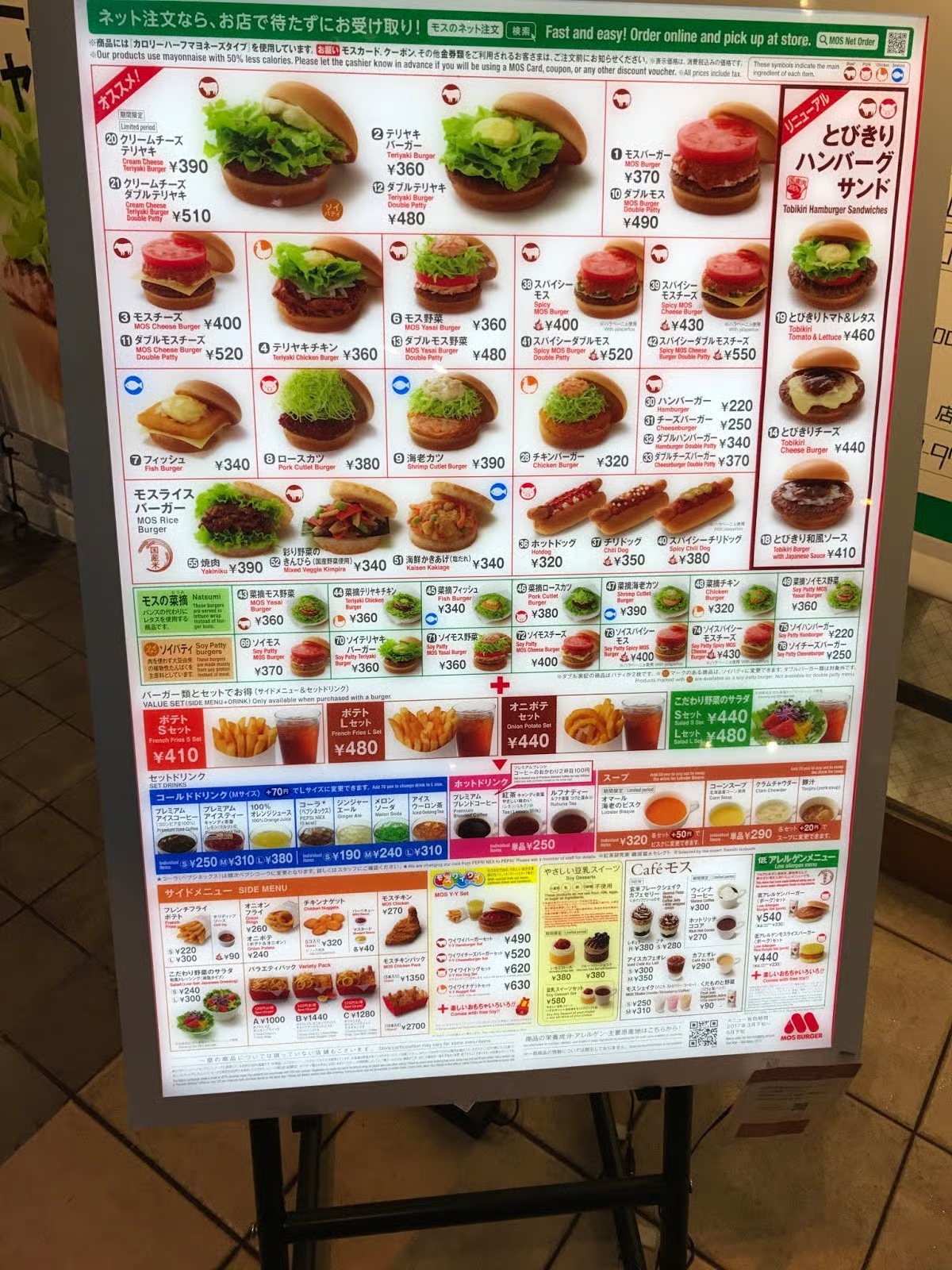
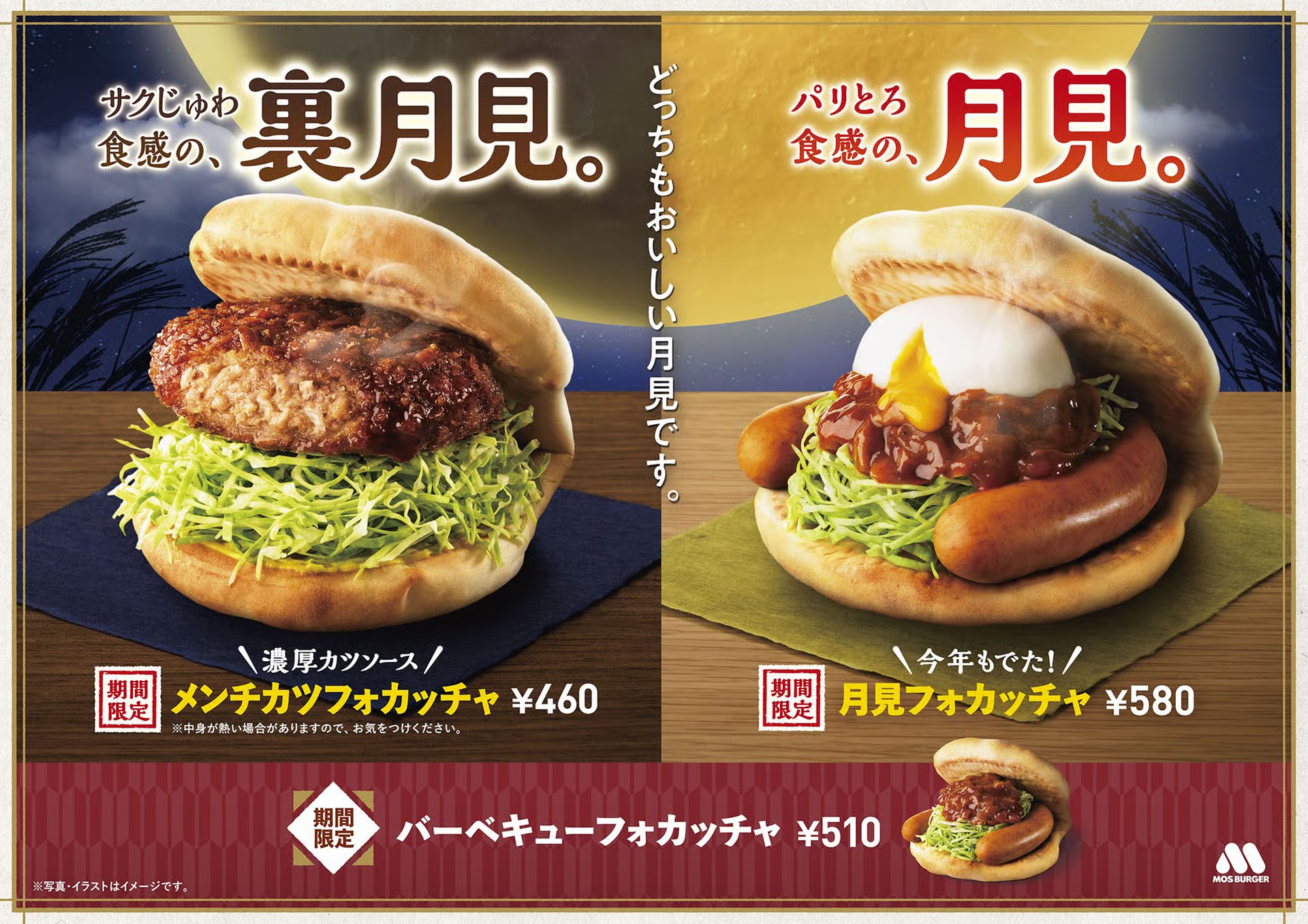
The funny part about food photography is that the methodology is largely regional. For example, Japanese audiences largely expect a burger photo to have the bun sliding off of the burger, like so:
Originally it was done to prevent the bun from obscuring any of the ingredients. But now it is a sort of cultural thing, where lots of menus do it simply because that’s what the other menus do. But it also means that Japanese burger photography is done using different materials and methods than western burger photography. But to use the second image as an example, that runny egg yolk on the right burger is probably some sort of inedible yellow paint. Because the photographer wants controllable color and consistency, and cooking is rarely consistent enough for that. The glaze on the meat is probably some kind of clear-coat rosin or spray. The egg was probably cooked hard and then sliced with a scalpel to create that perfect wedge slice for the yellow paint to be added. Etc…

Replying to @Carl@anarchist.nexus
If I recall, in the US, anything in a food advert photo that is meant to come with the product – IE, the toppings of the burger – must be real food, and cannot be paint or such or that’s false advertising. The milk in cereal is provided by the consumer, so they can use the glue there. And while the ketchup is applied via syringe, it is, in fact, ketchup: www.youtube.com/watch?v=mIEhDSWXeF4
What they get away with is the arrangement of the ingredients, things like splitting and spreading a pattie to make it appear larger, fluffing the choice lettuce pieces and tomato slices, using hidden toothpicks to arrange things.
It’s possible the Japanese ad you presented isn’t food at all, and just model food, like presented in shop storefronts – looking like the real thing. That steam is definitely added after the fact. It also has a bit of a sheen in spots on the bread that makes me think it’s just plastic, but I don’t think the same “false advertising” laws apply in Japan.
Replying to @kayohtie@pawb.social
Right. If you’re selling ice cream, the ice cream is ice cream. If you’re selling brownies, and there’s ice cream in the background, that ice cream is mashed potato.
They’ll also make ten burgers and pick the most photogenic one.
Not that it matters, because your burger will never look like the picture.