Replying to @⁨Simulation6@sopuli.xyz⁩

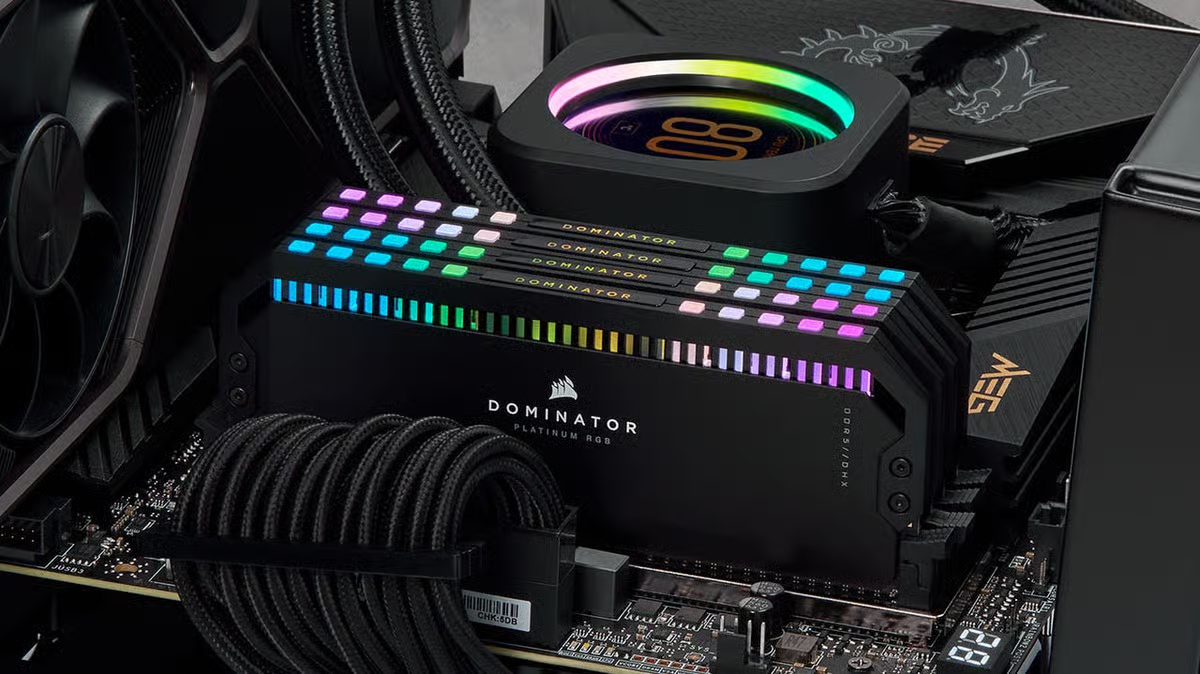
OpenAI has a deal with Samsung and SK Hynix to purchase 900,000 DRAM wafers per month, or 40% of global DRAM output. These are just uncut wafers, accumulating in warehouses that serve two purposes:

  • Prepares them for the distribution to data centers,
  • Manipulates the supply chain to squeeze their competitors, who are left with slim pickings.

You and I are the victims of this until the bubble finally pops and the deal falls through.

Replying to @⁨poopkins@lemmy.world⁩

You and I are the victims

We’re way downstream. The “victims” are all the SaaS and smaller market cap firms that need business compute for accounting and commerce.

Case in point, I got a request for a new server delayed three months because we blew through our Q1 budget for new hardware faster than expected.

That’s not really hurting me, personally. But it means our server teams need to do more with less even as the business expands.

Replying to @⁨Simulation6@sopuli.xyz⁩

It’s because it’s a Ponzi scheme. Huge amounts of investment dollars are being dumped into AI and anything related to AI. If you build any kind of chips that are used in AI datacenters, you suddenly have a bunch of money invested in your company. What do you do with it? You make a deal with OpenAI (or one of the other ones) that you’ll invest that money into them if they agree to buy a bunch of chips from you. Now you have revenue on books and are showing a reasonable return on that investment.

If you were a chip manufacturer and actually believed that there was a big future in AI, you’d be using those investment dollars to build some more chip fabs. And some of these companies are doing that. But overall, moving money to another company so they will order chips for datacenters that aren’t built yet (and may never be built) is just bubble ponzi shenanigans.

Computer hardware depreciates in value very quickly. You don’t buy hardware today so you can install that hardware in a datacenter that won’t be online for another year.

Replying to @⁨SpaceCowboy@lemmy.ca⁩

If you were a chip manufacturer and actually believed that there was a big future in AI, you’d be using those investment dollars to build some more chip fabs.

Major new semiconductor fabrication plant projects are expanding across the United States, led by a $16.8 billion SpaceX and Tesla “Terafab” project in Grimes County, Texas, massive expansions by TSMC in Arizona, and Samsung’s ongoing fab development in Taylor, Texas.

Computer hardware depreciates in value very quickly. You don’t buy hardware today so you can install that hardware in a datacenter that won’t be online for another year.

Hardly unusual for speculators to buy up a hot commodity the day of release and then resell it into an inflated secondary market a few days or weeks later.