posted in Technology
RSA-260 has been factored
4397328654844826923795068102505872571721883526553349659561256924505973939597593482272505698004801207988043088656411102133523080581 divides RSA-260
en.wikipedia.org/wiki/RSA_numbers#RSA-260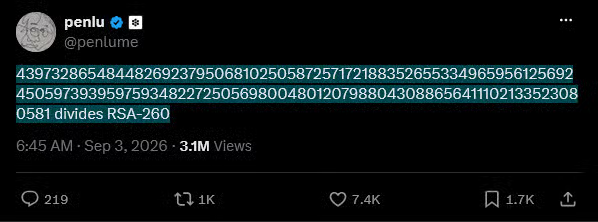
posted in Technology
RSA-260 has been factored
4397328654844826923795068102505872571721883526553349659561256924505973939597593482272505698004801207988043088656411102133523080581 divides RSA-260
en.wikipedia.org/wiki/RSA_numbers#RSA-260Can someone explain what this means concretely, does that mean you can decrypt stuff that uses? And if yes is there anything in the real world that actually uses it?
Replying to @SatansDaughter@quokk.au
No practical significance. The pros make sure that encryption stays ahead of the possible.
Replying to @SatansDaughter@quokk.au
Actually, on second thought, there may be a small significance. If encrypted messages are intercepted by interested parties, they are probably archived for later. If anyone used that kind of encryption (like 30 years ago, I guess) then they should assume their stuff has been read if it seems worth an effort. Maybe it also serves as a warning for the future about current encryption.
Replying to @General_Effort@lemmy.world
This is something intelligence agencies use and it’s called SNDL - store now, decrypt later.