posted in Technology

France’s nuclear fleet gives it one of the world’s lowest-carbon electricity grids
ourworldindata.org/data-insights/frances-nuclear-fleet-gives-it-one-of-the-worlds-lowest-carbon-electricity-gridsposted in Technology
France’s nuclear fleet gives it one of the world’s lowest-carbon electricity grids
ourworldindata.org/data-insights/frances-nuclear-fleet-gives-it-one-of-the-worlds-lowest-carbon-electricity-gridsReplying to @VioletTea@lemmy.world
It’s like I’ve always said, “The best time to build a nuclear power plant is fifty years ago.”
The second best time is forty nine years ago
69 years ago would have been a blast

true, then you’d need decommission it and rebuild it about now.
We should have been deploying nuclear much earlier and then augment with renewables. Once energy storage technology matured more you could phase out nuclear plants.

That would’ve required long term planning though and what if in the end it came out that coal isn’t so bad at all, huh, what then??? /s
And it turned out that beautiful clean coal is just that!
While they did well environmental to produce this and even from a cost to consumer, there are many hidden costs to the power produced which will test France in the coming years as their fleet of reactors and the coming debt-to-gdp crisis means the tens of billions required to overhaul it might be tough to subsidize.
Which unfortunately now shuts down because the reactors cannot cope with the heatwaves. Turns out that no river = no cooling = no energy production.
False,
Reactor production is throttled down to preserve the river environment, not because they cannot cool themselves. Only 18% reduction on the worst event.
Dismissing the biggest low carbon energy producer because 1970 engineers did not account for the unknown temperature extremes 20 years after the predicted lifespan of the reactor is silly.
Unknown temperature extremes? We knew about climate change for much longer. And France’s nuclear reactors have an average age of less than 40 years.
Turns out, even when you have to throttle them down slightly due to drought, having a large amount of available nuclear power, like France and Sweden do, means you emit an awful lot less carbon.
Have you read about the Paks NPP? Not throttled, shut down. They even tried sinking barges in the Danube to raise levels enough to keep it going.
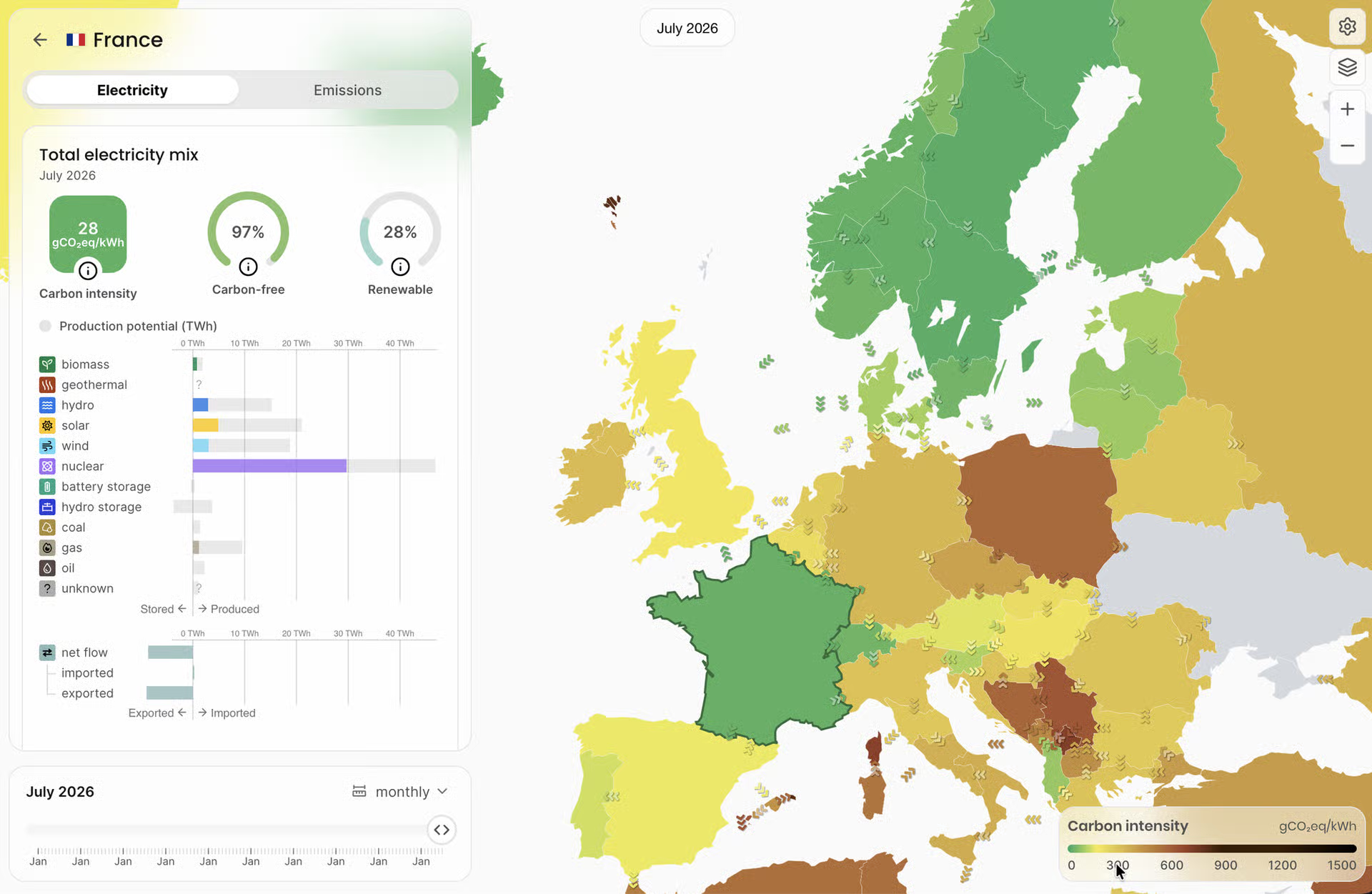
And yet, despite that, France still has some of the cleanest electricity in the world with prices in line with the rest of Europe and exported about 10TWhrs of electricity during July.
I agree that downtime is bad, but I don’t think abandoning nuclear to go all in on solar which has a minimum downtime of 50% or wind which has extended periods of <10% is a solution to that. Given that we need electrification to replace fossil fuels in transport and heating over the next few decades to prevent catastrophic climate change, the only reasonable course IMO is to build out as much as possible of nuclear and renewables.
The problem is that building nuclear is slower and more expensive than just building renewables. It made some sense when labor was cheaper. But it doesn’t anymore.
Yeah we need to electrify transportation, heating, fertiliser and steel production. What you need to consider is that these all have excellent synergies with renewable energy. Making fertiliser from nuclear power never made sense and never will make sense. But with solar power it’s just now barely cheap enough to make sense. There are already plants up and running. And you then get a huge amount of capacity to balancer solar/wind for free as well. The same goes for transportation, steel production and especially heat. We already have heat batteries in production. Both super high temperature ones to replace fossil fuels in industry, and medium temperature ones that can store energy for months to shift energy from summer to winter for district heating systems.
None of this makes economic sense with nuclear (well, EVs make sense still).
I have nothing against nuclear. I love the tech. But it’s simply dead. And no, SMRs is not gonna save it.
Nuclear is not clean energy. Building new reactors makes zero sense given the cost compared to renewables.
Cool map though what’s that website?
Which program is this?
 Electricity MapsMap | Electricity MapsTrack real-time and historical electricity data worldwide — see production mix, CO2 emissions, prices, cross-border exports, and much more.
Unfortunately, thanks to the anti-nuclear lobby, we are in a situation where the current reactors will have to be shutdown before the new ones are available to take their place.
If we could deal with the waste that we’ve already got, that would instill some confidence, but the govt has basically shrugged. youtube.com/watch?v=nLUAN2Rev1E
Replying to @brianary@lemmy.zip
Nuclear waste is an already solved problem, we just have to use the solutions. The vast majority (>99%) can be recycled.
With more power than it generated?
Because it only replaces a environmental disaster with a future one. Still no (practical) way to handle the waste.

Yeah, the famous french anti-nuclear lobby. Those guys who control the french government with its nuclear weapons, who has also recently built a nuclear reactor. That government totally is controlled by the anti-nuclear lobby.
Or … maybe France tried upgrading its aging nuclear reactors with the new reactor in Flamanville, which went spectacular over budget? And debt ridden EdF simply has not the funds to build over 50 new reactors at 13 billion each?

not this again…
sure nuclear WAS fine, french power plants are getting old, can’t handle oncoming increasing heatwaves and regularly have major accidents. source (german)
in the age of wind and solar and cheap batteries it is not necessary and much cheaper to build renewables.
also: french nuclear energy is only cheap because it gets heavily subsidized. a kwh of renewables is about 7ct, a kwh of nuclear is in reality about 49ct
Don’t forget they have been basically stealing the required Uranium from African Sahel countries like Niger for decades.
* Sustained through government subsidies to create/maintain their nukes and submarines.
Still massive exporter of electricity. I wonder how much coal and gas would burn in Europe if French npp weren’t there.
id suggest Fiji, New Zealand, New Guinea, Cambodia and many dozen other countries will have much lower emissions. in their Navy.