Replying to an earlier post

The part that this headline skips over is that it’s followed by 5 hours of pricing that are 3 times the regular rate, and then the rest of the day is a rare slightly under the old rate. The expensive rate kicks in between 4pm and 9pm, which is pretty much when the solar supply eases off and dries up.

If you work from home, it’s possible to shift some of the big load equipment to early afternoon, but some, like ovens and heaters aren’t so easy to shift. You really need to do the maths to see if it works.

If you’ve got a battery, you’re in a better position, because you can use your own solar and/or the free hours to top the battery up, and then draw on it during the expensive hours. Our battery isn’t quite big enough to carry us through 5 hours, but it gets us most of the way there, so the maths made it worth us to change to the new tariff.


Replying to an earlier post

If you work from home, it’s possible to shift some of the big load equipment to early afternoon

If the “big load” equipment you mean here is washing machines and dishwashers, many (if not most) have a delay timer option. I set mine before I leave home. Dishwasher can finish whenever; washing machine I schedule to finish around the time I get home so I can put things out to dry before they’ve been sitting wet for too long.

Even heaters can be partially shifted, if you’ve got good insulation and the technical capability. My (reverse cycle) AC system lets me set a timer, for example. You can automate them to run and heat up the place when electricity is free so the place is warm when you get home. Good insulation should keep it warm for a while. Though later into the evening and early the next morning are definitely still going to need it.

Replying to an earlier post

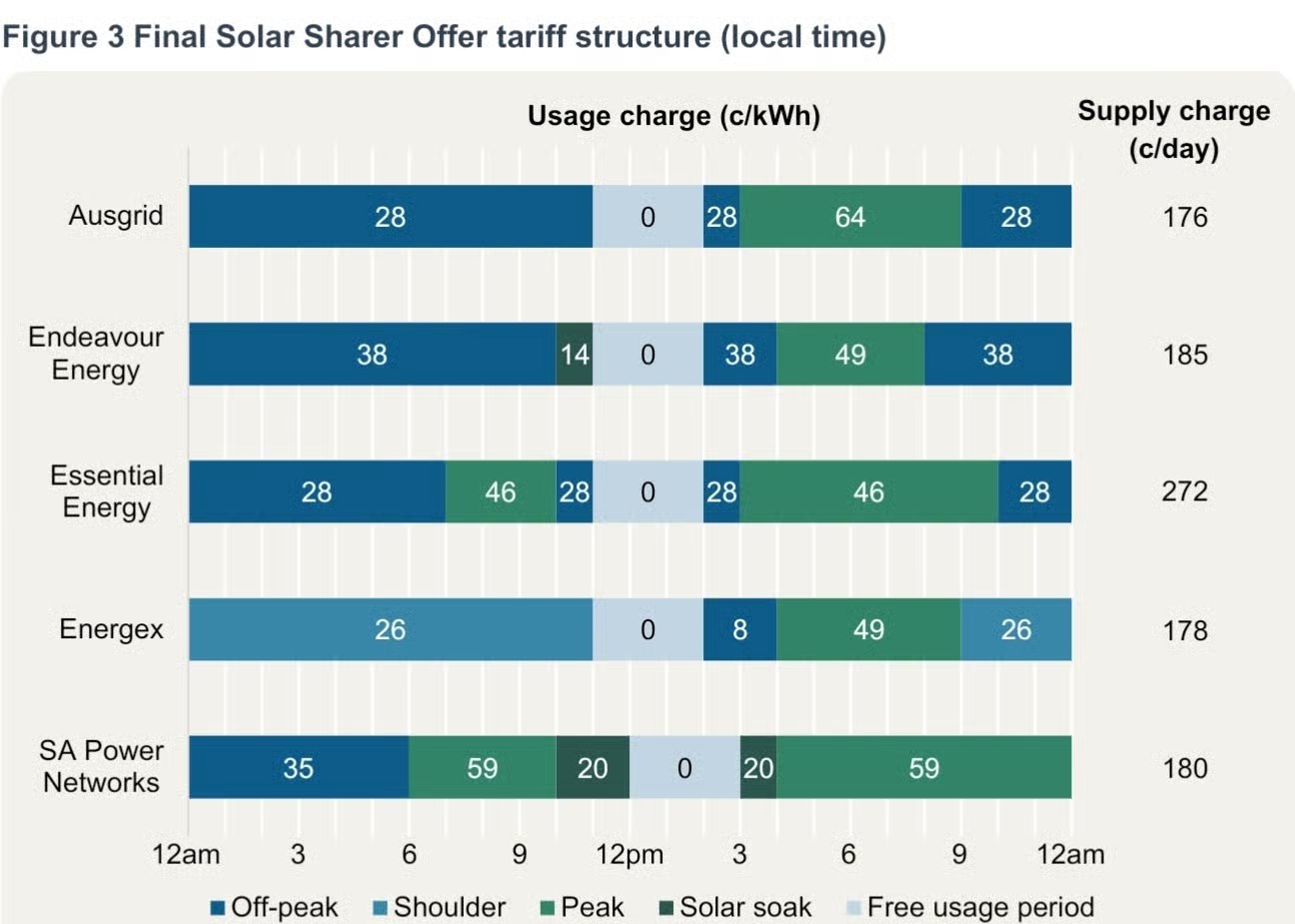
This is a screenshot from the AER PDF on the solar sharer program, which you can find here https://www.aer.gov.au/system/files/2026-05/AER%20-%20Solar%20Sharer%20Offer%20fact%20sheet%20-%20DMO%208%20final%20determination.pdf

I’m in Queensland, so the Energex rates apply. The base tariff rate is 26c until 11am, then free for 3 hours. Then 8c for 2 hours and then 49c between 4 and 9pm. My memory was off, and it’s only double the rate, but my point still stands. The peak time is a lot more expensive on the solar sharer plan, so you need to do the maths and make sure your usage will be shifted towards the free period and away from the peak, because if your highest usage is in the peak period and you don’t mitigate that, you could end up paying more on the solar sharer plan. You can absolutely save money on the SSO, and we use it for that reason, but you can also end up out of pocket.

Replying to @⁨ThatGuyNamedZeus@feddit.org⁩

saved up money and bought solar panels is now NOT going to be benefitting from their hard work.

You’re still welcome to consume your own solar power in the middle of the day, you don’t have to export it. Nobody is forcing you to export.

Export rates are a pittance precisely because there is excess supply in the middle of the day. If this arrangement actually succeeds in shifting some demand to those hours, then export rates for those with excess solar will go up.

Replying to @⁨ThatGuyNamedZeus@feddit.org⁩

If you want to use your own power and not give it to the grid, then don't use a grid tie inverter. Get some batteries and only accept power from the grid, never feed back into it. If you're feeding into the communal system, expect the rules to not always be exactly what you want. Don't we all want people to use clean daytime solar power instead of dirty fossil fuel-based nighttime power?