Replying to @⁨dwazou@jlai.lu⁩

On Wednesday, Mr. Bessent said the administration had considered imposing sanctions on Chinese companies that steal intellectual property from American firms. “Open source is not open season on American IP,” he said, referring to intellectual property.

Unless you are OpenAI/Anthropic/Meta, then the use American and worldwide IP is totally acceptable. 🙄

X (formerly Twitter)Treasury Secretary Scott Bessent (@SecScottBessent) on XWe support open-source AI and the innovation it unlocks. But open source is not open season on American IP. When PRC firms conduct covert, industrial-scale distillation attacks that cross the line into IP theft, sanctions and Entity List designations will be on the table.

Replying to @⁨Tetsuo@jlai.lu⁩

They’re losing money, like cloud I doubt having OpenSource code would have much of an impact on the average consumer (maybe if they fully opened they weights it would have an impact but even then, they could delay the release a few months/versions and keep like 99% of the paid customers) being closed is more about stock valuation, they have to pretend to have a bunch of secret sauce/source that is worth infinity dollars.

Replying to @⁨RIotingPacifist@lemmy.world⁩

I applaud the open source Chinese makers. They might be “distilling” from the closed weights models of competitors but since they themselves pillage the internet with no oversight in my book that’s fine. In some way the Deepseek, minimax and kimi makers are forcing the weights of bigger proprietary open.

Right now on OpenRouter a large part of the processing goes to Deepseek. Deepseek is still weaker than the Claude “frontier” models but they are way cheaper. Since they are open weights anybody can compete as providers and the cost stays “low”. These AI Chinese makers are a constant threat to the american proprietary models and that’s a great thing for the consumers.

Replying to an earlier post

On one side are leading A.I. companies like Anthropic and OpenAI, which claim that some A.I. models are too dangerous to be developed in the open and must be tightly controlled — by businesses like themselves — for safety.

And there’s the reason these giant companies keep saying their products are dangerous over and over.

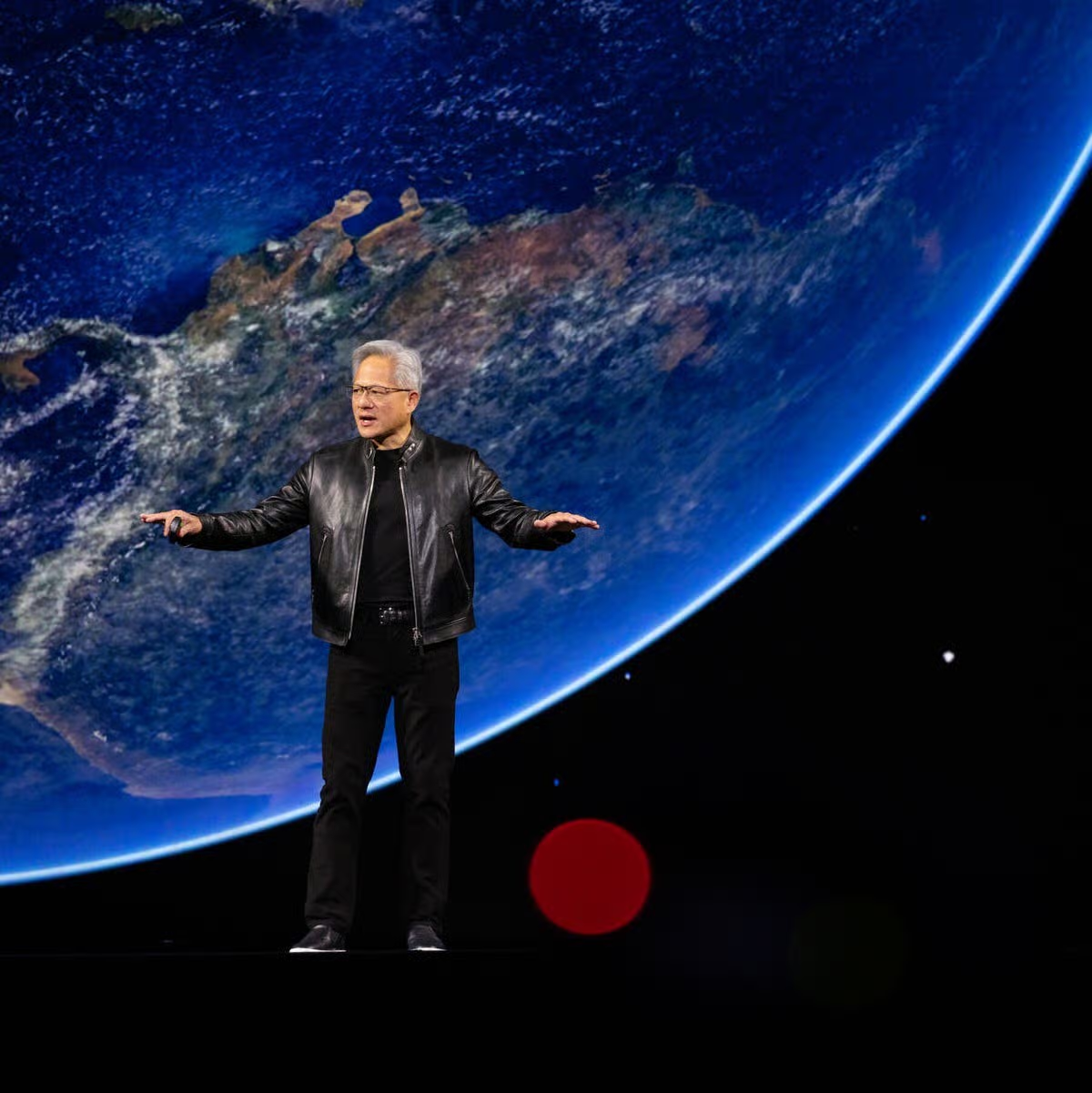
Surprisingly good writing from the New York Times, it must have escaped their editorial board by mistake. As a bonus, they included a picture of what the CEO of Nvidia would look like if he was yeeted into space: