Replying to @⁨darkdemize@sh.itjust.works⁩

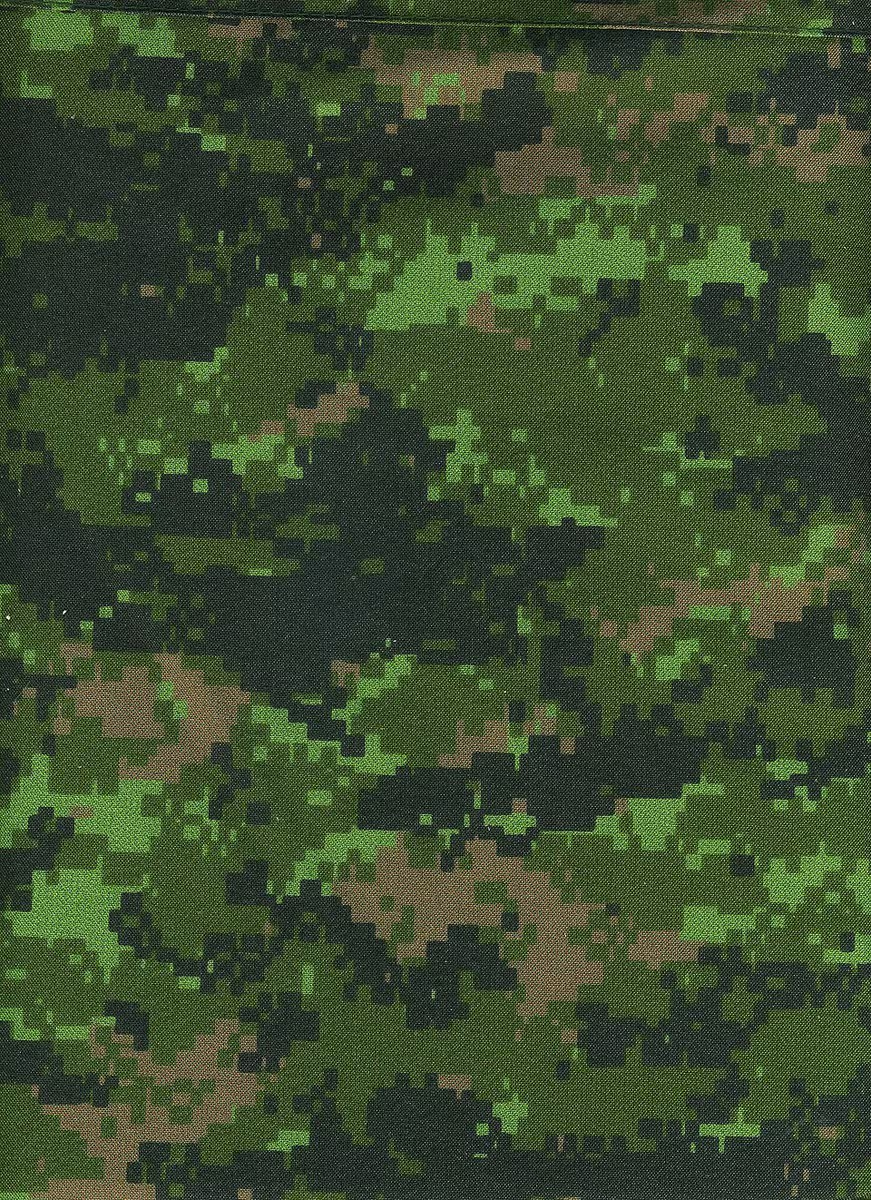
Neither pixellation nor digitization contributes to the camouflaging effect. The pixellated style, however, simplifies design and eases printing on fabric, compared to traditional patterns. While digital patterns are becoming widespread, critics maintain that the pixellated look is a question of fashion rather than function.[7]

Just quoting the relevant part.

Replying to @⁨darkdemize@sh.itjust.works⁩

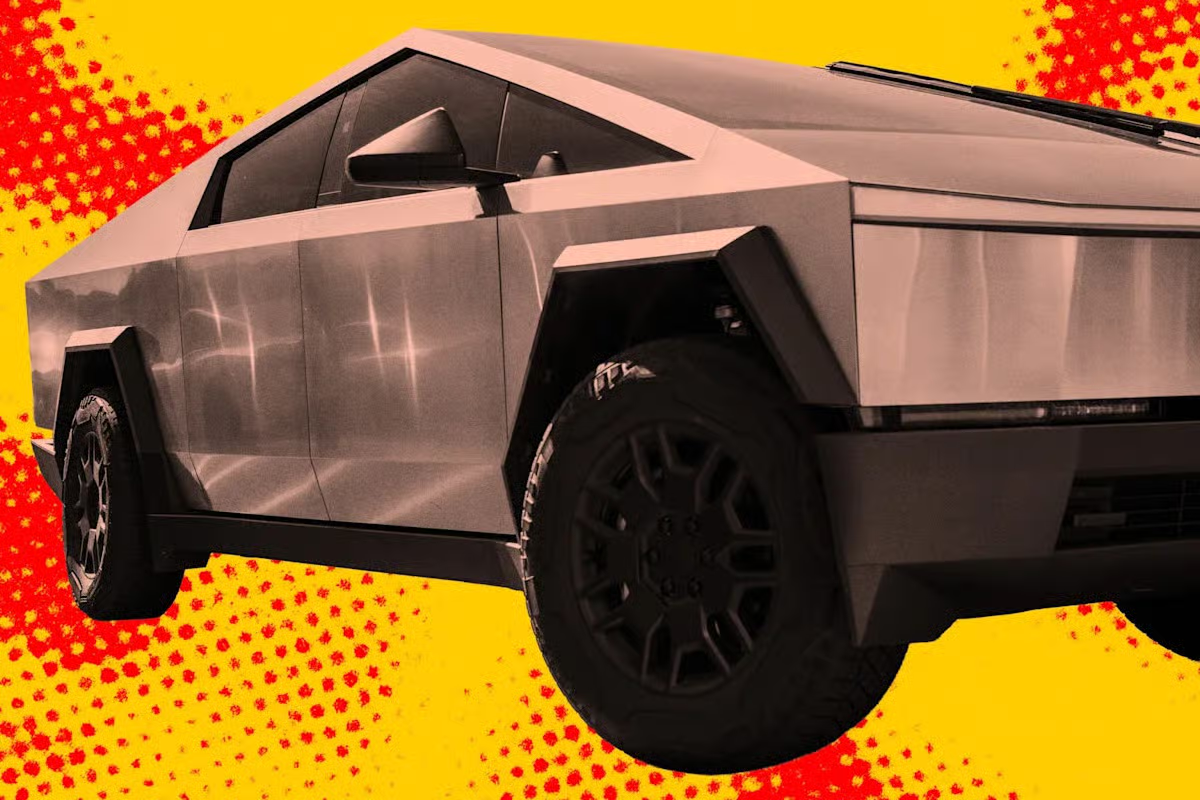
nah, you’re totally off topic. I was responding to looks. sorry for distracting you away from looks by mentioning practicality. on practicality, the reason for the cybertruck panels is they’re stainless steel. on looks, you didn’t reply. since you avoided that topic, i suspect you’re another sheep who jumped on the “ugly” bandwagon and aren’t able to say much more than “ugly ugly ugly”. no interest.

Replying to @⁨darkdemize@sh.itjust.works⁩

Very interesting, but after reading, it specifically states that it’s the multi scaling that has a function on the battlefield, which can be implemented through all shapes basically.

The ‘digital’ (square) patterning is most certainly either cost saving measures, fashion, or both.

“The pixellated style, however, simplifies design and eases printing on fabric, compared to traditional patterns. While digital patterns are becoming widespread, critics maintain that the pixellated look is a question of fashion rather than function.[7]

Now I’m aware you just stated that ‘it had a practical purpose’ but your tone and framing suggests to me something other than ‘its easier and cheaper to manufacture’.
en.wikipedia.orgMulti-scale camouflage - Wikipedia

Replying to @⁨NekoKoneko@lemmy.world⁩

The danger of the Pinto was exaggerated. Do a web search for the You’re Wrong About episode on the Pinto. The investigative reporting on the Pinto’s safety flaw used a demonstration rigged to explode. Other subcompact cars had a similar dangling fuel tank, and the number of actual Pinto explosions in the field was actually rarer than those of its competitors.