posted in Technology
Schools across America are quietly admitting that screens in classrooms made students worse off and are reversing years of tech-first policies

fortune.com/article/schools-abandoning-chromebooks-laptop-programs-as-screen-time-hurts-learning-test-scores-north-carolina-michigan-kansas-tech-education/
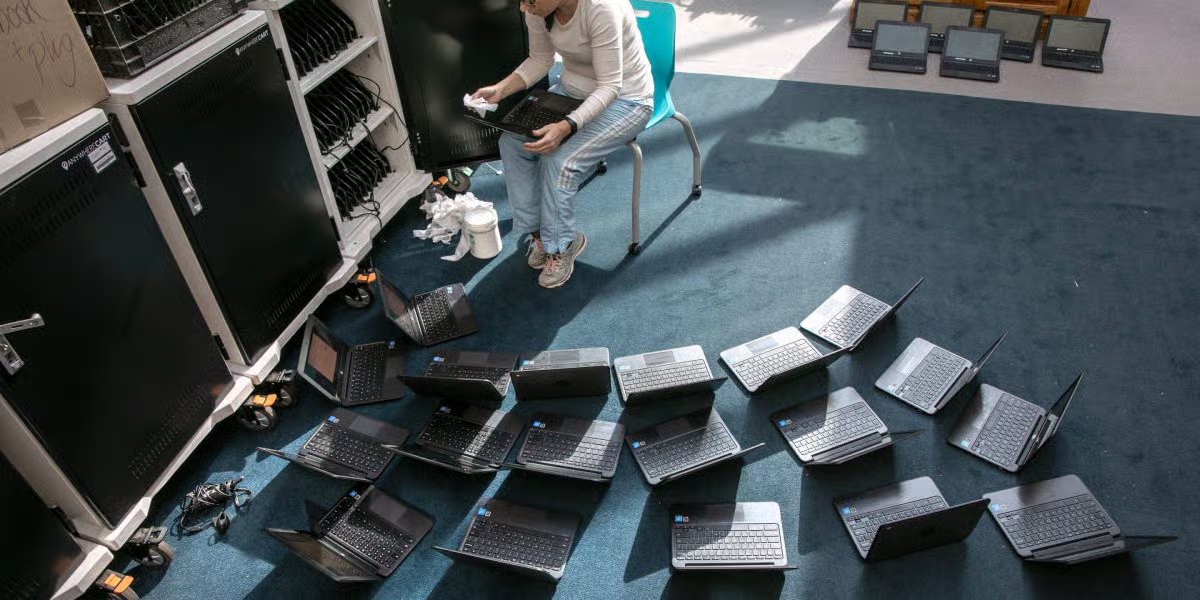
Chromebooks at Newfield Elementary School in August 2020, in Stamford, Conn. FortuneSchools across America are quietly admitting that screens in classrooms made students worse off and are reversing years of tech-first policies | FortuneMillions were spent putting laptops in every student’s hands. Now schools want them back as tech falls short of the miracle solution it was sold as.



Replying to @⁨sanitation@lemmy.today⁩

This has been a major problem for my kid. They don’t even lock down the iPads they issue so they just do whatever. So when my kid is failing classes because he’s not doing assignments in class and it turns out he’s just on YouTube all day, it’s like why the fuck are they even able to get on that in the first place? Doesn’t matter how tightly I restrict technology at home when his school just says fuck it.

Replying to @⁨The_Picard_Maneuver@piefed.world⁩

I am a developer and I agree with you.

A blacklist isn’t a good approach on its own - you could never predict all the possible apps you might need to block. But it is a perfectly reasonable failsafe for “content rating” and would probably even provide some valuable app-level feedback for the platform to use to check up on apps that are gaming their rating.

A whitelist approach is a reasonable overall approach and to some extent I guess you can implement this by allowing any content rating but requiring approval to install an app. At least I think you could do it this way. Like I said the settings are a bloody mess and hard to use so I’m only ever 80% sure of what’s actually happening.

en