posted in Technology

U.S. FCC approves giant space mirror to deliver 'sunlight on demand,' but what are the legal implications?
www.cbc.ca/news/science/reflect-orbital-approval-fcc-9.7287535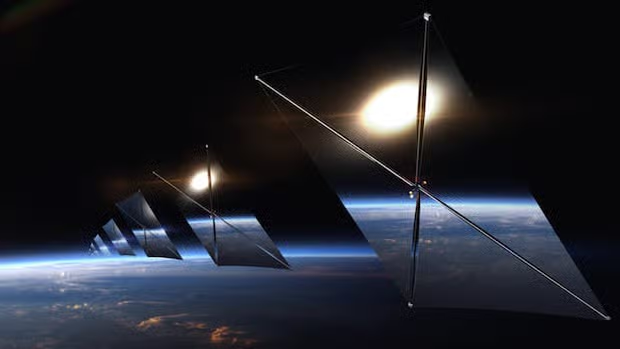 CBCANALYSIS | U.S. FCC approves giant space mirror to deliver 'sunlight on demand,' but what are the legal implications? | CBC NewsDespite hundreds of public comments opposing a giant space mirror that would shine light roughly five kilometres wide, the U.S. Federal Communications Commission (FCC), has given it the green light. What could this mean for Canadians?