
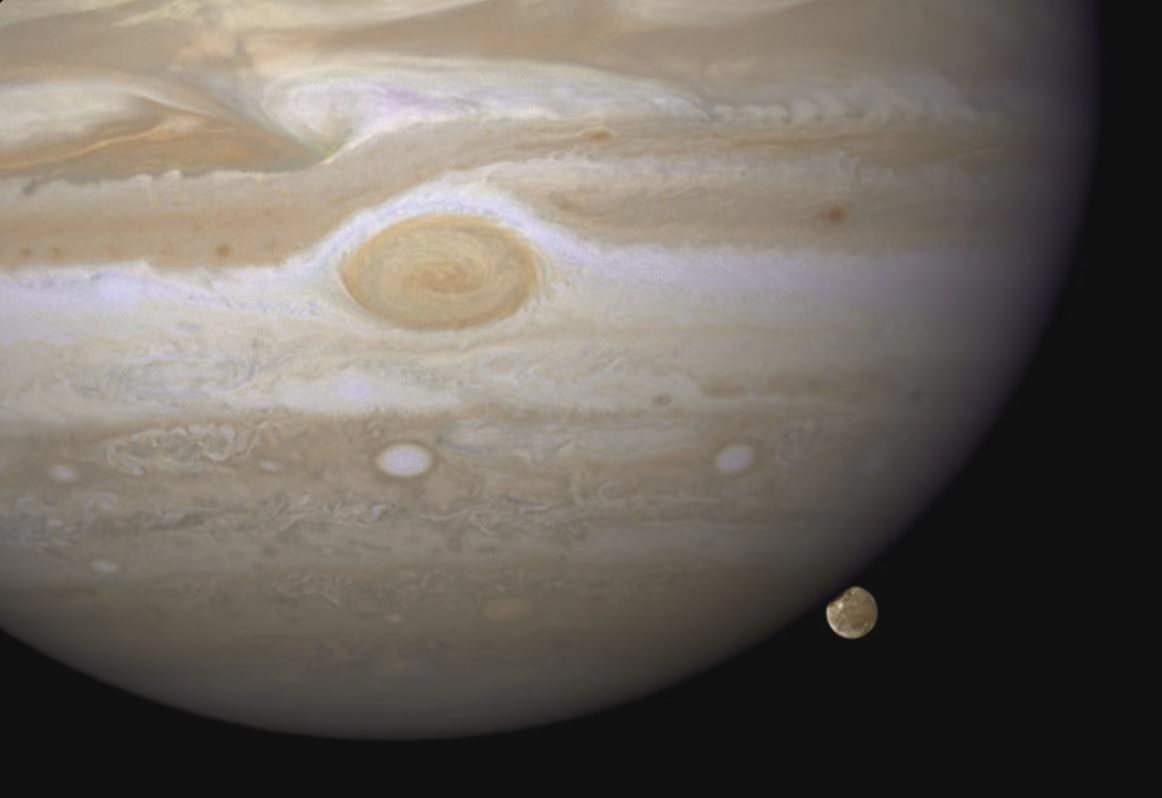
#PPOD: Jupiter’s largest moon, Ganymede, prepares to disappear behind the giant planet in this crisp view captured by the Hubble Space Telescope. Larger than Mercury, Ganymede orbits Jupiter every seven days, regularly passing in front of and behind the planet as seen from Earth. Hubble’s sharp view reveals details on both worlds, including Ganymede’s bright Tros impact crater and Jupiter’s Great Red Spot. Credit: NASA, ESA, and E. Karkoschka (University of Arizona)
 — Open image attachment 1 of 1
Jupiter fills the frame with pale orange and white cloud bands and the swirling Great Red Spot near center-left, while a small illuminated moon (Ganymede) appears against the black space at lower right.