perhaps

also lnkr

Owner
Atom feed

@lnkr · Joined ⁨Jul⁩ ⁨2026⁩

@lnkr, developing and testing a new thing.
En, Ru, MDNI

Replying to @⁨a1ba@suya.place⁩

@a1ba Okay, "for enthusiasts" is probably a stretch. I’m willing to give it up, but not to the point of "for the modern consumer", more like something in between. The Quest 3 is a product for the modern consumer. The difference between it and the Frame is enormous, specifically in R&D. Valve won’t be able to make much money off the Frame post-purchase, they don’t have anything noteworthy in terms of (upcoming/actively supported) VR games. This is either a massive fuckup and oversight from the very idea of it, even setting the crisis aside, or an intermediate step aimed at engaging with a community that is willing to put up with some inconveniences in exchange for the freedom to customize and explore unplanned uses.

Replying to @⁨a1ba@suya.place⁩

@a1ba I'm not sure. It seems to me that if it weren't for the ram crisis (and now the issues with the other components as well), Valve hardware might have performed well, or at least met Valve's own expectations.
I don't really see any serious plans to take over the world right here and now in their hardware, latest wave included. These are still experiments and intermediate steps that they're occasionally trying to reality-check and refine into a finished product. This *is* the hardware for enthusiasts, with a glimpse of hope of reaching beyond that audience (steam deck).
Of course, that doesn't make up for the current blunder. I can only hope that it won't cause them to abandon this course of action.

Plamenu comes with extended PeerTube support.
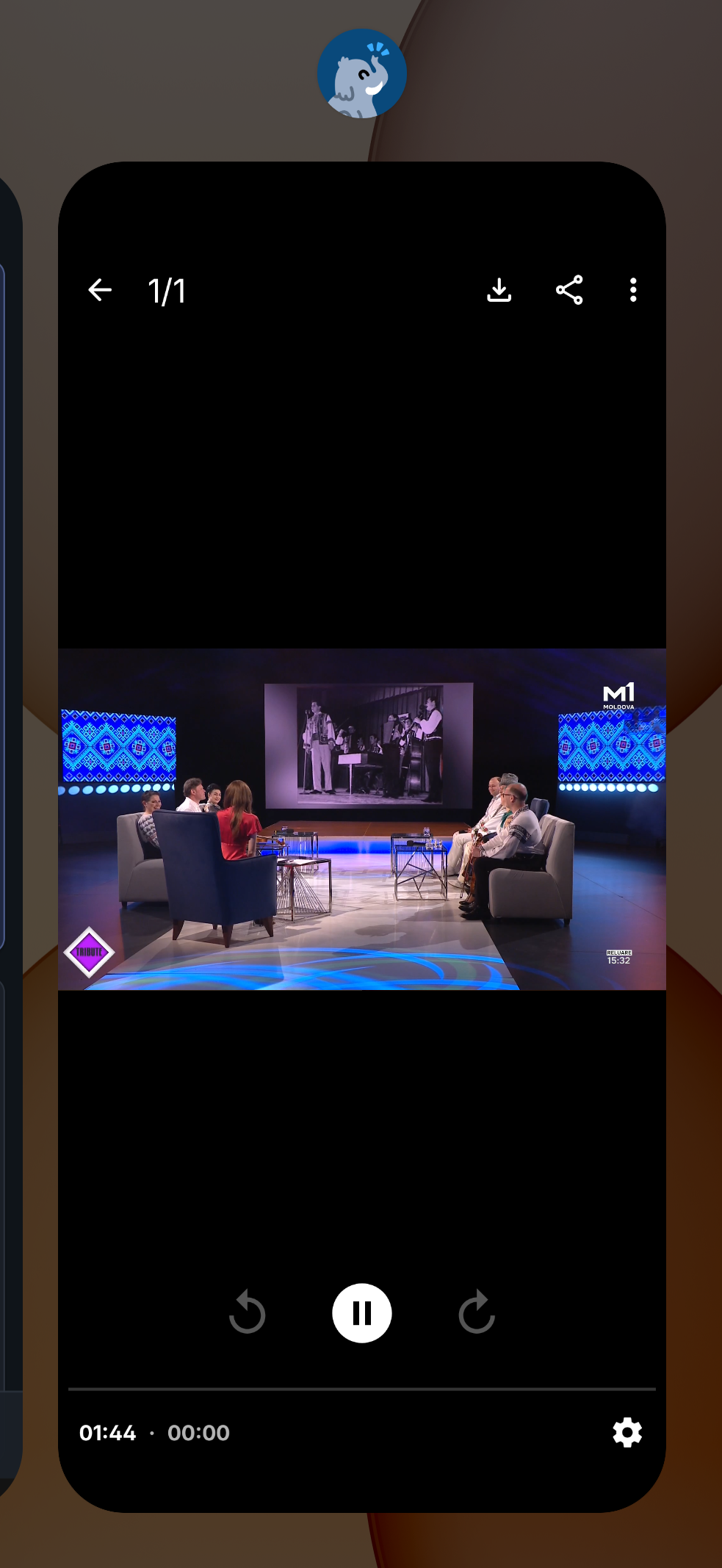
Here's an example of what I mean by "extended": an unmodified Tusky client, connected to a Plamenu instance, is able to play a PeerTube livestream.
Plamenu caches the video stream, so dozens of Plamenu users on the same instance watching the same PeerTube stream put no more load on the source PeerTube instance than a single viewer, and I'm currently looking for a way for the Plamenu to participate in PeerTube's P2P, so we can reduce that even further.

An unmodified Tusky client connected to a Plamenu instance, showing a post with an embedded PeerTube livestream from Moldova 1 and a playable video preview. — Open image attachment ⁨1⁩ of ⁨2⁩
An unmodified Tusky client connected to a Plamenu instance, showing a post with an embedded PeerTube livestream from Moldova 1 and a playable video preview.
Tusky's built-in media player actively playing the Moldova 1 PeerTube livestream through Plamenu, showing a TV studio broadcast with standard playback controls. — Open image attachment ⁨2⁩ of ⁨2⁩
Tusky's built-in media player actively playing the Moldova 1 PeerTube livestream through Plamenu, showing a TV studio broadcast with standard playback controls.

@menelion @RareBird15 that's an interesting point, thanks for sharing! I thought it might be useful to share some thoughts kind of "from the other side of the fence", since they're pretty much the exact kind of reaction this blog post addresses. I'm usually not the kind of person who actively criticizes every publication written or assisted by an LLM, but I do partially get where that reaction comes from. Reading this post, which I stumbled upon by chance, was somewhat difficult for me at first, I immediately recognized several generative patterns that, these days, I've almost automatically learned to associate, without really thinking about it, with laziness and/or with people who don't respect their audience and churn out posts and other content in an automated or semi-automated manner. Usually there's no meaningful intention behind it beyond ads, marketing, SEO, engagement, whatever, and sometimes it feels like no human being even bothered to read the thing before publishing it. After seeing enough of that kind of content, and oh boy, there is more than enough of it if you work anywhere close to modern IT, those patterns themselves start triggering the association, regardless of why they're there or how much thought actually went into the text. Reading your post made me notice that reaction in myself pretty clearly.

And there isn't really a transparent, easy way to distinguish legitimate use from abuse. I wish there was. From the outside, thoughtful use of an LLM as an accessibility tool, an editor, or simply something that helps you get your own thoughts into words can end up leaving some of the exact same fingerprints as somebody generating fifty SEO articles they couldn't care less about. The reader doesn't get to see the process behind the text, only the result, and by that point the association may have already kicked in. I myself periodically have huge issues expressing my thoughts, and nowadays I sometimes turn to LLMs for help with that, this reply included. And then I often find myself going back through the result and clearing out the trigger words, rhythms, and patterns specifically so that what I'm actually trying to say isn't immediately discarded as slop. Which is kind of absurd in its own way, the tool can help me express something I was struggling to put into words, but then I have to make sure its involvement isn't the first and only thing people notice.

I absolutely didn't mean to imply that you weren't thinking, or to say anything offensive about the way you use AI, and I apologize if that's how it came across. I was mostly trying to describe my own reaction within the context of the environment I've gotten used to reading things in. I'm genuinely glad that you have tools that help you express yourself and make things more accessible to you, and I'm sorry you've had to deal with people flattening all of that into "just use your brain". At the same time, I wish the current iteration of this technology hadn't arrived at the expense of creators, hadn't damaged trust in written work so badly, and hadn't created so many incentives to automate learning, communication, and creative work for the sake of scale. It did, though, and I don't think those consequences can just be discarded either. That's the tension I'm trying to describe here: the same technology can be an incredibly meaningful accessibility tool for one person and part of a deeply shitty and damaging ecosystem for another, and from the outside those uses are not always easy to tell apart.


Replying to @⁨wakest⁩

@wakest I wonder why the "Mastodon quote of a PieFed quote" never got proper approval on the Plamenu side, it's still stuck waiting for it from the PieFed side. Also, since when can Mastodon quote PieFed?

Quotes are such a mess tbh. Moderately cool fact: Plamenu shows the "RE: quoted_url" fallback until it gets proper approval and can embed the quoted post, so no matter how bad things get, you're always able to follow the context one way or another. I found it to be a reasonable middle ground between consent and usability. Clients like Phanpy sometimes can smooth it out into what looks like a continuous quoting chain even if the quoting misbehaved multiple times through it.

Replying to @⁨liaizon@wake.st⁩

@liaizon @wakest I might as well. I'm not very familiar with it and therefore not exactly thrilled to rely on it, so I'm gonna take a closer look.

Thinking about it again, I should probably postpone that and focus on getting Plamenu open-sourced now and getting criticized for implementing the vital parts of the whole thing incorrectly before I take a swing at entirely new categories of interaction.

Replying to @⁨wakest⁩

@wakest I'd say downgrade that to moderate-sized news at best. This is by no means properly sandboxed and secure, it's lacking the realtime channel for now, I'm barely the right person to author a proposal for this thing, and if I am, I'd rather wait until we get the E2E going and Connection-Allowlist available in all major browsers.
Still, might be a fun idea to play around with.

wicg.github.ioConnection Allowlists