man death is expensive I had no idea
georgia
🔒 Manual approvalweclome to my website!!
$PAGE_VIEWS
:blobcatnompeach::blobcatautism::blobcatgrimacing:
georiga on telegram
georgia@trashserver.net on xmpp
(response times may vary)
:fedora::debian::kdenew::xfce::sailfishos::lineageos2::fdroid::raspberrypi:
अहं ब्रह्मास्मि त्वं ब्राह्मण असि अयम् आत्मा ब्रह्म सर्वं खल्विदं ब्रह्म
$PAGE_VIEWS
:blobcatnompeach::blobcatautism::blobcatgrimacing:
georiga on telegram
georgia@trashserver.net on xmpp
(response times may vary)
:fedora::debian::kdenew::xfce::sailfishos::lineageos2::fdroid::raspberrypi:
अहं ब्रह्मास्मि त्वं ब्राह्मण असि अयम् आत्मा ब्रह्म सर्वं खल्विदं ब्रह्म
I should talk more about why I dont like the book of job and why I think suffering (despite being better understood as Gods justice or worse, wrath) is God teaching us with love not God testing our integrity (He already knows our hearts, anyway).
mom called me with urgent news. my papa died on his fucking birthday. im honestly just in shock. my nana had a severe stroke a few years ago and is entirely dependent on him and is bad at managing emotions and stress now. obviously she is devastated and she hasnt given up the body yet.
damn, kagi quick is flattering me. i dont like this.
Replying to a post on shitposter.world
@sun @lain
it really is such a good answer. i did assume three nested bodies, because kosha theory is quite literally that and the koshas overlap with the bodies. but they are states/modifications of brahman produced by one limiting adjunct (ignorance). at least in advaita vedanta...
most of the sanskrit i understand to my surprise. its a bit funny seeing "smrti" mean memory here. because thats also what hindu scriptures besides the vedas that have a human author are called. but it literally means "what is remembered".
i noticed that in some places primary texts are cited (vedantasara in part 1) but in others they arent. part 3 contained my existing assumption (dormant samskaras are the causal, citta a subtle fructification). but part 2 contains something unique, the claim that samskaras (here defined as individual impressions that cluster together to form tendencies) belong to the subtle body, and vasanas (ingrained patterns here) belong to the causal. where can i find this? whats the primary source?

it really is such a good answer. i did assume three nested bodies, because kosha theory is quite literally that and the koshas overlap with the bodies. but they are states/modifications of brahman produced by one limiting adjunct (ignorance). at least in advaita vedanta...
most of the sanskrit i understand to my surprise. its a bit funny seeing "smrti" mean memory here. because thats also what hindu scriptures besides the vedas that have a human author are called. but it literally means "what is remembered".
i noticed that in some places primary texts are cited (vedantasara in part 1) but in others they arent. part 3 contained my existing assumption (dormant samskaras are the causal, citta a subtle fructification). but part 2 contains something unique, the claim that samskaras (here defined as individual impressions that cluster together to form tendencies) belong to the subtle body, and vasanas (ingrained patterns here) belong to the causal. where can i find this? whats the primary source?

Replying to @georgia@netzsphaere.xyz
@lain can you ask kagi please 

maybe i should just ask an llm my question and ill be surprised. "if chitta is part of the antahkarana of the subtle body, how are samskaras of the causal body stored within it"
i fucking hate the antiquated notion that the male contributes the seed of the new organism and the female germinates it in her womb. the female both contributes an equal amount of genetic material AND gestates the fetus. no one can deny she has vastly more of a share in reproduction, which for a man is wholly pleasurable and a woman is mostly quite painful and arduous.
Replying to @georgia@netzsphaere.xyz
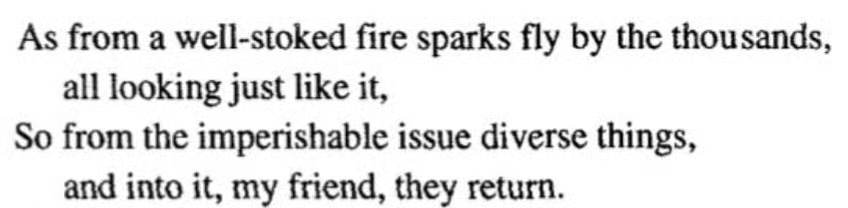
@lain I just used the metaphor because qualified monists are fond of sparks and fire, and sun and sunlight. of course us monists are fond of the ether in the jar, and the snake in the rope.
Replying to @georgia@netzsphaere.xyz
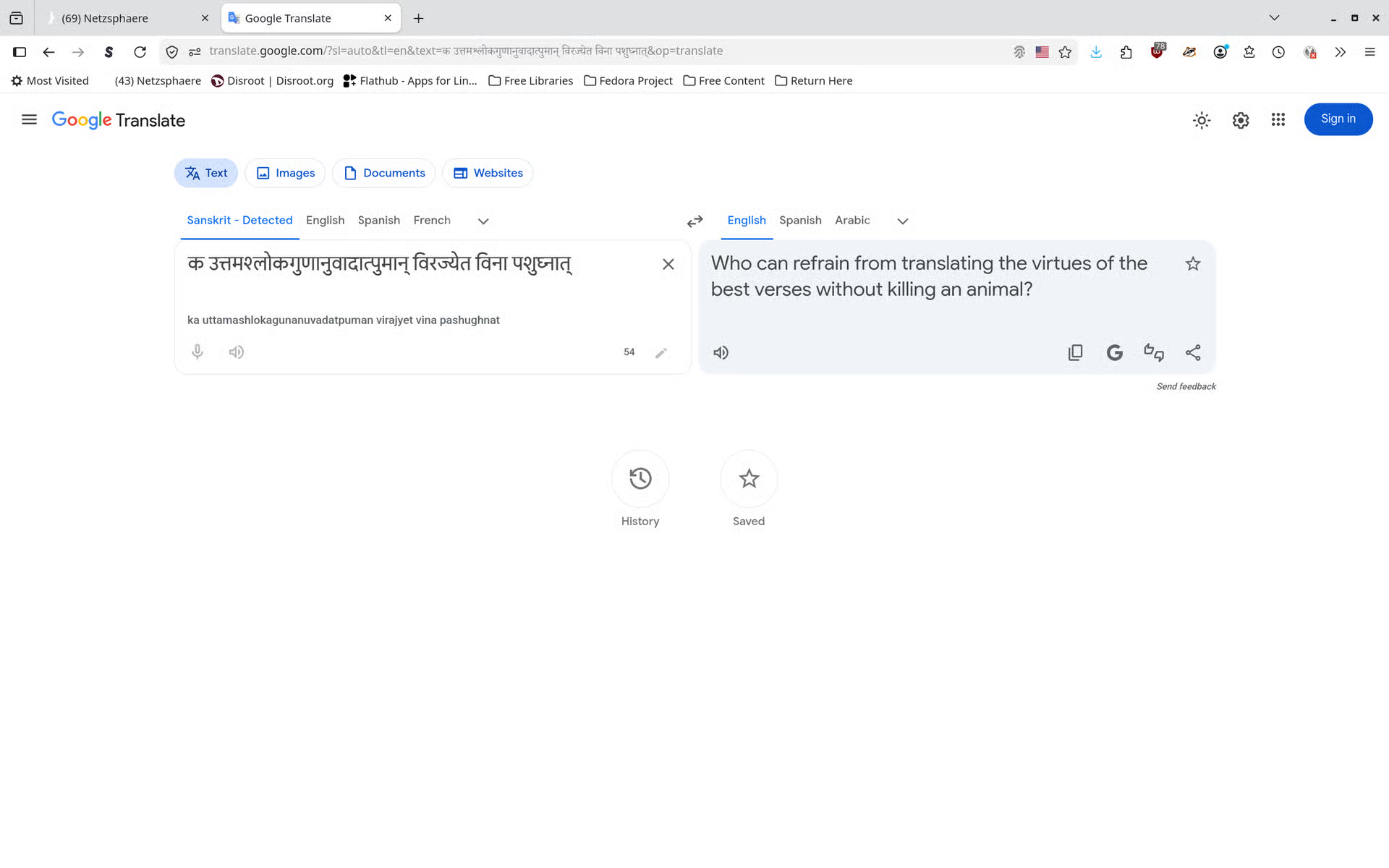
@lain although i think killer of animals is the literal meaning, especially killing cattle
Replying to @georgia@netzsphaere.xyz
@lain paśughna is the word used, it means both killing animals and killing oneself
Replying to @georgia@netzsphaere.xyz
https://vedabase.io/en/library/sb/10/1/4/ here's the verse, of course in typical chaitanya fashion it translates epithets of Sri Krishna as "the supreme personality of Godhead", but uttamasloka means "He of whom the highest slokas (a form of verse) are uttered", aka the subject of beautiful poetry, aka He of great reknown
vedabase.ioŚrīmad-Bhāgavatam 10.1.4Srila Prabhupada's books online