I was born in 1996, but the older generation (it’s Russia) that remembers Soviet schools sometimes remembers Soviet educational PCs. Those were a few series, I don’t remember names, the point is there were Apple II clones and there were PDP-11 clones (but in PC form factor, even with networking ability in the sense of there being one master machine and slave machines booting from it ; but those were not terminals).
So, that older generation remembers as if something normal being taught to program in BASIC, FORTRAN, later C or Pascal and operate machines. Soviet life was quite a lot poorer than even 90s despite all the retroactive disdain for that decade, still informatics classes were apparently at least educationally useful and had at least one operable machine usually.
The 90s generations at least got some computer instruction of general use.
And my generation got Windows machines and no real understanding by anyone what informatics classes are even for. Unless it’s some special school or at least with math focus.
Things people were taught in the 80s and which somehow don’t transition at all to their operation of modern PCs, that contrast still terrifies me.
So - it’s the same everywhere, it seems, because of the idea prevalent in the 00s that my generation is going to just wing it because of being exposed to electronics since childhood. An absolutely nutcase and absolutely winning (in the sense of popularity) idea.
I even have a pre-school brochure somewhere, if I’m not mistaken, with algorithmic problems and solutions. The earlier the better.
One can think in paranoid/cynical ways - “fools are easier to rule” or “so that’s why they were pushing hacker movies in the 90s to scare everyone”. I honestly think it was just fear of some day being less than capable of understanding the technology we rely upon to keep breathing. And that fear is unsubstantiated, because similarly to that most people don’t understand city planning, logistics, oil refineries, electrical engineering and one can go on. But due to that fear of singularity it was easier to start imagining that somehow new generations will gain hard knowledge naturally.
But even that wouldn’t be much of a problem if not for Microsoft. Hate them with passion. EDIT: For managing to sell, coerce and impose their monopoly upon the world and upon education most of all

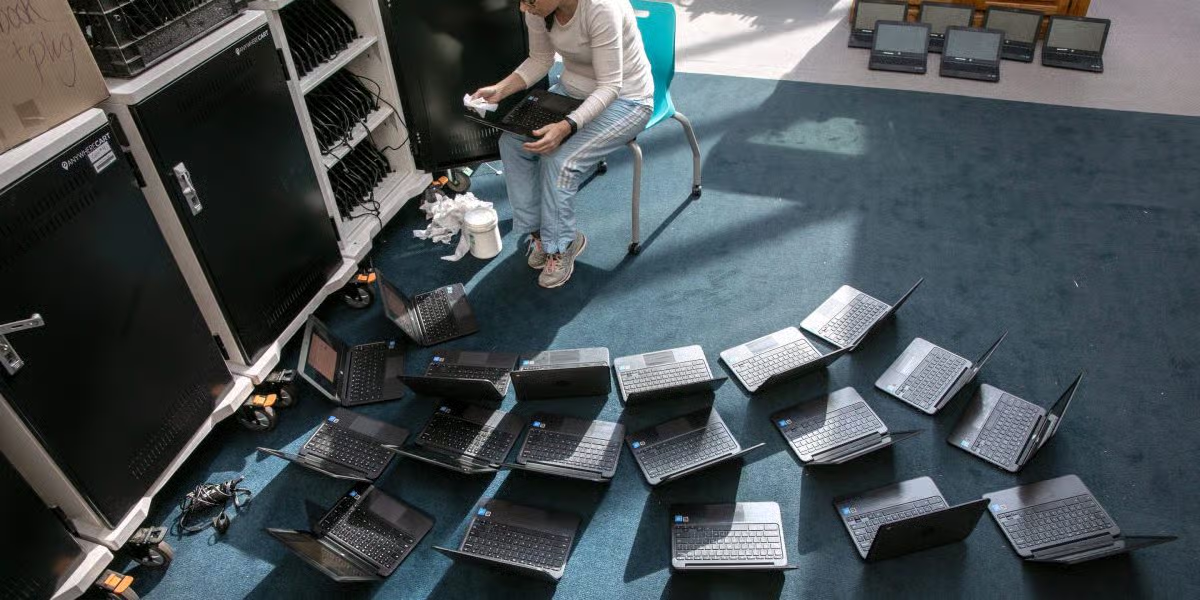 FortuneSchools across America are quietly admitting that screens in classrooms made students worse off and are reversing years of tech-first policies | FortuneMillions were spent putting laptops in every student’s hands. Now schools want them back as tech falls short of the miracle solution it was sold as.