Replying to @⁨beep@piefed.world⁩

They want us angry at each other, afraid, lonely, sad, anxious, suspicious, isolated, paranoid and sick.

They’re doing everything they can to make that reality for as many people as they can, and they are succeeding.

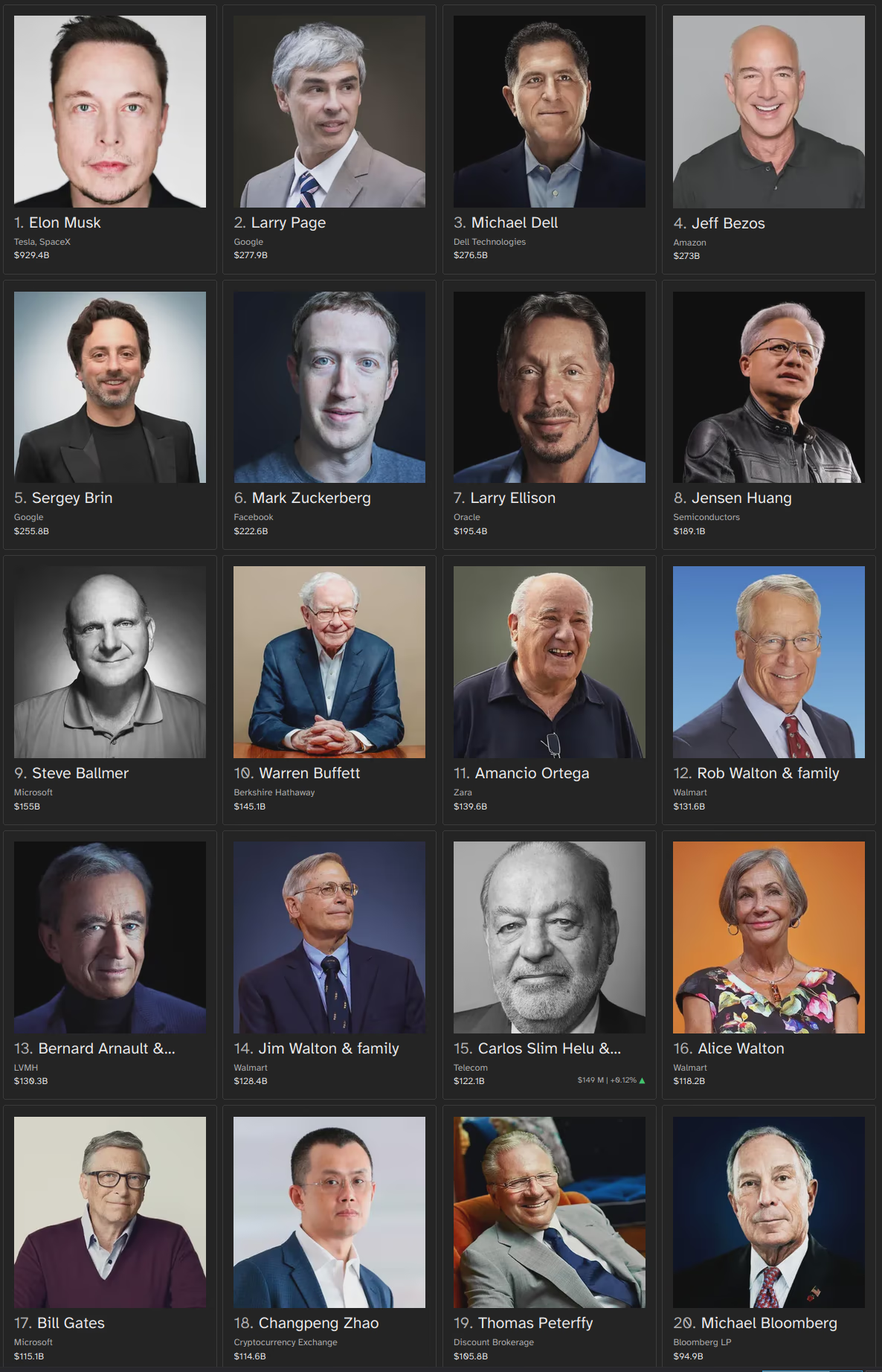
“They” have names, and this is just a few of them. You, as I, likely only recognize a handful of the top of the list. But, there are almost 3500 people with a net worth of over $1 billion, 1/3 of them live in the U.S. They all stand together.

Here’s number 48, have you ever heard of this guy or his sons?

Replying to @⁨DarrinBrunner@lemmy.world⁩

It is kinda interesting to see how much tech has overwhelmed the top rankings. I mean, “tech in the US has doing well” has been a thing all of my life, but over the years, it’s really crept up there. Almost everyone there is self-made wealthy in tech.

  • Musk: manufacturing, fintech
  • Page: tech
  • Dell: tech (personal computers…again, manufacturing, not pure software)
  • Bezos: tech (well…again, Amazon is also logistics now, though I do kinda think of it as a dot-com, not to mention being a cloud services provider)
  • Brin: tech
  • Zuckerberg: tech
  • Ellison: tech
  • Huang: tech (hardware, not software)
  • Ballmer: tech
  • Buffet: finance
  • Ortega: fast fashion (and not in the US/Europe)
  • Walton: retailing
  • Arnault: luxury goods (and not in the US/Europe)
  • More Walton: retailing
  • Slim: Varied (and not in the US)
  • More Walton: retailing
  • Gates: tech
  • Zhao: fintech/cryptocurrency (not in the US/China)
  • Peterffy: fintech
  • Bloomberg: finance, fintech

I mean, outside of Musk not fitting into pure tech, Waltons doing retailing, Buffet being a famous investor, and maybe Bloomberg, depending upon how you classify him, being finance, it’s all tech now. Like, that’s where the big economic growth has happened. The non-tech stuff is outside the US: two Europeans in luxury goods and retailing, and a Mexican in a huge conglomerate.

And in the US, only the Waltons are on there due to simply inheriting a shit-ton of multigenerational wealth.

Replying to @⁨beep@piefed.world⁩

These are some wild numbers, looking at them together.

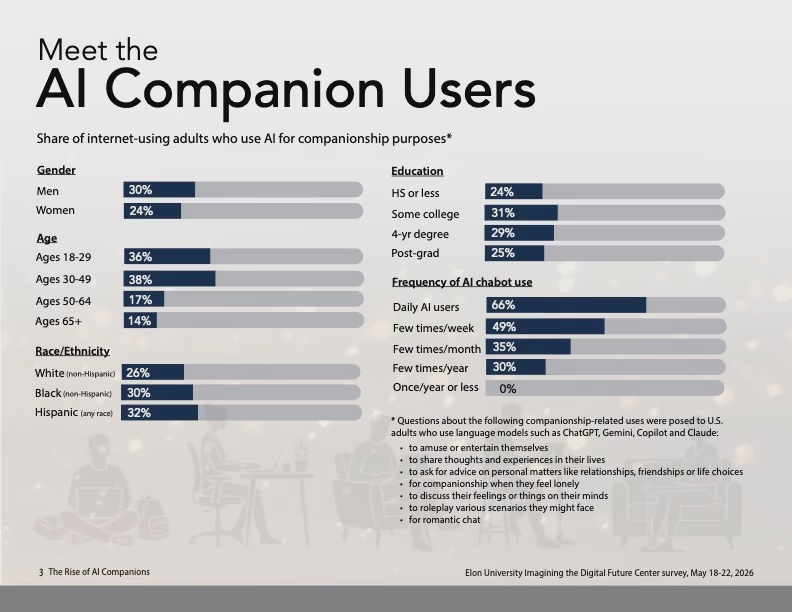
So, basically, it’s heavily disproportionately loaded towards high-education users. 25% users have post-graduate degrees.

ccdaily.com/…/datapoints-educational-attainment-i…

This has 14.9% of the US age 25 and older falling into that group.

But it’s also disproportionately loaded towards black and Latino users. This has 30% of the userbase being non-Latino black.

blackdemographics.com/black-population-in-the-u-s…

That’s 12.7% of the US.

I wouldn’t blink at either one of those statistics in isolation.

But…both black and Latino groups, particularly black, typically have lower levels of educational attainment in the US.

I would expect that to mean that there is either some really high concentration in one area—like, a exceptionally high level of black users with graduate degrees are using AI, enough to throw the numbers that far from overall proportions in society, or you have different strong “clusters” of different groups using AI—like, there is a really high level of black AI users and a really strong cluster of high-education users.

considers

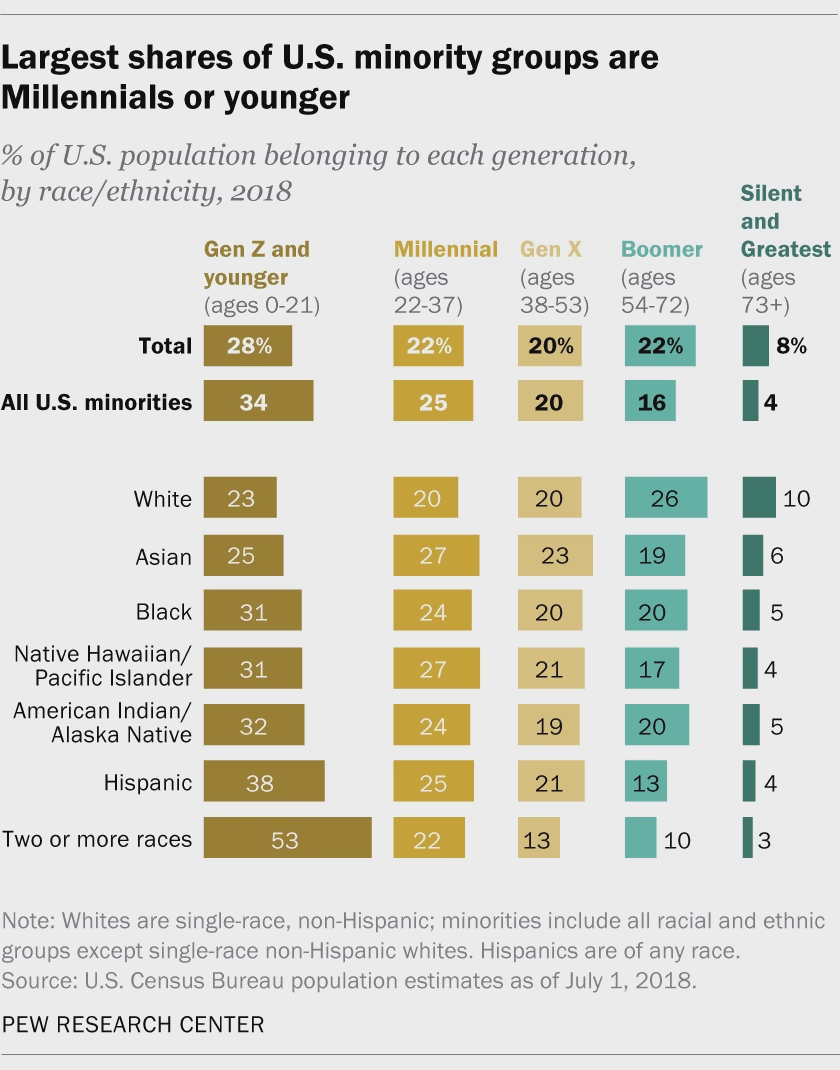
It does say that users are disproportionately below 50, and that would explain some of it. Younger generations are both more educated and less white than older ones.

searches

pewresearch.org/…/most-common-age-among-us-racial…

Would need to go dig up demographics for each cohort to preduct what proportional numbers would be, but just glancing at that, that’s definitely not going to explain nearly all of that. The groups are roughly equally-sized for younger age cohorts, so that’s be a fair bit of that on age, but there’s still gonna be a substantial education split.

searches

nces.ed.gov/FastFacts/display.asp?id=72

For the 2021-2022 school year, this has whites being granted about six times as many masters or doctorates as either black or Latino students, so that’ll be a pretty big educational gap even for younger age cohorts. Yeah. Huh.

drums fingers

Well, I dunno. It’s an interesting pair of figures, though.

Replying to @⁨Wakko@hell.cloud⁩

That was one thing that I wondered about for a moment, like, maybe you have people working very specific types of fields—I’d seen some papers in, like, psychology and stuff talking about human-AI interaction, and maybe this is a really hot thing to be doing—but this survey was specific to “companion” uses, which I don’t think that would likely include professional use the way it was defined here:

The people who have used LLMs for social, emotional and personal purposes are known as “AI companion users” and a representative sample of 1,000 of them were surveyed to discover how they use their social bots, the nature of their relationships and the impact of their encounters with these systems.