posted in Selfhosted

[AIP] Fathom v0.9.0: a new desktop Jellyfin client with built-in server management, Seerr, and YouTube

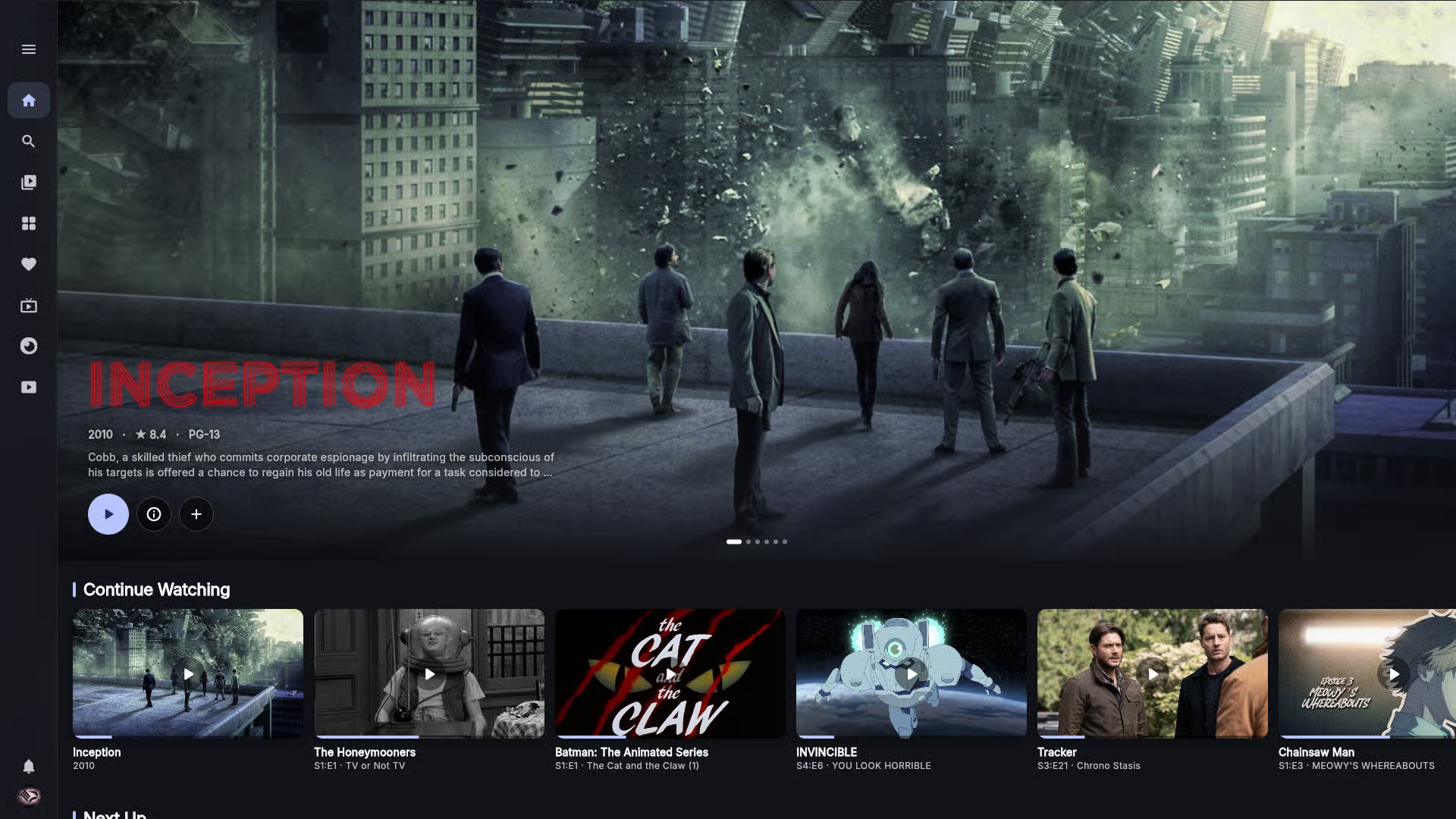
I’ve been building Fathom, a desktop Jellyfin client, for quite some time and just put out the first public release (0.9.0) for Linux and Windows.

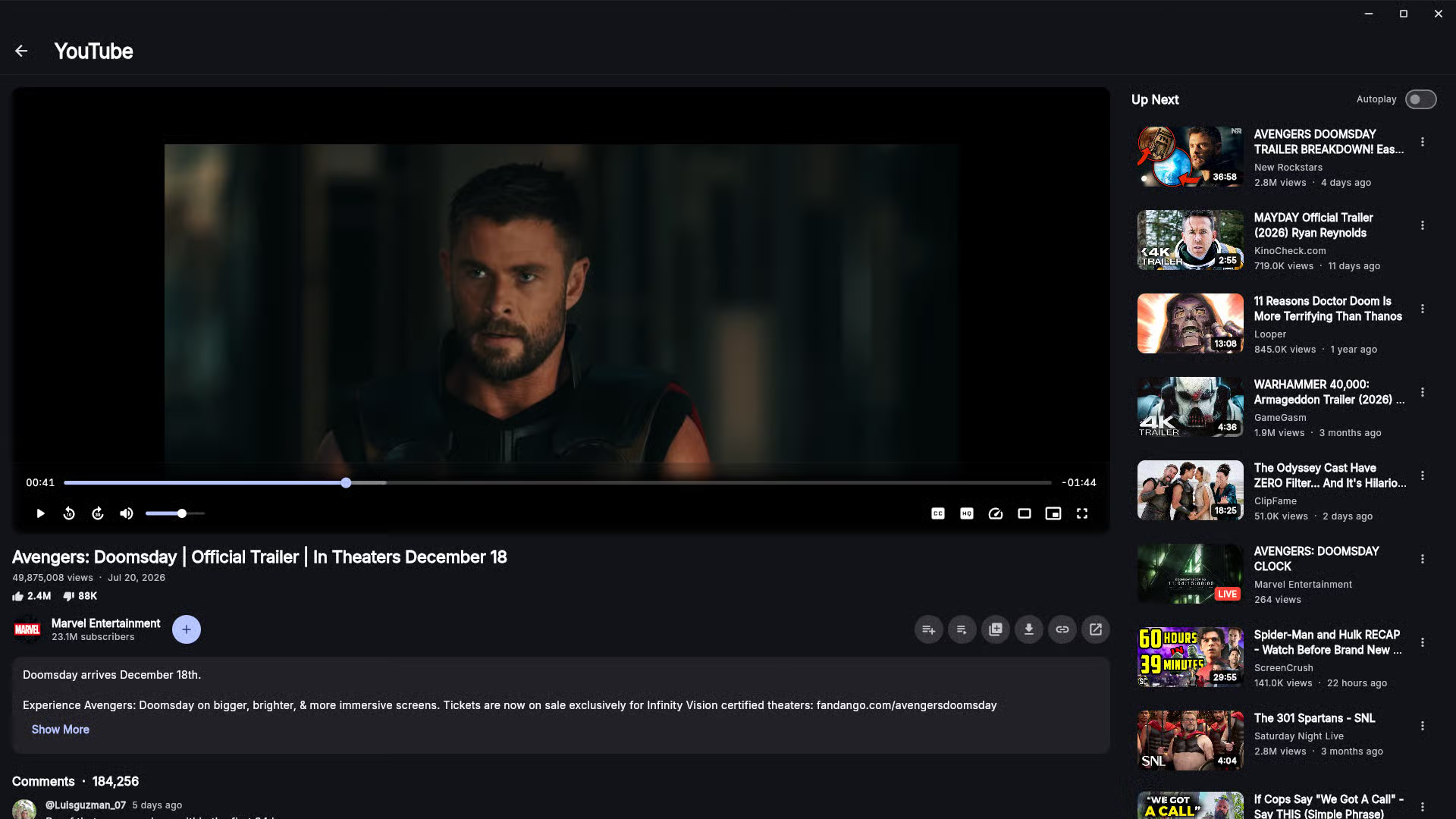
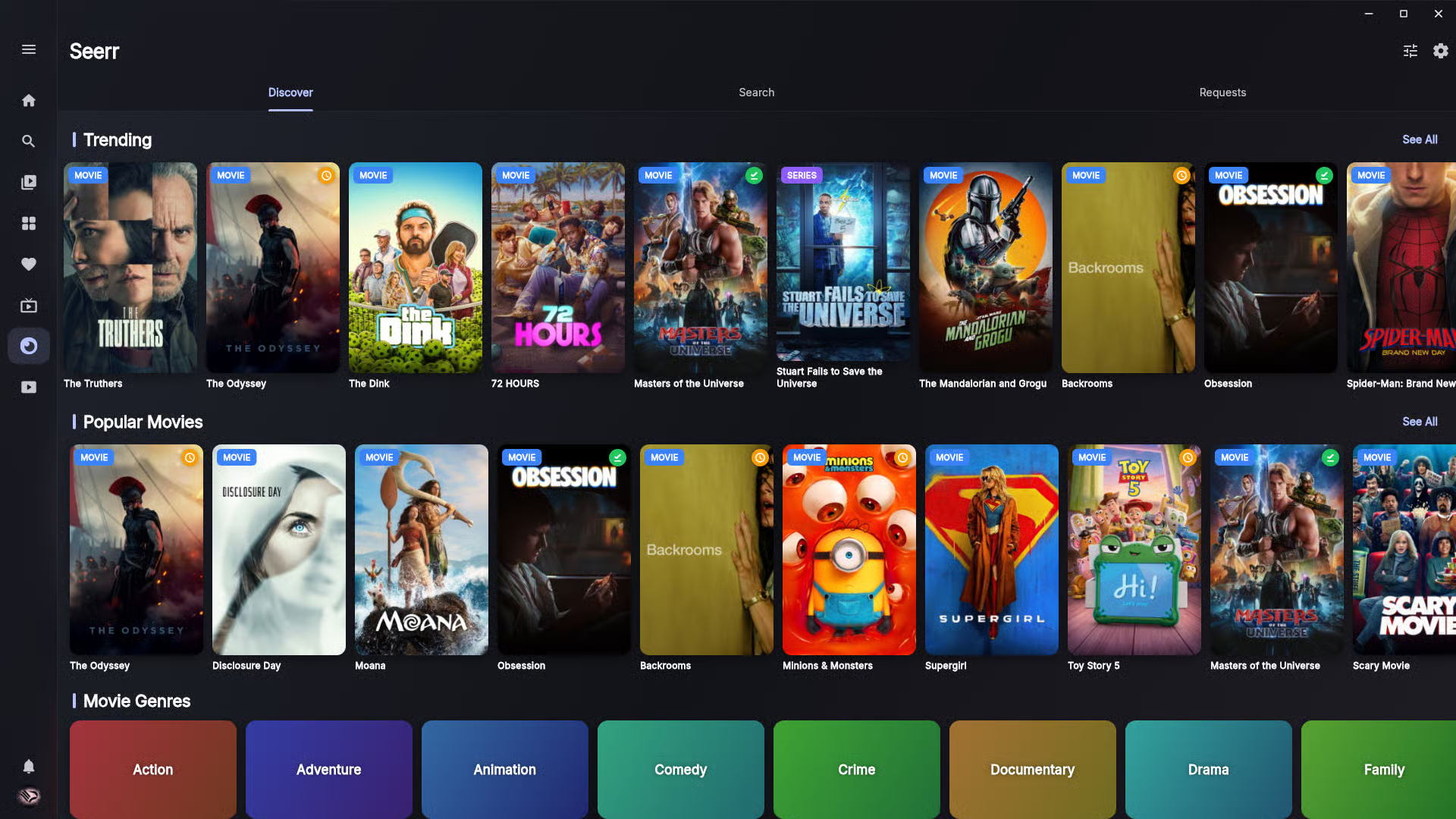
The real draw is having everything in one place. Your Jellyfin movies, shows, music, and Live TV; most of Jellyfin’s important server-side management (users, libraries, scheduled tasks, transcoding, Live TV and DVR, and more); and optional Seerr requests plus a full YouTube client, all without leaving the app. No bouncing between the web dashboard, a requests page, and a browser tab. One window does the lot.

What’s in it:

  • Server management, built in. Handle users, libraries, scheduled tasks, transcoding, active sessions, Live TV and DVR, and more, without opening the Jellyfin web dashboard.
  • Optional Seerr requests right from the detail page, with Jellyfin, Seerr, or API-key sign-in.
  • Optional YouTube client. SponsorBlock, DeArrow, dislike counts, downloads, no ads and no account, off unless you turn it on.
  • One shared player. Jellyfin and YouTube use the same controls, seek bar, and shortcuts. Picture-in-picture, or pop a video out to a floating, always-on-top window on your desktop.
  • Plus: SyncPlay watch-together (works with other Jellyfin clients too), ratings (Rotten Tomatoes, IMDb, and more), in-app updates with a stable or beta channel, light/dark/AMOLED themes, and searchable settings. Everything plays through mpv, so you get direct play, hardware decoding, and proper subtitle and audio track control.

It’s Linux-first (built and tested on Arch/KDE) with a self-contained AppImage, plus a portable Windows build. Android and more features are on the roadmap.

Download + source: github.com/Fathom-Media/fathom/releases/…/v0.9.0 Repo (AGPL-3.0): github.com/Fathom-Media/fathom

This is the first public release, so expect a few rough edges. All feedback is genuinely wanted: bug reports, feature requests, and ideas. The goal is to grow Fathom into one of the best Jellyfin clients out there, so open an issue or start a discussion and it’ll get read.

AI Disclosure

Per Rule 7 / [AIP] disclosure requirements AI was used during development as a coding assistant. Level per category:

  • Design (architecture, system design): Hint — I make the architectural calls; AI suggests trade-offs and edge cases I might have missed.
  • Implementation (production code): Pair — roughly 50/50. AI drafts, I review, adjust, test on real hardware, and only commit what I’ve verified. Every commit is manually reviewed before it goes to my dev repo.
  • Testing (writing tests, test plans, QA): Assisted — real-device testing is manual (I test on my own PC before every release). AI helps draft test plans and think through edge cases.
  • Documentation (docs, comments, README, CHANGELOG): Pair — release notes and changelog entries are drafted with AI then edited for tone; comments and code docs are mostly Pair as well.
  • Review (code review, PR feedback): Assisted — I’m the reviewer; AI helps with security sweeps, audit passes on complex changes, and consistency checks.
  • Deployment (CI/CD config): Hint — GitHub Actions/release pipeline is largely conventional; AI-suggested improvements only.
github.com/Fathom-Media/fathom/releases/tag/v0.9.0
Fathom 0.9.0
The first public release of Fathom, a desktop client for Jellyfin, for Linux and Windows.
Fathom puts your Jellyfin movies, shows, music, and Live TV in one fast, good-looking app, and...GitHubRelease v0.9.0 · Fathom-Media/fathomFathom 0.9.0 The first public release of Fathom, a desktop client for Jellyfin, for Linux and Windows. Fathom puts your Jellyfin movies, shows, music, and Live TV in one fast, good-looking app, and...
enPage

Replying to @⁨potustheplant@feddit.nl⁩

Yes, the YouTube side is fully client-side, the app resolves and fetches the stream directly, the Jellyfin server isn’t involved at all. So YouTube sees the connection of whatever machine is running Fathom, using that machine’s IP and location. Fathom doesn’t spoof anything itself, but because it’s client-side, running it at home or behind a VPN is what should decide the location YouTube sees.

Replying to @⁨potustheplant@feddit.nl⁩

Yeah, unfortunately that’s a Google account/billing thing, not a playback thing. Fathom only fetches the video stream on your machine; it doesn’t touch your account or Premium. That “verify your country” check is much stricter than playback and wants a residential IP in the country, so datacenter VPN ranges like Proton’s can get “flagged”. Nothing i think a media client alone can get around.

Replying to @⁨sk@utsukta.org⁩

Sign-in goes through Jellyfin’s normal username/password endpoint (AuthenticateByName) plus Quick Connect, which is the same path the LDAP plugin hooks into, so LDAP logins generally work with a standard client like this, it shouldn’t be the blocker by itself. A few things worth trying: if your server has Quick Connect enabled, try that (it sidesteps the password path entirely and is a good way to isolate the problem); double-check the server URL has the scheme and port (e.g. host:8096); and a self-signed HTTPS cert can also cause a failure. If you can paste the exact error you’re seeing, I’ll dig in, and a GitHub issue is welcome.

Replying to an earlier post

this is all i see


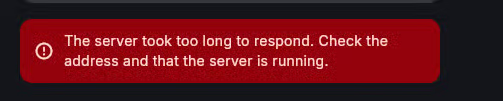
i am using the linux Appimage, quick connect simply times out, no messages in console except :

./Fathom-x86_64.AppImage 
Gtk-Message: 18:26:14.006: Failed to load module "xapp-gtk3-module"
Gtk-Message: 18:26:14.006: Failed to load module "canberra-gtk-module"
package:media_kit_libs_linux registered.
[W][18:26:18.213431] pw.conf      | [          conf.c: 1209 pw_conf_load_conf_for_context()] setting config.name to client-rt.conf is deprecated, using client.conf
I have jellyfin running on a domain with proper certs and jellyfin's official client works perfectly.

Replying to @⁨sk@utsukta.org⁩

Sorry about that. That message is a network timeout, so the Quick Connect request isn’t getting a response back within the window. Since you had to enter the server address to reach that screen, plain reachability and your cert are should be fine, so it’s something specific to the Quick Connect path.

Two things would help me narrow it down:

Does normal username/password sign-in work against the same server, or does that time out too? If password works and only Quick Connect hangs, that isolates it to the Quick Connect endpoints.

Is Jellyfin behind a reverse proxy (nginx/Caddy/Traefik), and which Jellyfin version?

Replying to @⁨sk@utsukta.org⁩

Glad 10.11.11 fixed the login. Since it’s the same with hardware acceleration on or off, decoding isn’t the bottleneck, it’s likely delivery or frame timing. Two quick checks: in your Jellyfin dashboard, is that session Direct Play or Transcode? And does the same file play smoothly in plain mpv/VLC (Fathom uses libmpv underneath)? That’ll tell us if it’s server/network vs. something on the Fathom side.

Replying to @⁨sk@utsukta.org⁩

Thanks, that narrows it down a lot. Fathom renders through libmpv and currently leans on its default frame timing, where a well-tuned client instead syncs frames to the display refresh.

Two questions would let me pin it down:

Which official client are you comparing against: the web client in a browser, or the Jellyfin Media Player desktop app? It matters because a browser hands video to a hardware overlay that is tear-free by design, while Jellyfin Media Player runs the same engine Fathom does, just configured differently.

What OS are you on, and what is your monitor’s refresh rate (60, 120, 144Hz)? On Linux, which desktop or compositor?

On the fix side, the next dev build adds a “Smooth Motion (Display Sync)” option under Settings > Playback > Advanced that paces frames to your monitor’s refresh. That is the usual cure for this kind of judder, so please try it when you have a moment.

The same build also adds a Diagnostics screen under Settings > About. Open it, turn on Diagnostic Logging, start the video again, let the stutter happen for a few seconds, then use “Copy Diagnostics” and paste the result here. That shows me the exact decode path and frame timing instead of me guessing. It strips out anything sensitive before copying.

github.com/Fathom-Media/fathom/…/v0.9.1-dev.3

GitHubRelease v0.9.1-dev.3 · Fathom-Media/fathomA modern desktop client for Jellyfin, with an optional built-in YouTube player and Seerr requests. - Release v0.9.1-dev.3 · Fathom-Media/fathom