Posting something on a private platform is actually not public. It is the private property of the platform owner and they can make it public or private any time they want or find ways to commodity it in their terms of service when you sign up.
I say this to back up what you say about the myth of the digital commons. Most online networks are not a commons at all, they are the exact opposite, they are an enclosure to extract profit from what would otherwise be a commons, usually built by finance capital to have appealing features at first, generated at a loss, and then once profit needs to be taken the alleged “commons” is increasingly closed and monetized. Journalista don’t really understand this, sure, but neither do most people. They expect, correctly, that social interactions should be analogous to chatting with someone on the street or at a public square, and social networks try to give that illusion.
Regarding individual choice, well a person is surrounded by the exact opposite of what we are saying and all their friends are on their addiction habit social networks so what would you expect them to do. These things don’t just happen on their own, people must work to organize and educate on the way capitalism turns their social lives into profit.

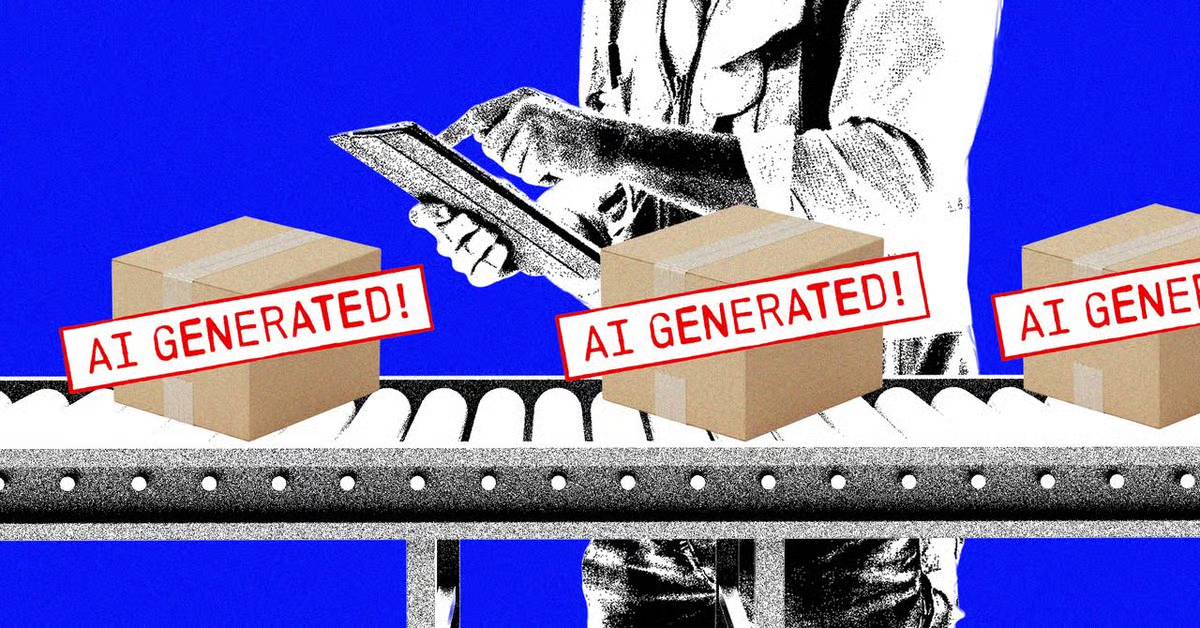 WIREDThe AI Slop Backlash Is Actually Having an ImpactPlatforms are finally recognizing that people don’t want to consume AI slop. A growing number of sites and apps now have tools and policies to flag, label, and ban AI-generated content.