
MuttMutt

@MuttMutt@lemmy.world · Joined ⁨Jun⁩ ⁨2023⁩

Replying to an earlier post

No major formal education. Did a DOS class at a local Community College back in the day, only did it for the certificate and made my high school pay for it. I already knew how to do everything they were walking me through anyway, I only showed up a couple days per week to drop stuff off.

The instructor made a big deal one of the last days. He stood near this whiteboard and said, “I’m ashamed, I’m appalled, out of everyone in this class, a high school student has the highest grade.”

I didn’t have the heart to tell him I learned DOS from the DOS Manual when I was 15. I learned how to do some very basic graphic programming and such when I was in elementary school on an Apple II.

I have worked as a network tech and pc repair tech for a WISP (Wireless Internet Service Provider) helped shoot 2.4Ghz WiFi connections up to 8.5 miles and shot a connection 7.6 miles myself. Most of the network troubleshooting was running multiple ping’s to different equipment to watch for issues. Learned on the job how to weatherproof connections using electrical tape and butyl rubber tape. It’s also where I learned how to crimp cables from the installer we had.

Most of the job was cleaning up and checking CPE’s that came in from previous installs, configuring the CPE’s for upcoming installations, and dealing with the phones. The owner was working for another company in IT about 3 hours away. I eventually quit when I was stuck trying to train a new installer and needed help with an issue, the owner quit answering the phone.

I later managed an in house ISP for an apartment building that was converted from a hotel built in the 50’s. I brought in 4 different connections, one from a small local WISP using the building as a tower 6Mbps, two AT&T 3Mbps DSL lines, and a cable modem 6Mbps. And provided internet for about 30 apartments using HPNA. Tried getting the owner to change some things but he was off the thought that if it works don’t fix it. Most people only got between 750Kbps to 1Mbps due to line quality and the technology.
Replying to @⁨white_nrdy@programming.dev⁩

No problem.

I try to explain things as best as I can so everyone can learn. I’ve been using TrueNAS since the FreeNAS 9.2 era so about 13 years now. When I started I had already dealt with a ton of issues and was searching for better than multiple single drives. My first real build was a Dual Xeon X5690 setup in an X8DT6-F so learning this about SAS was really important.

Sadly there are so many acronyms out there (and growing all the time) that is getting hard to just read the news let alone anything else without a little help.

Replying to @⁨philanthropicoctopus@thelemmy.club⁩

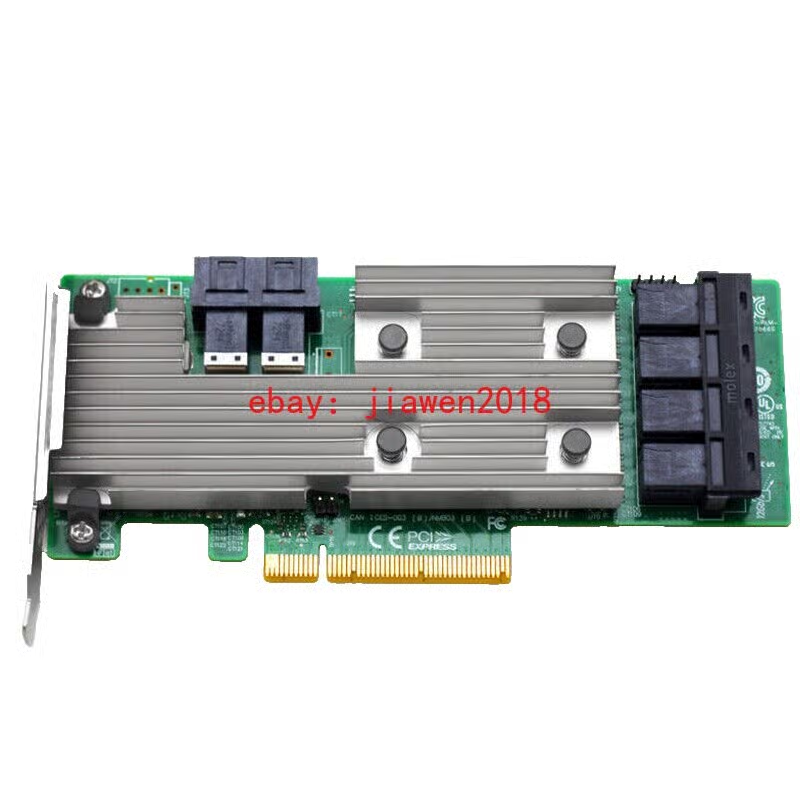
If you are intending to run software raid then you want something that can be flashed to Initiator Target or IT mode. There is a JBOD function for some RAID cards and you DO NOT want that because it does not send all the same data that software raid wants from the dive. You also do not want to waste money on a card with RAM or Battery Backups since they are really designed for hardware RAID.

A SAS3008 card will really be what you are looking for.

www.ebay.com/shop/lsi-sas-3008?_nkw=lsi+sas+3008

With a SAS backplane or expanders you can connect 256 drives.

eBayLsi Sas 3008 | eBayExplore a wide range of our Lsi Sas 3008 selection. Find top brands, exclusive offers, and unbeatable prices on eBay. Shop now for fast shipping and easy returns!

Replying to @⁨tofu@lemmy.nocturnal.garden⁩

I have so many irons in the fire I can never quit…

Right now I am tinkering with a local only HomeAssistant AI voice assistant. I have an Ubuntu VM running docker on my TrueNAS which has an ARC A310. The reason I’m running a VM is because I’m using A Dual Edge TPU module for FrigateNVR while using the ARC A310 for video decoding. Ollama is running Qwen2.5 3B. I’m also running Wyoming Whisper and open-webui for the voice AI. I’m using a ESP32-S3 AI Smart Speaker Dev Board for voice control.

I found a project on GitHub that looked really good but was designed to always pull files and so I forked that to create a local only version and setup a small docker container for the audio files. Still working on modifications of the repository but the setup is working OK but I’m trying to work out the bugs.

I’m also working on a Halloween project. I have a plastic pumpkin with a big red arcade button for a nose, LED’s for eyes, a speaker, some car horns, proximity sensors, and a temper… I call it my Doom Pumpkin. It will go outside a week before Halloween and complain about people touching it’s buttons or lack there of during the day and stay quiet at night. On Halloween it will keep going till later and when someone presses the button it will randomly honk horns in different ways. When someone steps in front it will say funny things to get them to press the button. If they walk behind it will warn them something bad might happen (like saying it farts fireballs.) It’s all setup in ESPHome and will be controlled by HomeAssistant and NodeRed. There is also a theft prevention mode built in that will cause it to just spazz out and blow the horns.

I’ve still gotta pull another 500 feet or so of ethernet then get those and some others dropped into the server closet and shift some stuff around so it feeds into the rack. I’ve also got to pull my current camera lines from my POE injector and run them into my POE switch.

This is all on top of building and installing racking for solar, getting the solar installed, pulling a wall in a couple inches at the top where it pulled away during an earthquake before we bought the place, and fixing a bunch of other stuff.

Replying to @⁨inanimate_carbon_rod@lemmy.zip⁩

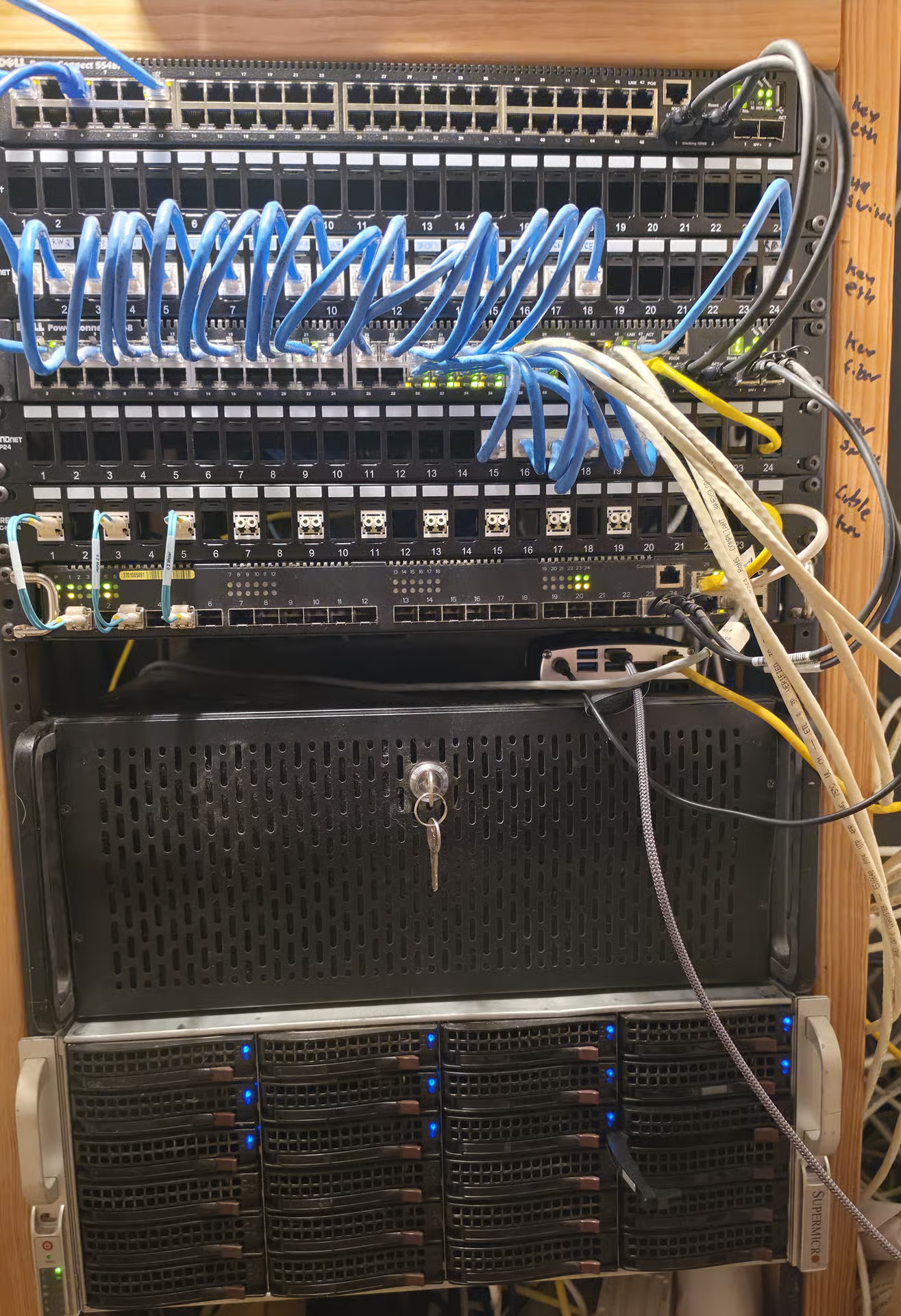
Supermicro boards go great in Supermicro 4U cases. I’m using an X10DRH-C in a case that holds 36 X 3.5" drives with a SAS backplane. You can grab a CSE-847 for 350 plus tax and shipping on ebay.

A set of cheap rack rails attached to some 2x4’s with a couple casters on the bottom and you have a rack you can stick in a closet and pull our when you need it.

The cheap rosewill cases are ok. But it you need to swap a drive (I have the 15 bay version that’s about 100 bucks I used for my server to begin with and now use it for a router with only two drives) it’s a pain to deal with. You have to pull the top, then remove screws to pull the cage for 5 drives, then pull the drive that you need to swap. It doesn’t sound like a big deal til a drive goes bad, or one of the 120mm fans that cool the drives dies.

The Supermicro is the bottom one, the Rosewill is above it.

They also make wall brackets you can hang the chassis on and it can sit on a desk as well.

Replying to @⁨northendtrooper@lemmy.ca⁩

It’s one of the reasons why getting a SAS controller is really nice, backplanes make it even better.

I was preforming a burn with 10 X 8TB drives on a controller that already had a couple operating ZFS pools totaling 18 X 4TB drives and a couple SSD’s and there was no slow downs. A SAS3008 controller can support over 6000 MB/s and has a PCI Express X8 3.0 bus.

I’ve been building my servers and network out of old enterprise gear for a while now. It uses more power but the things you can do are truly amazing. Sadly the ai boom drove prices way up compared to a couple years ago, what I bought for 900 in 2024 is running around 1500 today.