If your current plan is to buy the latest and greatest phone today, sell it in two years, and then buy a new top of the line phone, then Apple’s new lease program looks like an attractive option. They’ve priced it such that, over the course of the lease, you end up paying about the cost of purchasing the phone minus its resale value. Leasing looks convenient because it saves you from having to find a buyer.
It also keeps phones out of the secondary market, which benefits Apple. Off lease phones are used for warranty replacements, or sold as refurbished through official storefronts instead of person to person.
Scientists Build the First 3D Cloak That Makes Objects Invisible To Heat
On an infrared camera, a warm object normally stands out clearly against cooler surroundings. Researchers have now built a three-dimensional cloak that bends heat around an object, erasing its thermal outline while protecting the space inside from temperature extremes…
This approach could eventually improve heat control around microchips and sensitive electronic components. It may also help protect equipment in severe environments or reduce the thermal signatures used to locate people and machinery…
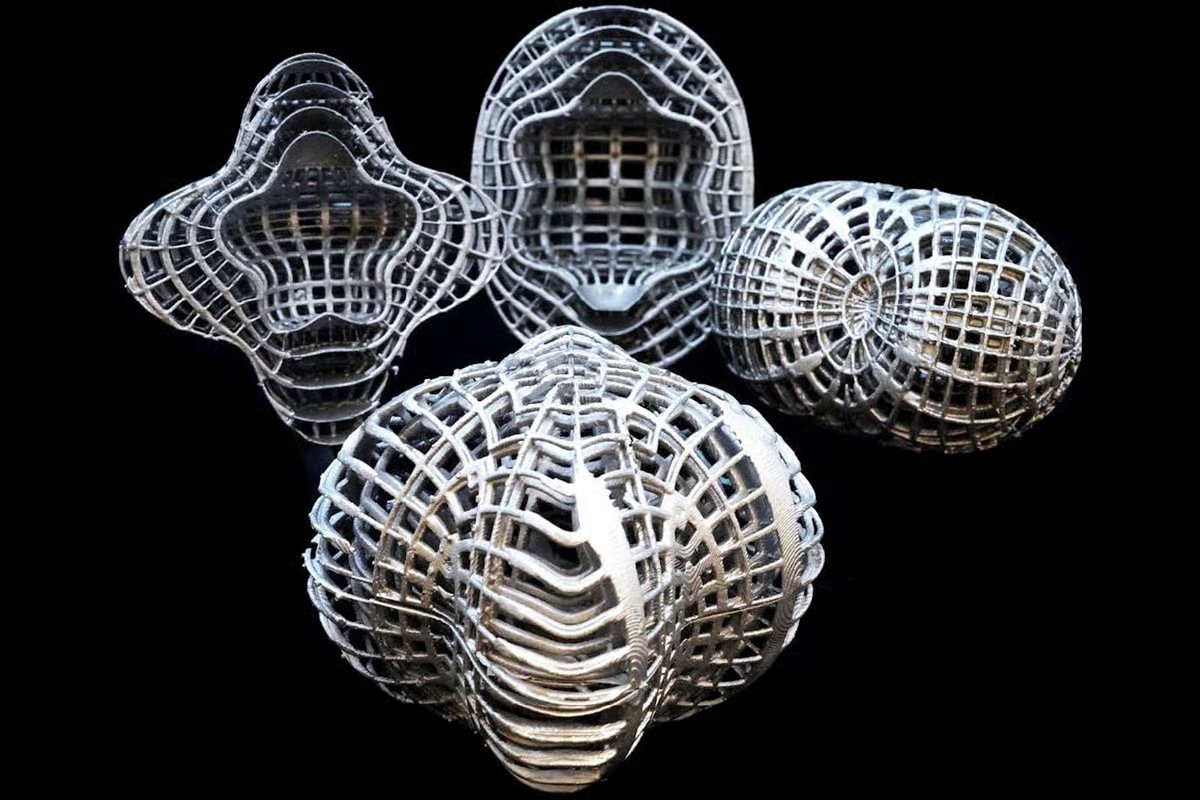
They printed a precise aluminum lattice in 3D to create highly conductive pathways through the cloak. Aluminum moves heat readily, allowing energy to travel quickly through selected regions. The remaining spaces were filled through mold casting with a rubbery material that transfers heat much more slowly.
Together, the materials created a controlled thermal route. Some sections accelerated heat flow while others restricted it, steering energy around the space occupied by the concealed object…
…In electronic systems, the cloak might redirect heat away from vulnerable components or prevent nearby heat sources from interfering with delicate devices.
It could also help protect equipment exposed to extreme temperatures. Security and defense applications are another possibility, including reducing the infrared signatures that allow thermal cameras to distinguish people or machinery from their surroundings…
…Concealing an object that produces its own heat presents a more difficult problem because that energy would continue building inside the protected region and could eventually reveal its location…
The researchers now plan to investigate smart, multifunctional cloaks capable of performing those active tasks. Such devices could eventually do more than hide a thermal signature by deliberately controlling where heat gathers, how it spreads, and where it leaves the protected region…

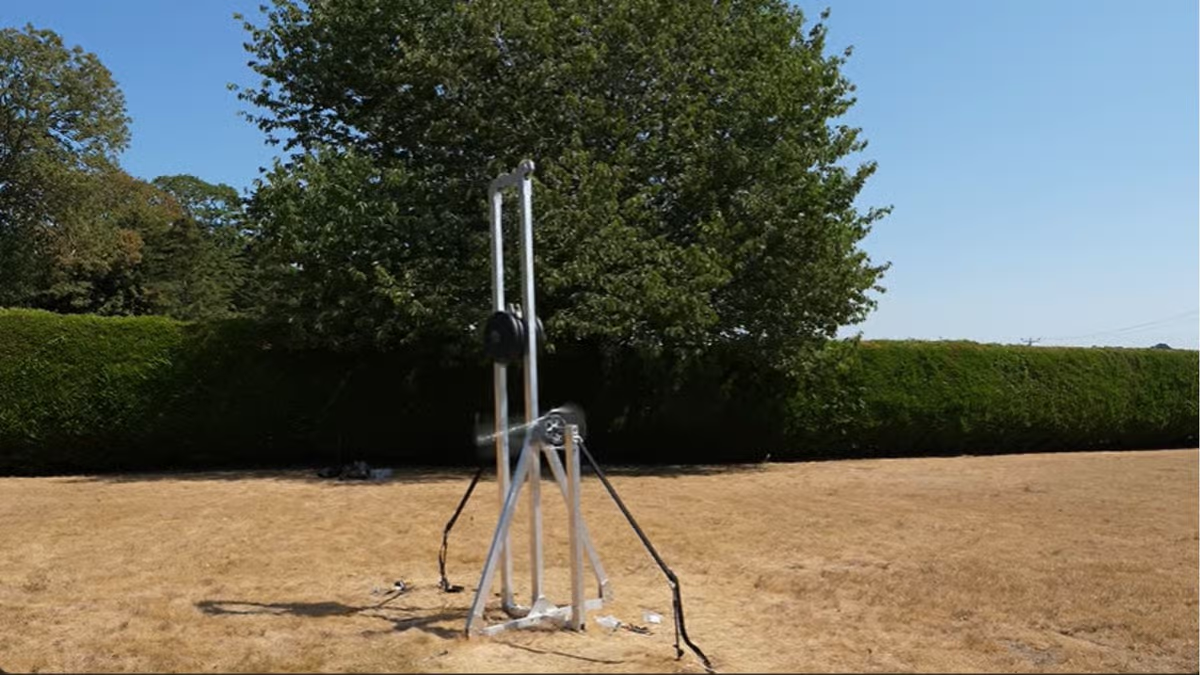 Interesting EngineeringEngineer’s 88-pound trebuchet makes projectile fly at supersonic speedsUK-based YouTuber, Tom Stanton has built a gravity-powered trebuchet that sent a four-gram projectile faster than the speed of sound.