И о хорошем: кроссворды, которые можно порешать онлайн.

Tomorrow comes.
I post popular science news and memes that I find interesting. I also write about work, video games, and life. Currently interested in Open Science and Citizen Science.
Приношу научно-популярные новости и мемы, которые мне кажутся интересными, пишу о работе, видеоиграх и просто о жизни. Текущие рабочие интересы: открытая наука, гражданская наука и научное волонтерство.
Always remember: we need to be kind, especially when we don't know what's going on.
Ru | Eng

И о хорошем: кроссворды, которые можно порешать онлайн.
 YouTubeHuman Brain Data Center is online!! #singapore #news #datacenter #biocomputing #ryankelly #ypr
Профессор Преображенский в повести «Собачье сердце» пересадил псу гипофиз человека. Теперь нейрофизиологи пересадили мышам, лишенным большей части коры, мозговой органоид человека, и через три месяца человеческие клетки составляли в ней более 90 процентов. В исследовании авторы продемонстрировали потенциал этой модели для изучения неврологических заболеваний человека, например ДЦП
Систематический обзор и метаанализ британских ученых продемонстрировали статистически значимую положительную связь между кратковременным и длительным воздействием твердых частиц и монооксида азота в воздухе и риском смерти в результате самоубийства, попытками самоубийства и частотой суицидальных мыслей. Нарративный обзор показал, что существуют положительные ассоциации и с другими загрязнителями воздуха, а еще с шумовым загрязнением
Окаменелости диплодока впервые обнаружили за пределами Северной Америки
Диплодоки - известный род гигантских динозавров-завропод с маленькими головами и длинными, похожими на кнут хвостами. Они обитали в позднем юрском периоде в интервале от 155 до 145 миллионов лет назад. С момента открытия диплодоков в 1878 году все подтвержденные остатки этого рода находили в формации Моррисон, богатом местонахождении окаменелостей на западе США. Однако теперь палеонтологи обнаружили остатки диплодока в Испании. Находка была сделана в муниципалитете Эль-Кастельяр, провинция Теруэль, и служит первым свидетельством присутствия диплодоков за пределами Северной Америки. Останки включают 14 хорошо сохранившихся хвостовых позвонков и несколько шевронов - костных дуг на нижней стороне хвоста. Традиционное анатомическое сравнение и современный филогенетический анализ позволили исследователям уверенно отнести их к роду Diplodocus и определить как близкого родственника вида Diplodocus hallorum. «При более внимательном изучении анатомии мы начали выявлять сочетание признаков, характерных для видов Diplodocus. Затем результаты различных эволюционных анализов неизменно указывали на то же самое», заявил Серхио Санчес Фенольоса (Sergio Sánchez Fenollosa), ведущий автор исследования, которое опубликовано в Journal of Vertebrate Paleontology, специалист в области биоразнообразия и эволюционной биологии при Объединенном научно-исследовательском фонде «Динополис-Теруэль» (Joint Paleontology Foundation Teruel-Dinópolis). «С каждым новым результатом картина становилась все яснее: перед нами был диплодок», подчеркнул он.
Возраст обнаруженной особи составляет около 150 миллионов лет. Место ее гибели указывает на то, что в позднем юрском периоде динозавры могли перемещаться между Северной Америкой и Европой, вероятно, используя временные сухопутные мосты, возникавшие в прото-Северной Атлантике. В юрский период - от 201,4 до 145 миллионов лет назад - древний суперконтинент Пангея начал раскалываться на массивы суши Лавразию и Гондвану. В это же время началось формирование Атлантического океана. Диплодоки относятся к подгруппе зауропод, одних из самых длинных сухопутных животных, когда-либо обитавших на Земле. По словам Фенольосы, эта недавняя находка проливает свет на экосистемы Пиренейского полуострова мезозойской эры и на разнообразие зауропод в Европе юрского периода. «Длина диплодока из Эль-Кастельяра составляла около 25 метров, что сопоставимо с размерами его североамериканских сородичей. В настоящее время остатки этого динозавра выставлены в Арагонском палеонтологическом музее в комплексе «Динополис».
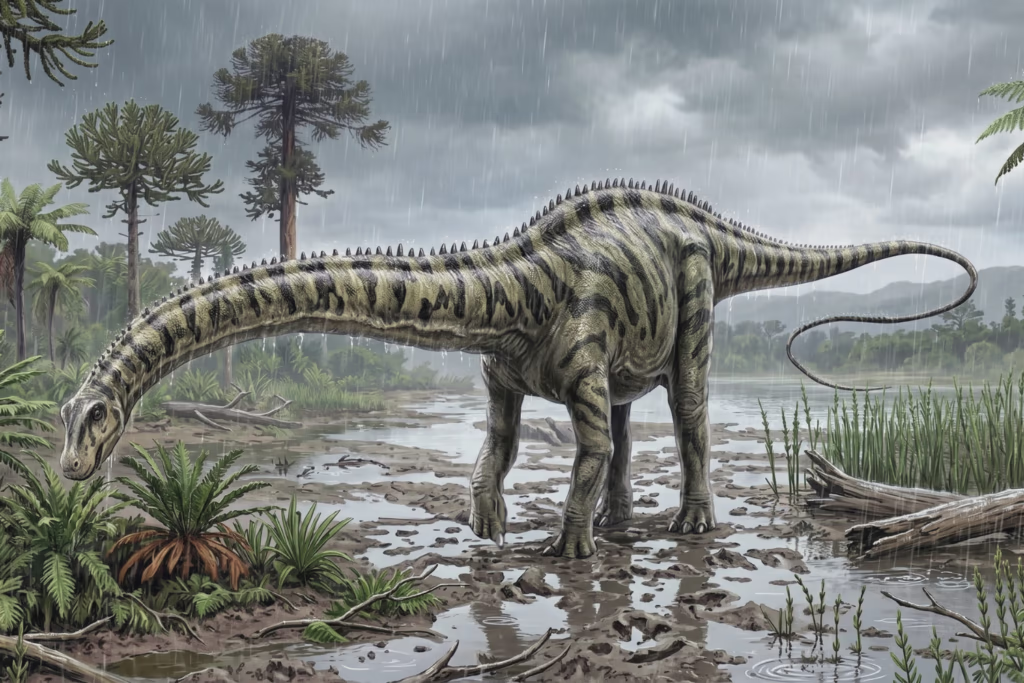 Taylor & Francis NewsroomFirst ever find of a Diplodocus outside of North America - Taylor & Francis NewsroomIn a discovery that challenges our understanding of dinosaur distribution during the Late Jurassic period, palaeontologists have identified the first evidence of the iconic Diplodocus outside North America. The remarkable find of this sauropod, detailed today by researchers from the Fundación Conjunto Paleontológico de Teruel-Dinópolis in the peer-reviewed Journal of Vertebrate Paleontology, represents one of […]
Я календарь переверну, и снова
ВЫБОРЫ, ВЫБОРЫ, КАНДИДАТЫ - ПИДОРЫ
sad axolotl boosted

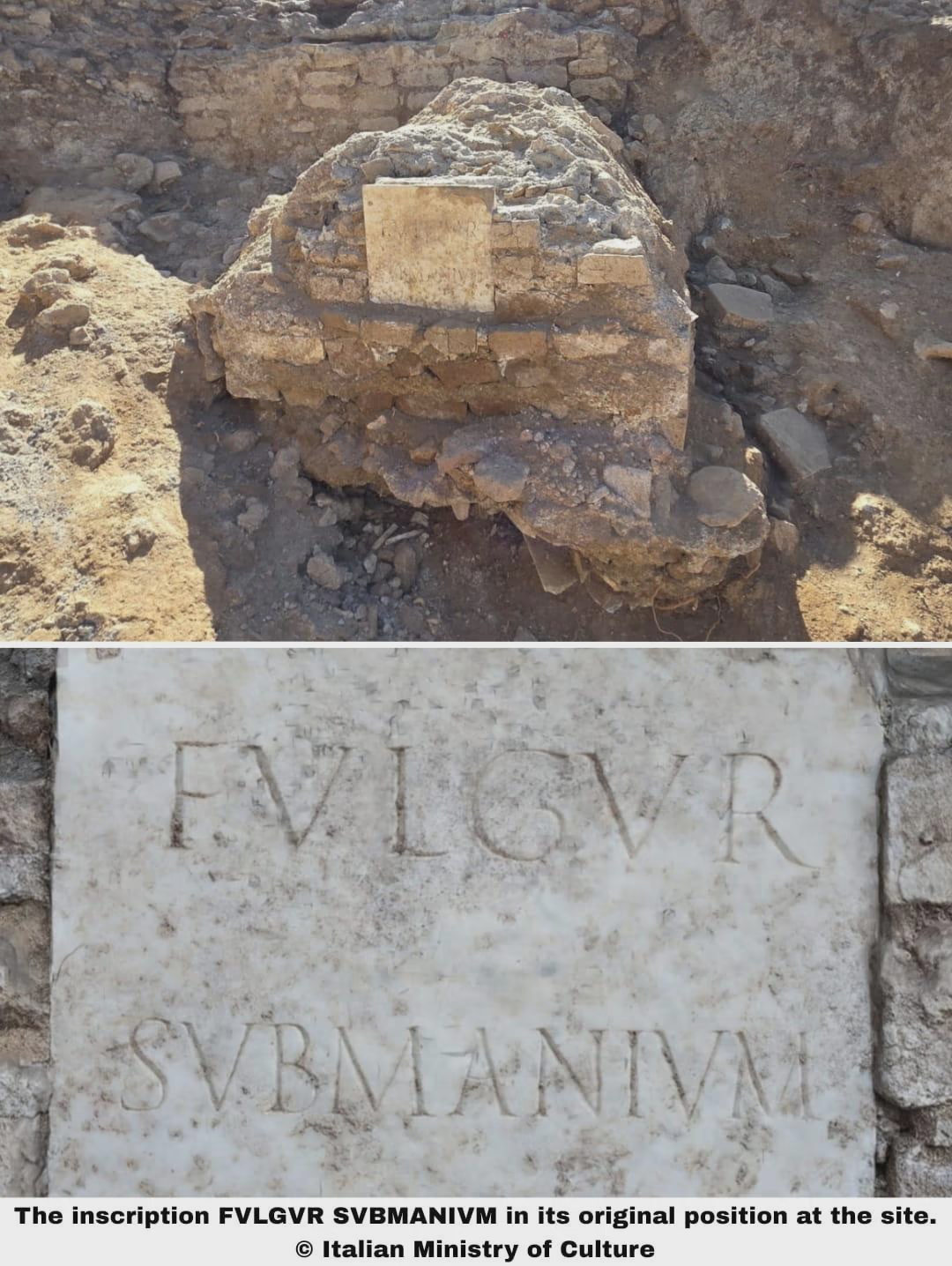
Romans buried traces of lightning strikes for the god Summanus, a 1,900-year-old inscription reveals
A marble inscription found at Hadrian’s Villa in Tivoli records a Roman belief about lightning and the night sky. Archaeologists uncovered the inscription during excavations in an area known as the Amphitheater. The inscription reads “FVLGVR SVBMANIVM,” a phrase referring to a lightning strike linked to Summanus...
More information: https://archaeologymag.com/2026/09/inscription-reveals-romans-buried-lightning/
Follow @archaeology
 — Open image attachment 1 of 1
sad axolotl boosted
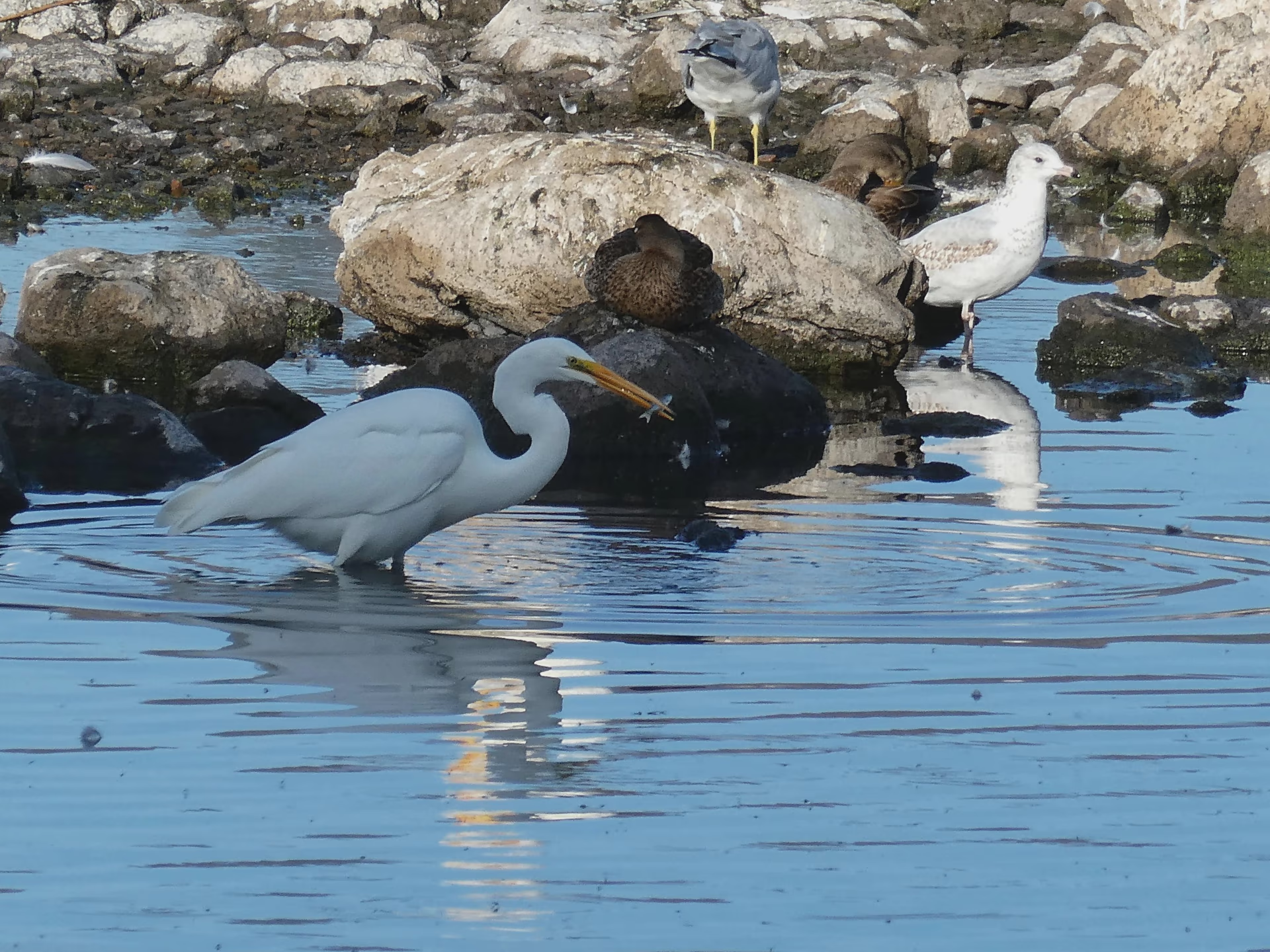
The sun's come out, along with all the fisher-birds.
 — Open image attachment 1 of 1
sad axolotl boosted

🌊 Neptune's tiny inner moons may be fragments of much larger worlds.
JWST found hydrated minerals on their surfaces — materials that require liquid water interacting with rock. But these small, frozen moons couldn't have produced them themselves.
The evidence points to an ancient system of larger moons, potentially shattered after Triton arrived.
🔗 https://www.seti.org/news/what-happened-to-neptunes-moons/
www.seti.org/news/what-happened-to-neptunes-moons/sad axolotl boosted

A Planetary Nebula from a 5.7 M⊙ Progenitor in a 90 Myr M31 Star Cluster: https://iopscience.iop.org/article/10.3847/2041-8213/ae77e4 -> Extragalactic #PlanetaryNebula with Massive Progenitor Sheds Light on Stellar Evolution: https://aasnova.org/2026/09/16/extragalactic-planetary-nebula-with-massive-progenitor-sheds-light-on-stellar-evolution/
![Color composite image of the young open cluster AP 210, constructed from archival HST/ACS observations in F475W (blue), F625W+F658N (green), and F814W (red). The PN appears as a bright blue–green point source near the cluster center because of its strong [O iii], Hα, and [N ii] emission. The white circle indicates the on-sky diameter of a single Hectospec fiber.](https://staging3.plamenu.com/media/11728420940500172801e2cdd0ab2349321167479b17e3b370.avif) — Open image attachment 1 of 1
— Open image attachment 1 of 1Зачем играть правильно, если можно играть весело? 
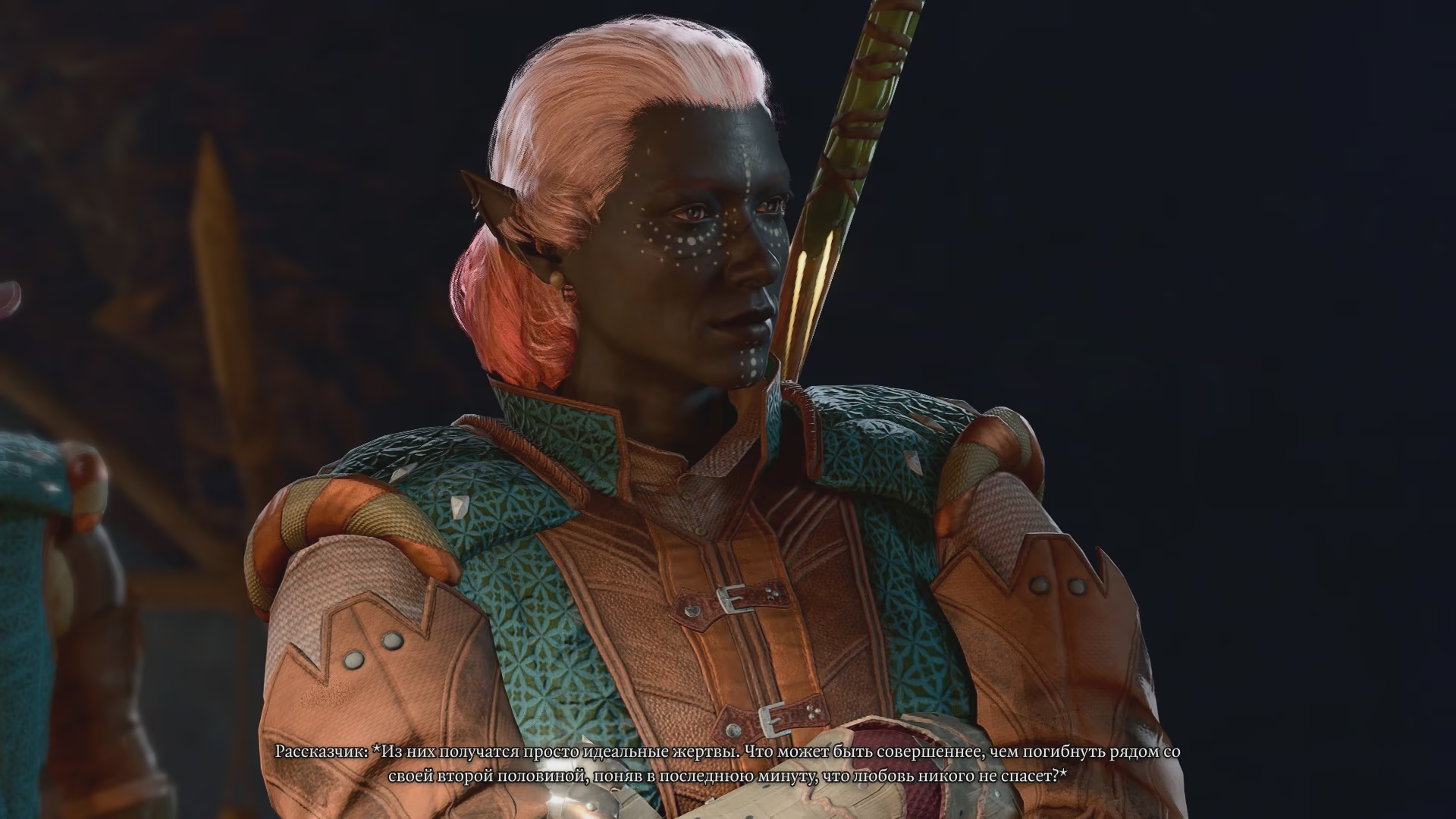
Соигрок застрял, не мог перепрыгнуть через пропасть сам. Логика: надо допрыгнуть до него и скастовать на него усиленный прыжок. Сердце: скастовать на него терновый хлыст и притянуть к себе.
Побеждает сердце, и фокус почти удается, но чуток не рассчитал расстояние, и соигрок падает в пропасть. Воскрешаю его свитком, дико гогоча.
В принципе, из ловушки его вытащили.
*
Пробежать кошкой мимо и сбросить дикий облик? А, может, пробегая цапнуть когтями соигрока за жопу?
*
Спокойно подождать, пока соигрок договорится? А, может, пойти воровать и убивать тех, с кем он договаривается, пока он занят и не видит?
sad axolotl boosted

 — Open image attachment 1 of 1
sad axolotl boosted

Replying to @cadey@pony.social
@cadey@pony.social with alt text
 — Open image attachment 1 of 1
Replying to @danilasch@vivaldi.net
@danilasch@social.vivaldi.net так и хорошо, когда у человека поспокойнее.
@omgitsmishenka@mastodon.ml
Replying to @minnidia@mastodon.ml
@minnidia@mastodon.ml этот поддерживает в пожеланиях
sad axolotl boosted

Webb's View of M64
Image Credit: NASA, CSA, ESA, F. Belfiore (ESO), J. Lee (STScI), A. Leroy (OSU), and D. Thilker (JHU); Processing: G. Kober (NASA/Catholic University)
Explanation: Sometimes where Hubble finds darkness, Webb sees light. An example is today’s composite images of Messier 64 (M64), a nearby spiral galaxy of many names. The dark band of dust partially blocking its bright core earned it the moniker “the Black Eye Galaxy.” Webb’s Mid-InfraRed Instrument (MIRI) sees that dust, shown in red, as it absorbs and re-emits light from surrounding newborn stars. These young stars are embedded in pink star-forming regions in the Hubble-only image. M64’s inner and outer gas regions counter-rotate, creating regions of increased star formation where the two gas “currents” meet and compress. A merger between M64 and a smaller galaxy was likely the cause of the opposing motion of the outer gas. Spiral galaxies were once thought to have peaceful histories. M64 was key evidence that spiral galaxies, including the Milky Way, can and do experience mergers. Webb’s view of M64 will tell astronomers about the structure, motion, and composition of the galaxy’s dust and add context to the galaxy’s merger history and evolution.
https://science.nasa.gov/image-article/apod-2026-september-16-webbs-view-of-m64/ #apod
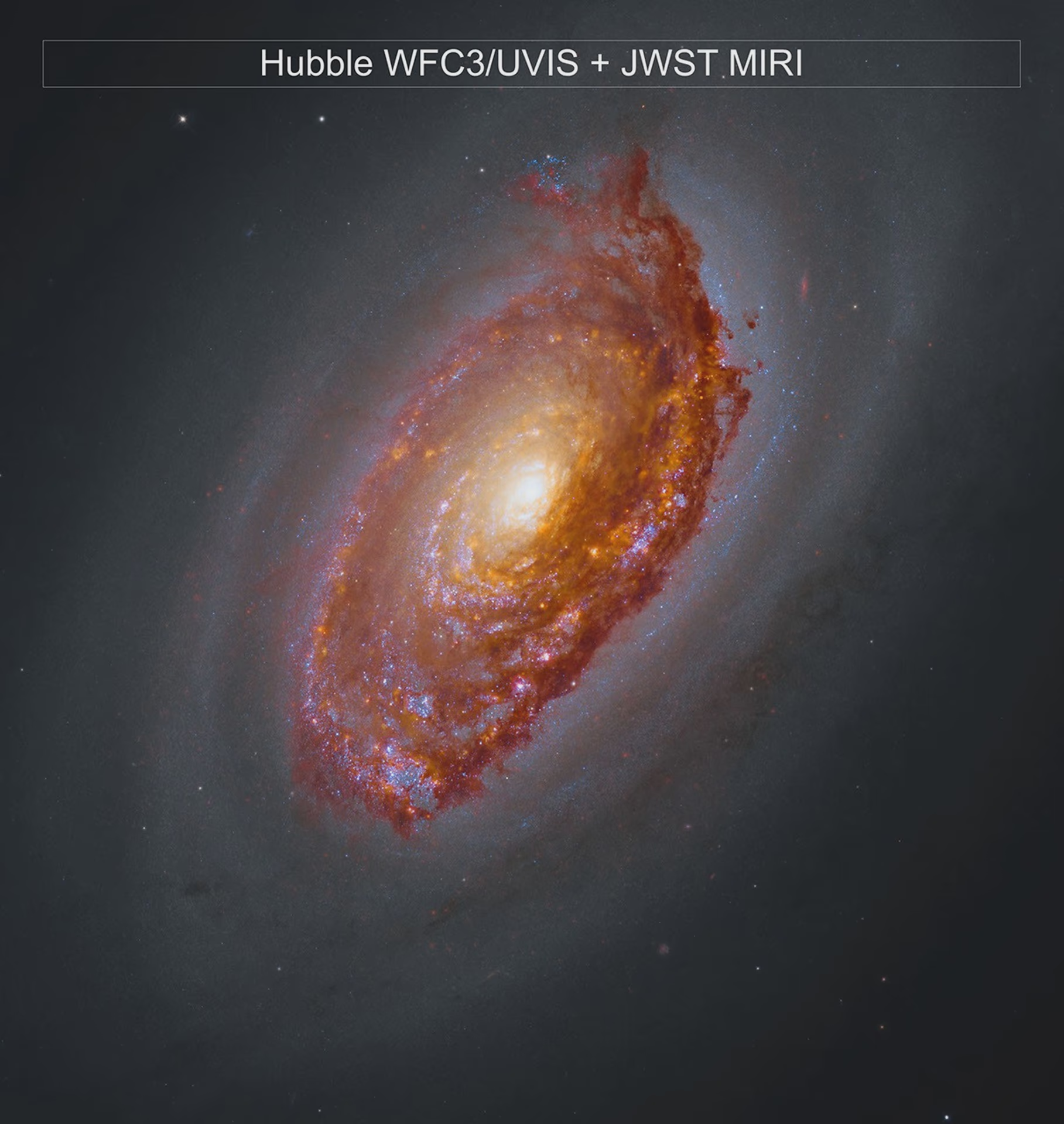 — Open image attachment 1 of 1
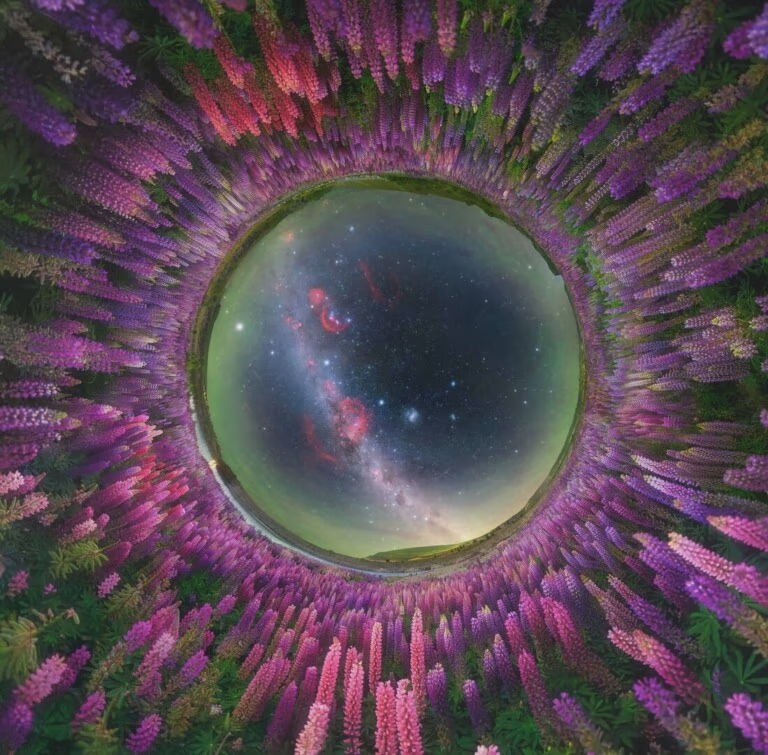
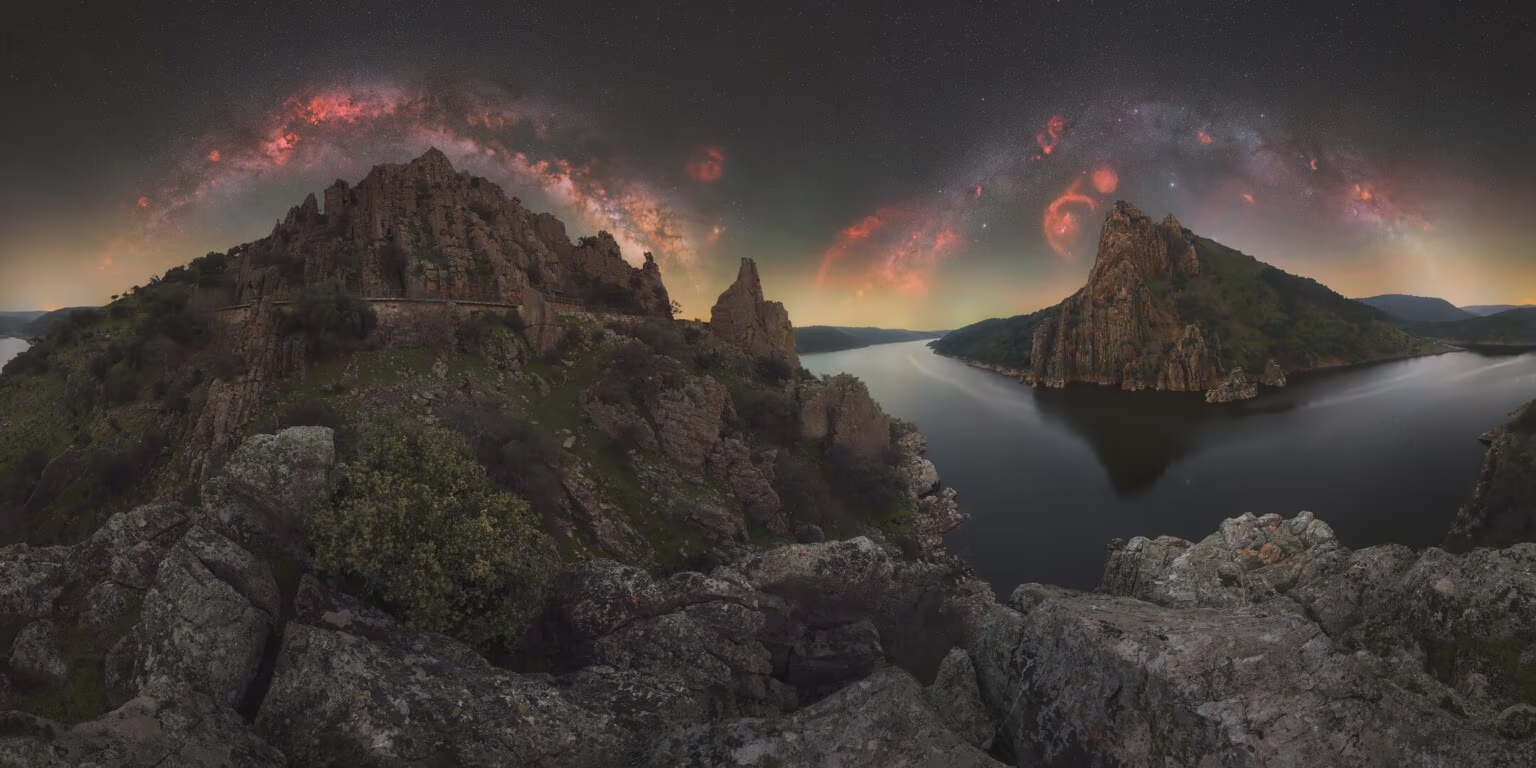
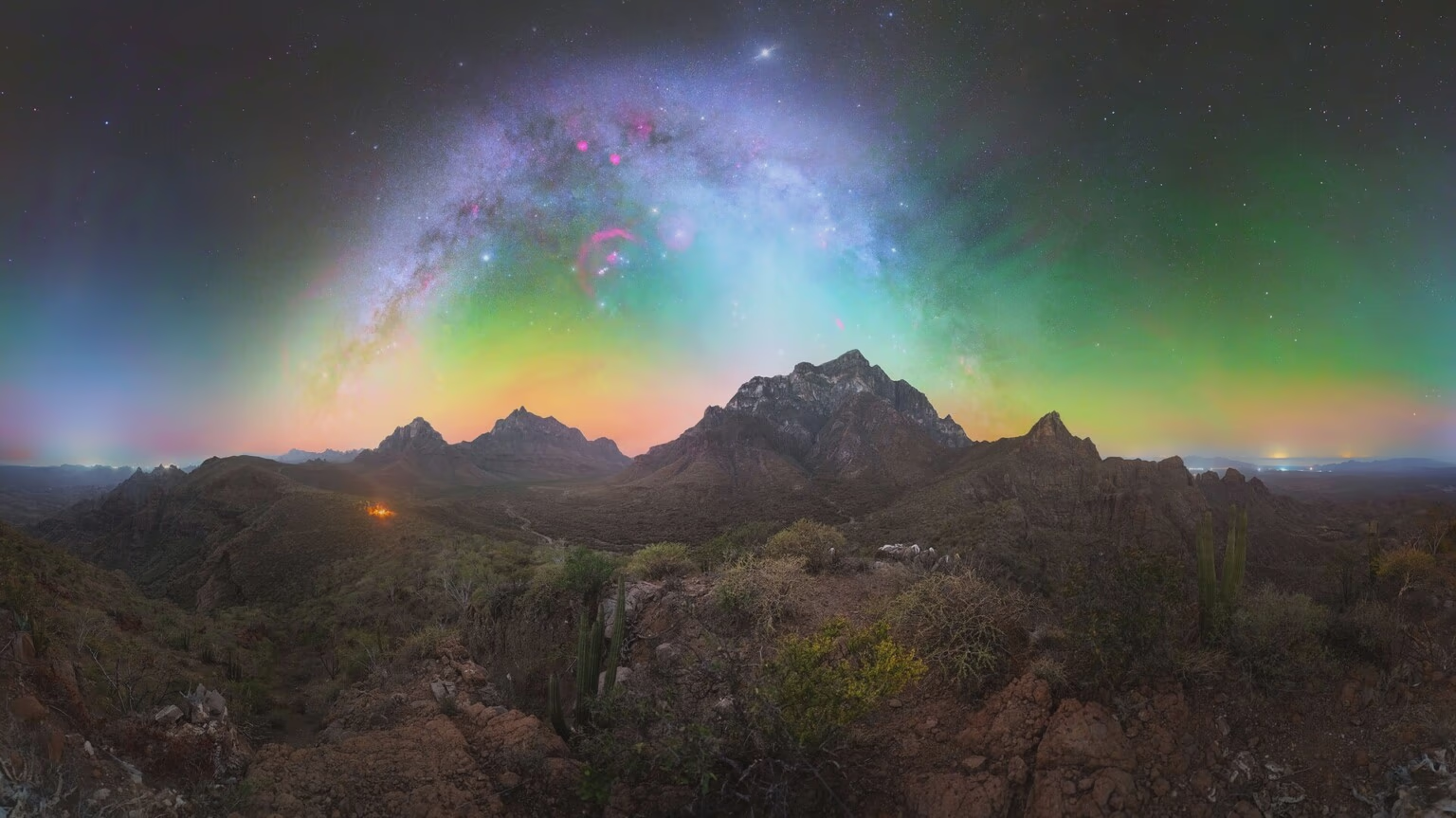
А вот тут фотографии Milky Way Photographer of the Year 2026 показывают.