

Исследователи из США и Канады проанализировали данные 25 человек и их 38 собак, собранные в течение четырех недель, чтобы выяснить, как они влияют на ночной сон друг друга. Оказалось, что собаки значимо не влияли на продолжительность и качество сна человека, даже если человеку казалось, что собаки мешают ему спать. Датчики активности показывали, что человек и собаки обычно двигались во сне в одно и то же время, но чаще человек начинал двигаться первым. То есть именно владелец будил собаку, а не наоборот.
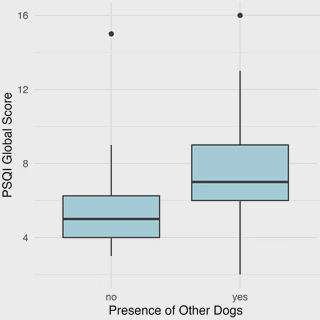 journals.plos.orgWho is disrupting whom? Examining the nighttime activity patterns of humans and their dogsFew studies have examined the nighttime dynamic between humans and dogs, but existing research suggests dogs can disrupt human sleep. In this study, we examined the nighttime activity of 25 Canadian participants, totaling 38 human-dog pairs using accelerometers and survey data. We used linear mixed effects models to assess the drivers of variability in both human sleep and dog nighttime activity, and a generalized linear model to assess the effects of demographic variables on self-reported sleep quality. None of the variables significantly affected objective sleep measures in humans or dog nighttime activity. Dog sleeping location did not affect human perceived sleep quality, but having multiple dogs was associated with poorer subjective sleep (p = 0.042). Human and dog nighttime activities were found to be significantly correlated. Additionally, we conducted a time series analysis to determine lagged correlations between human and dog activities within five minutes. Among the 61% dyad