posted in Technology

Open-source stealth USB hides an encrypted partition behind an 8GB decoy drive Phantom Drive appears as a regular USB stick until you create a text file to unlock the hidden data

www.tomshardware.com/pc-components/usb-flash-drives/open-source-stealth-usb-hides-an-encrypted-partition-behind-an-8gb-decoy-drive-phantom-drive-appears-as-a-regular-usb-stick-until-you-create-a-text-file-to-unlock-the-hidden-data
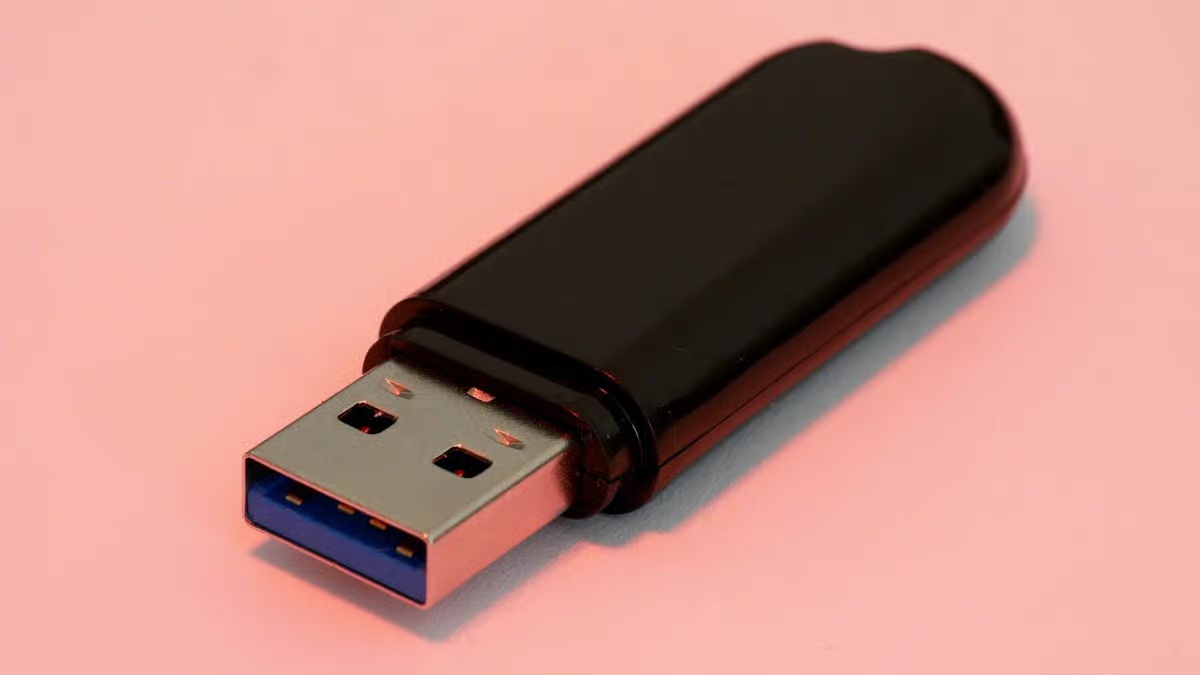
The PhantomdriveTom's HardwareOpen-source stealth USB hides an encrypted partition behind an 8GB decoy drive — 'Phantom Drive' appears as a regular USB stick until you create a text file to unlock the hidden dataA trick to break the walls of hidden partitions.



Replying to @⁨unexposedhazard@discuss.tchncs.de⁩

No it isn’t. It will be treated like any other drive where encryption is nothing new. In fact, to look for a text file and then make something accessible means it is likely much easier to detect that something is off about it than regular encryption that just looks like random data. Whether it tries to hide it’s true storage capacity or boots its own internal OS to present storage, people often think they’re being clever when really they’re just making themselves stand out.

Replying to @⁨timewarp@lemmy.world⁩

Do you think TSA/CBP is going to check the flash data lines to see if the MCU is scanning the flash internally?

This isn’t a standard USB flash controller… You would need to break the casing and physically probe it to figure out that something was off as far as I can tell. It’s not like the MCU broadcasts that it is scanning to the USB port.

You would have to be hitting the stick pretty hard, not just a normal file scan to notice the timing being slightly too long in a small portion of the scans. The bigger problem would be that the flash drive would be brand-recognizable if it ends up being mass produced that they might auto-confiscate it, and of course the default file that it searches for being known.