I have to say I’m a bit worried he’s banking on receiving unlimited access to an insane level of surveillance data to use in the the $50B digital prison he’s building in Louisiana
I mean, like everything, the ultimate goal is privatize, control/eliminate competition and profit via exploitation.
Nobody chooses academia over industry for the money. They do it so they’re not forced to compromise their values under the thumb of some micromanaging nepo baby demanding results they want to believe no matter what the data actually says. Investors not inventors.
If you get rid of publicly funded research, you leave a lot of talented scientists with no choice. It’s either industry, leave the country, or leave science entirely and start a new career.
And keep in mind, this is in addition to what OMB already proposed to do to all federal funding. Maybe they plan to hand Republicans a get out of jail free card by actually stopping the Vought/OMB proposed changes to federal grants just before the deadline in October, then achieve the original goal anyway after the midterms.
The US research enterprise too heavily centers on elite research institutions, and fails individual researchers with bold ideas, suggests the White House Office of Science and Technology in a new report. The office recommends sweeping changes to where federal funding is spent and how it should be awarded.
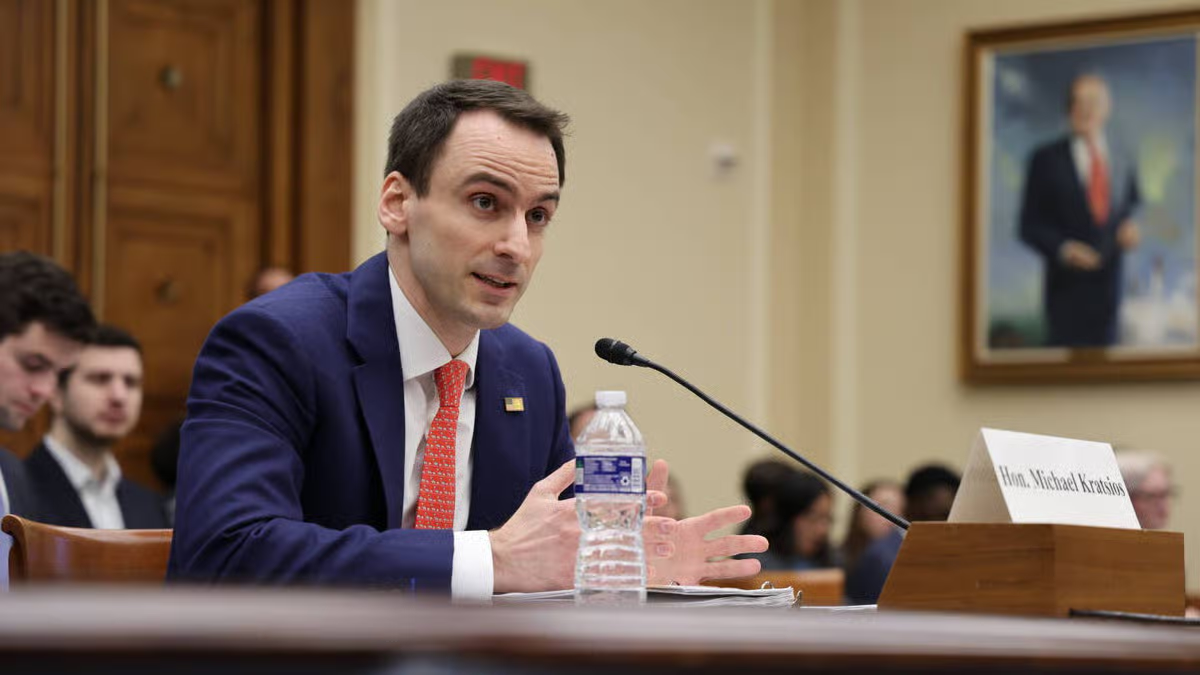
Released on July 21, the Science: A New Golden Age report seeks to update Vannevar Bush’s landmark 1945 report Science: The Endless Frontier for the modern era. In the report, OSTP Director Michael Kratsios argues that today’s scientific landscape — shaped by AI, global competition, and private-sector investment — requires a fundamental redesign of how the federal government funds research.
Also on July 21, Kratsios and White House Office of Management and Budget Director Russ Vought jointly published a memorandum on the Trump administration’s R&D budget priorities for fiscal year 2028. The memo instructs science agencies to incorporate the administration’s priorities into their forthcoming budget requests, as well as develop implementation plans within 90 days for a series of “R&D priority practices.” Those include:
Developing new research funding mechanisms;
Identifying and supporting top tech talent through, for example, early career and STEM-learning opportunities;
Boosting the “science of science-funding” to evaluate which programs have the greatest impact;
And collaborating with industry to drive greater private investment in R&D.
The memo directs agencies to rebalance their portfolios toward foundational research, and prioritize physical science over life science. Many of the administration’s priorities, including AI and nuclear fission, are dependent on computer science, physical science, and engineering, but the report notes that the latter two fields’ share of the federal research portfolio has declined over time, even as their strategic importance has grown.
I must confess to this not being in my wheelhouse at all. I just started reading about the. esterday and I’m very interested in them as a people empowerment middle finger to the oligarchy
No idea how realistic this is but I find the idea of people eventually using these to achieve complete data sovereignty very interesting.
Exploring cutting-edge data ecosystems: A comprehensive analysis
Data-driven innovation has recently changed the mindset in data sharing from centralized architectures and monolithic data exploitation by data providers (data platforms) to decentralized architectures and different data sharing options among all involved participants (data ecosystems).
Differences between the various data ecosystems are not clear, making it hard to choose the most suitable for each use case, negatively impacting their adoption. Since the domain is growing fast, a review of the state-of-the-art data ecosystem initiatives is needed to analyze what each initiative offers, identify collaboration prospects, and highlight features for improvement and open research topics. In this paper, we review the state-of-the-art data ecosystem initiatives, describe their innovative aspects, compare their technical and business features, and identify open research challenges. We aim to assist practitioners in choosing the most suitable data ecosystem for their use cases and scientists to explore emerging research opportunities.

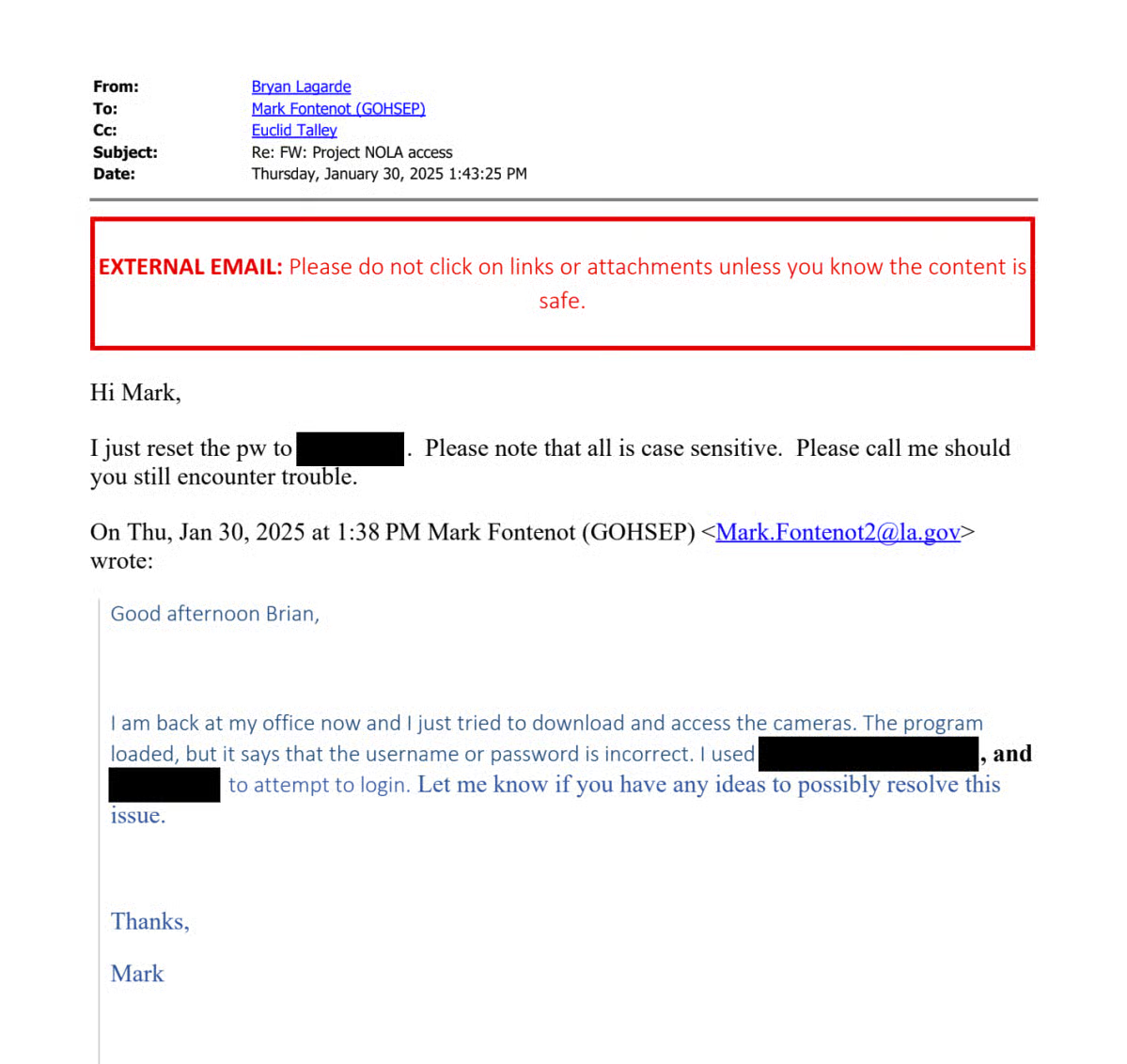 Insomniac TechnologiesJeff Landry’s Intelligence Chief is Spying on New Orleans with Project NOLAPublic records show GOHSEP’s Director of Intelligence was personally provisioned Project NOLA credentials. Nobody told the people being watched. On January 29, 2025, Mark Fontenot, Director o…