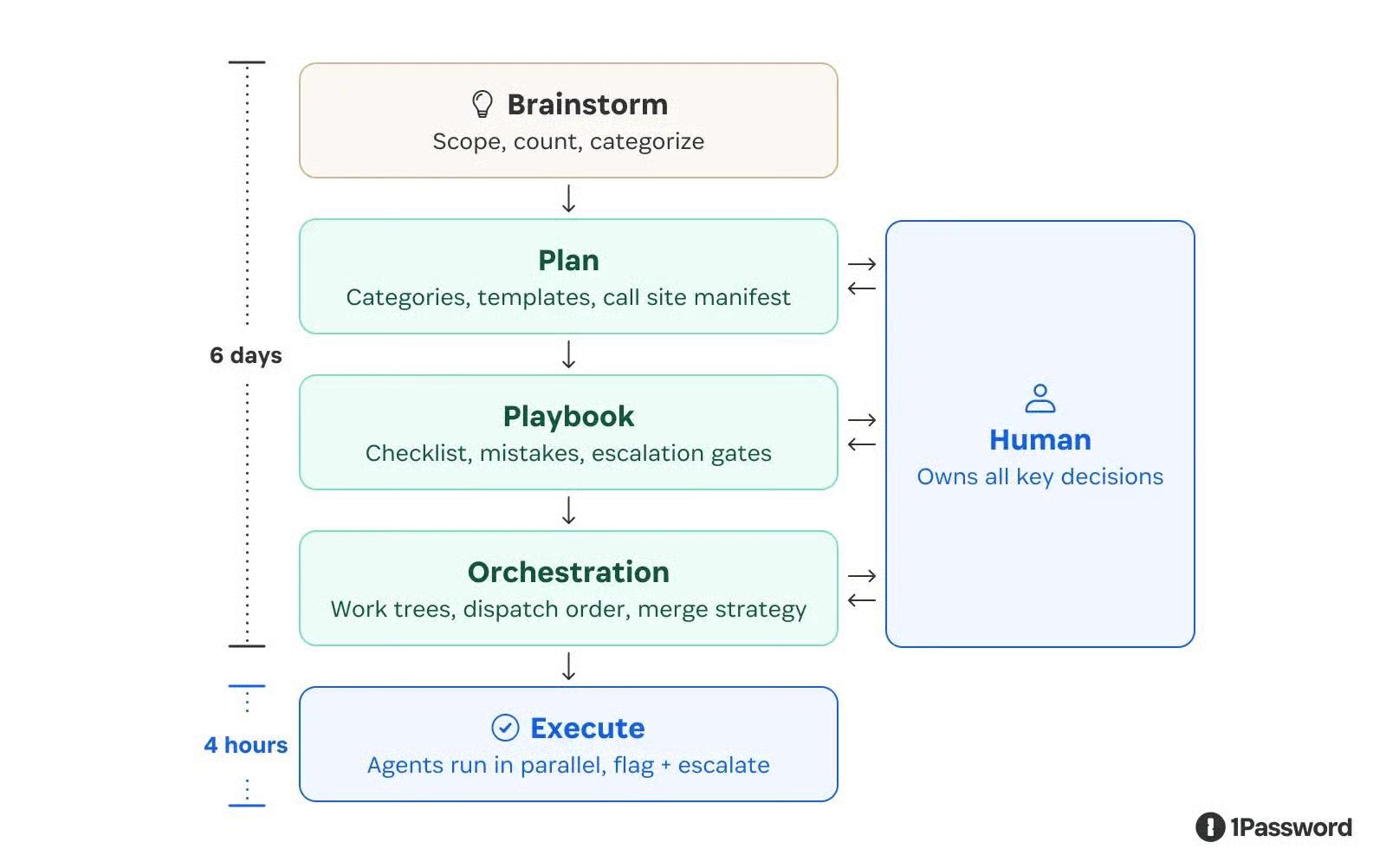
"The pattern that works is using agents to produce deterministic artifacts, then forcing execution through those constraints." Tido Carriero, VP of Engineering at Cursor.

At 1Password, we applied agentic tooling to B5, our multi-million-line Go monolith, to help plan and execute a production refactor. Here's what we learned: 1password.com/blog/what-we-lea

Replying to @⁨1password@1password.social⁩

We’ve heard the feedback clearly, and you all are right to ask hard questions when AI is involved in security products.

What matters here is being precise about what changed and what did not.

The systems involved were internal operational systems and supporting code, not customer vaults or the cryptographic systems that protect them. Your passwords, Secret Key, vault encryption, and private data were never exposed to AI models or opened up in any way.

Replying to @⁨1password@1password.social⁩

Our engineers used AI-assisted tooling the same way many teams use modern development tools: to help review, organize, and improve internal code. Every change was reviewed by engineers and went through our standard security and quality processes before being accepted.

The security model behind 1Password remains the same. We cannot see the contents of your vault, and neither can anyone else. That has not changed.