Replying to @Redacted@lemmy.world
Hm. Thanks, I’ll be using this and other instances for historical/other important posts that are only on Reddit for now.
Replying to @Redacted@lemmy.world
Hm. Thanks, I’ll be using this and other instances for historical/other important posts that are only on Reddit for now.
Replying to @Redacted@lemmy.world
does the ||reddit.com^$header=referer: fix still work? I can’t seem to get it this way
Replying to @kuiskaaja@lemmy.ml
I tried without uBlock Origin on my end and it did indeed work. I incorrectly assumed it was my vpn without properly verifying. Though CactusEcho said there were problems without the adblocker so it may be inconclusive.
Replying to @sunbytes@lemmy.world
Woaha. Why didn’t anyone think of this before you?
Replying to @kuiskaaja@lemmy.ml
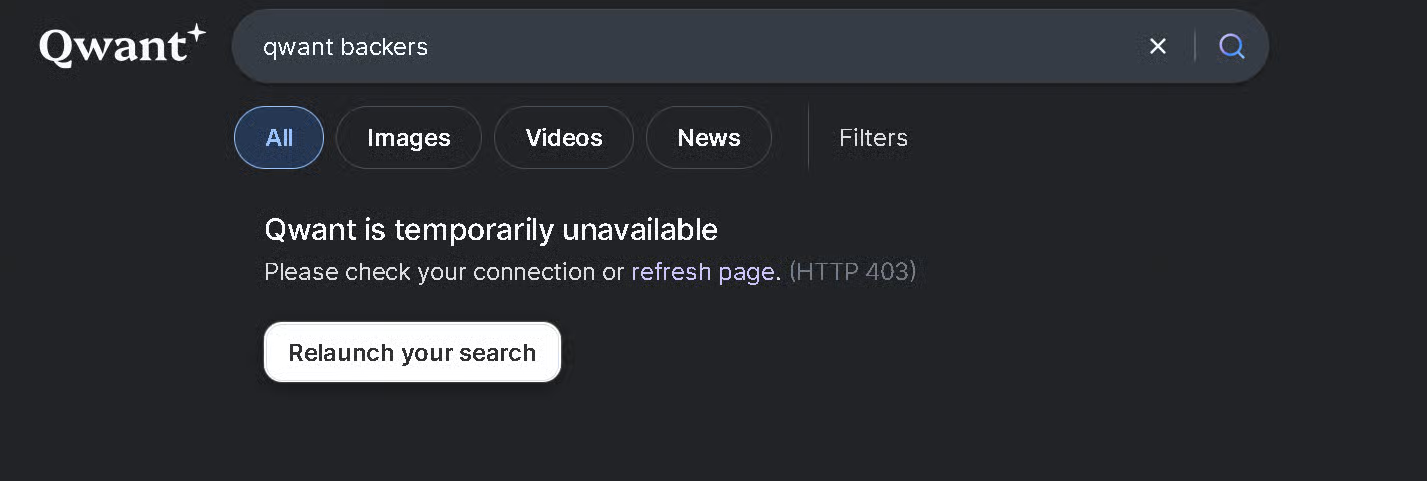
I wasn’t aware of Qwant. It seems to build its own index instead of relying on other providers (great), and has proper backing to be a viable competitor in something so big (the French government seems to endorse it; along with institutional use in EU parliament?).
I just tested it and unfortunately got a 403 however (FORBIDDEN). Though I was behind an endpoint of a very popular VPN for some testing, that sucks regardless.
Actually, before I could post this, I tried the search refresh and it worked somehow.
To test again I switched to another server of the same VPN provider (same selected country) and tried searching. Same error, which didn’t go away after doing the refresh. So they might have some sort of spam prevention measure which eases itself automatically, but I feel like it could definitely be implemented better if that’s the case.
Edit: Yep, if you sit on that 403 page for 5-6 minutes without doing anything and then hit the relaunch your search button, things work as intended afterwards.
Replying to @Seimhe@lemmy.world
I just tried Ecosia again after a long while (I last tried it around sometime in early 2020/21) and it seems a lot nicer and better than before. I’ll use it for a little bit then :$
posted in Technology
Google has started encrypting its search results' URLs with "goto?=" links for logged out sessions and/or scrapers ( 28 August, 2026 )
About a week or two ago, I started noticing that I could no longer copy the clean links for search result hits on Google. I thought it was maybe some quirk of a browser I was using, but today when trying to copy a link to a Youtube video, I realized it was actually rolled out globally (it seems).
Basically instead of getting a
https://youtube/. com/watch?v=-ed6UeDp1ek link now through google, (spaced out link to avoid AutoMod)
you will get
https://www.google.com/goto?url=CAES<rest-of-encrypted-blob-containing–versionByte-keyID-cipherText>
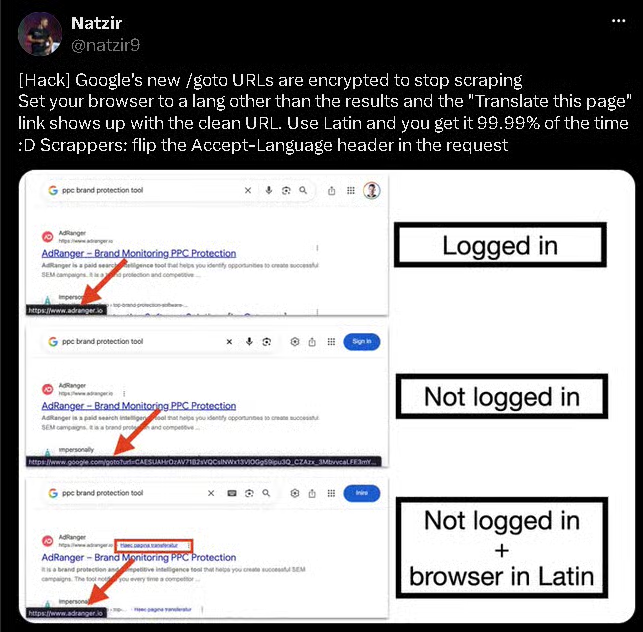
The article describes the change in technical detail, and mentions a fix, but the author has kept it private for now so Google doesn’t patch it up (like they probably will or have for this workaround relying on the “Translate Page” feature with a different Browser Language selection [Twitter Link, Aug 27]).
Why it will probably be patched:
Surprised there’s no post about it here already.
Only Hackernews article I could find (4 days ago):
news.ycombinator.com/item?id=49506338
Edit: It seems to matter a lot whether your network is deemed “spammy” or problematic by Google for the encrypted URLs to kick in, even if you’re logged out. Funnily enough my google searches went back to normal a few hours after I posted this. So a logged out session might get the regular, unencrypted links if your IP network has a good rating on Google’s end. Mine often runs into captchas and the like, so it makes sense why I’d be targeted by this new change.
Then again, I just tested on my mobile cellular on a logged out search, and I still have the goto’s. Can’t really control that.
Replying to @HubertManne@piefed.social
I think so. I’m realizing the article is actually very confusing.
katu.com/…/speeding-in-portland-some-of-the-city-…
Since 2024, the Portland Bureau of Transportation (PBOT) has used “Rest in Red” technology along Powell Boulevard between Southeast 21st and 33rd avenues. The system uses sensors to detect approaching vehicles. Drivers traveling at or below the speed limit receive a green light, while speeding drivers face a red light.
The system operates only at night.
www.portland.gov/transportation/…/rest-red#toc-re…
Traffic signals with “rest in red” technology can display red lights in all directions during late night and early morning hours when traffic volume is light rather than cycling through green, yellow, and red the way they do normally during the day.
When a person driving a vehicle approaches a “rest in red” intersection, the traffic signal may stay red until it detects that the driver reached the intersection. Assuming no cross-traffic is approaching, the traffic signal will turn green to benefit people that are driving within the speed limit.
Other traffic signal technology examples
PBOT uses other types of traffic signal technology to encourage safe travel speeds. For example, if a person drives 13.5 mph downtown, they are more likely to catch green lights and travel in groups with other vehicle traffic.
Similarly, PBOT has deployed special signal timing along N Vancouver Avenue so people biking don’t repeatedly get stopped by red lights.
How the technology works
Detection
At most traffic signals, PBOT uses smart sensors to detect approaching cars to determine when to give a green light. PBOT currently uses “microwave detection” mounted on traffic signal mast arms. “Microwave detection” can locate approaching traffic from several hundred feet away.
Signal controllers
Signal controllers are the “brains” of the traffic signal that make “rest in red” work. During peak hours, signal controllers collect and communicate important information. During off-peak hours, signal controllers with the right detection can allow for different types of operation to minimize speeding.
Newer traffic signals are more likely to include smart detection technology and upgraded signal controllers. However, many traffic signals across the city are aging out and have limited or no detection as well as signal controllers which haven’t been upgraded.
PBOT plans to update traffic signals as needed and funding becomes available to match city policy.
Still confusing, but I think they’re implementing both, over time.
Supposedly Oregn State University is or will be conducting research on its effectiveness in reducing crashss, but I couldn’t find any info from them. Maybe that will clear things up.
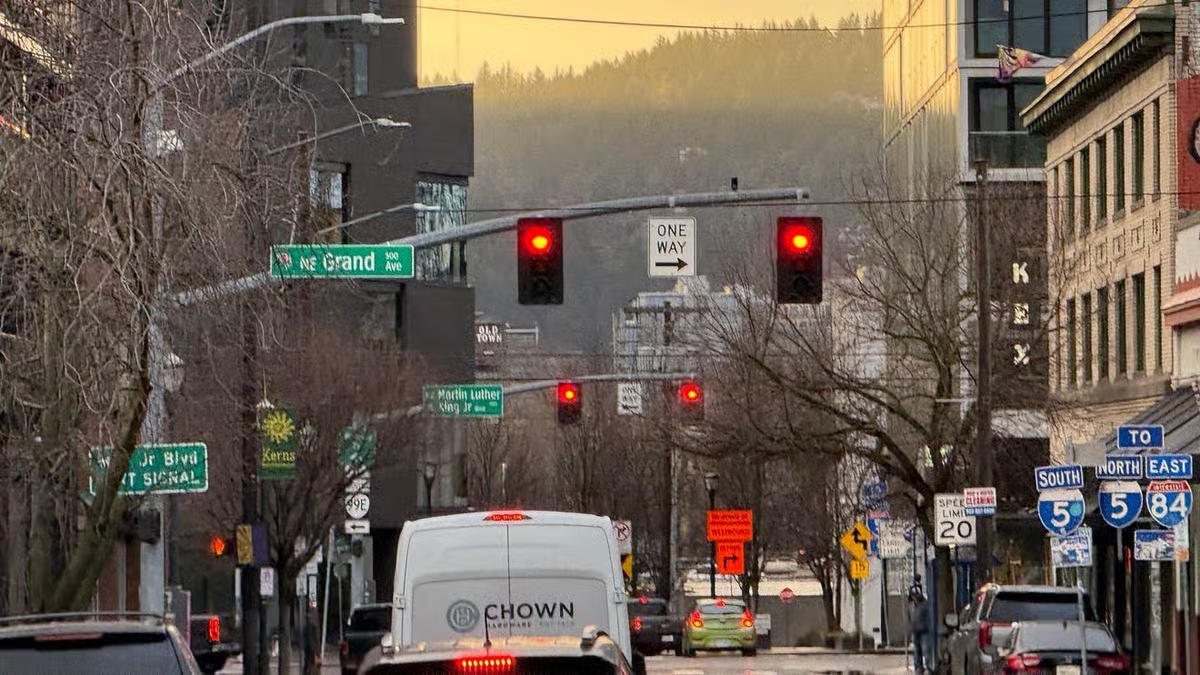 KATUSpeeding in Portland? Some of the city's traffic lights are designed to stop youDrivers traveling on Southeast Powell Boulevard at night may notice more red lights as Portland expands a traffic-calming system designed to reduce speeding.
Replying to @LifeInMultipleChoice@lemmy.world
I had thought this too, but in the article they mentioned speed sensors that track the speeds of vehicles in one (maybe two?) of these cities. So I think it’s a mix of both of those things, with them probably preferring the preferential approach.
Some US cities begin rewarding careful drivers with fewer red lights by giving early greens to those driving under or at the speed limit
apnews.com/article/rest-red-reward-drivers-portland-albuquerque-bcec5e0fe91dcaaaeb8f60e866ff7a37Seems like I just got hit with it too today or yesterday, and it was being rolled out since about a month ago. Sad.
Here’s a hackernews post on it (3 days old):
news.ycombinator.com/item?id=49326106