@glasspusher @failedLyndonLaRouchite I like 15N and I cannot lie.
No peer reviewer can deny.
When a little plant eats that heavy kinda N
Get a high-end publication!
Environmental scientist and clammunicator
Provider of #ClamFacts
@glasspusher @failedLyndonLaRouchite I like 15N and I cannot lie.
No peer reviewer can deny.
When a little plant eats that heavy kinda N
Get a high-end publication!
@dcr a good start is rescuing one of those little Venus flytraps in domes at the hardware store. They are actually pretty easy to keep with the right specific conditions. Happy to advise, and lots of good info on the web!
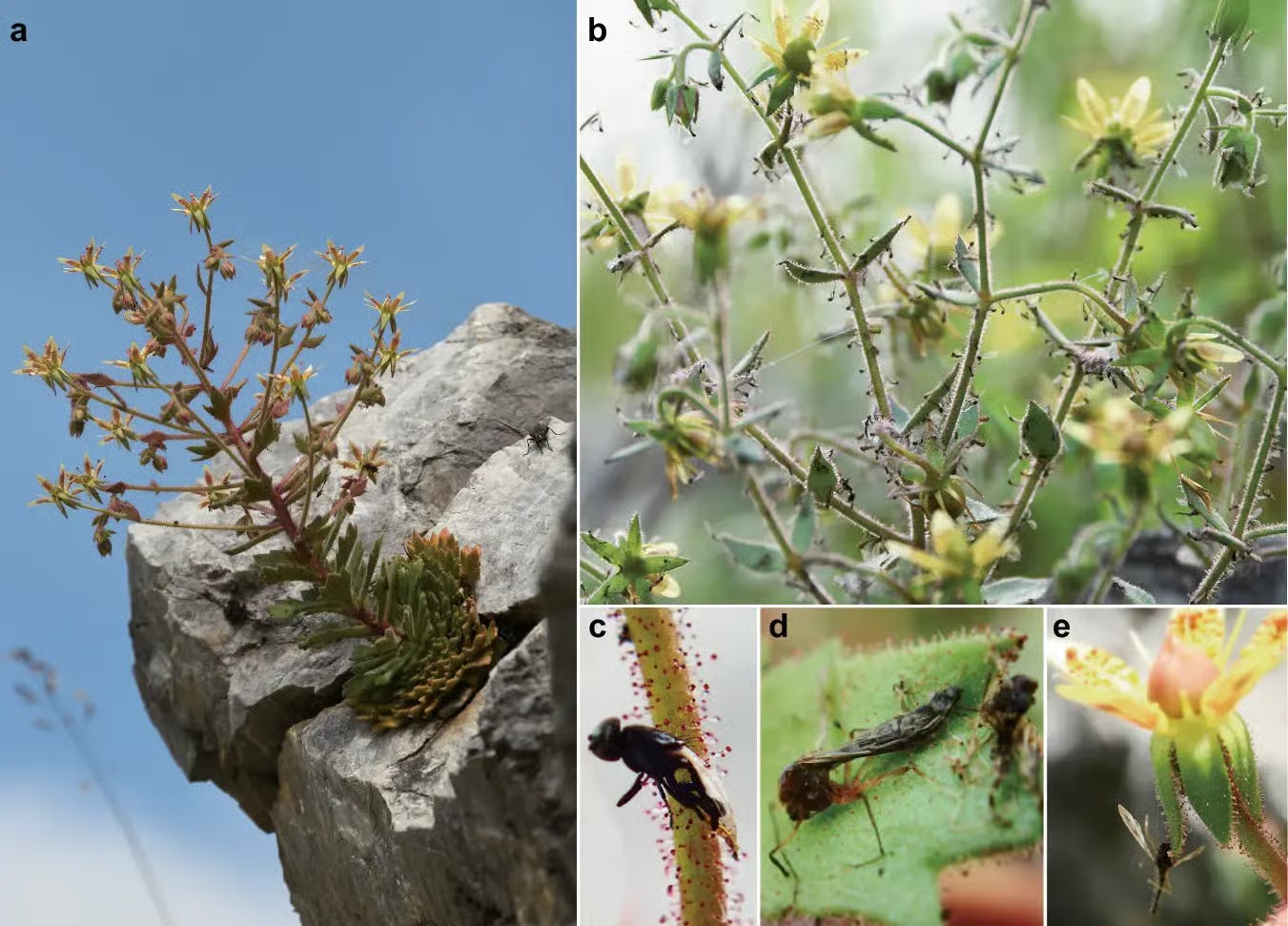
Researchers have confirmed another member in the small but growing club of carnivorous plants, Saxifraga candelabrum! These little herbs live in mountains of Yunnan and Sichuan in China. Their genus was hypothesized by Darwin (a noted carnivorous plant stan) to eat insects based on their habit of trapping bugs in sticky hairs, but catching bugs doesn't necessarily mean they're *eating* them. But we have science to prove it!
In their new study, the team confirmed plants that catch more insects grow more flowers. They make extra good-smelling volatile compounds from their flowers especially to attract more bugs! This is an unusual strategy since most carnivore plants make long flower stalks isolated from their traps, since it's not profitable to kill your pollinators! But here, the researchers found large insects aren't caught by the hairs and are able to successfully pollinate the flowers, while little flies are grabbed and eaten.
The researchers found enzymes that digest the prey and also were able to trace the digestion through nitrogen isotope tagging! Much of the assimilated nitrogen from prey ended up in the flowers.
Lastly, the researchers found parts of the genome of S. candelabrum had been expanded relative to its close non-carnivorous relatives, in ways paralleling other carnivorous plant species like sundews.
As a carnivorous plant lover myself, it's fascinating to find a plant that evolved to give its flowering a leg up by using the flowers themselves as a bug trap. A somewhat risky tightrope to walk, enabling it to thrive in a nutrient poor alpine environment! Overall, a slam-dunk identification of carnivory that sounds like it'll stick!