


sad axolotl :capybara_heart:

View original page

@Chia@lamp.leemoon.network · Joined ⁨Jul⁩ ⁨2026⁩

Tomorrow comes.

I post popular science news and memes that I find interesting. I also write about work, video games, and life. Currently interested in Open Science and Citizen Science.

Приношу научно-популярные новости и мемы, которые мне кажутся интересными, пишу о работе, видеоиграх и просто о жизни. Текущие рабочие интересы: открытая наука, гражданская наука и научное волонтерство.

Always remember: we need to be kind, especially when we don't know what's going on.

Ru | Eng
​:blobfoxbuhanka:​

Посты про игры

https://dybr.space/blog/liesliasau

Новый биотех-способ очистки почвы от гербицидов
 
Имазамокс - один из наиболее широко используемых гербицидов имидазолинонового класса. Он эффективно подавляет рост сорняков, но его стойкость в почве и способность накапливаться делают его серьезной экологической проблемой. Химические методы очистки дороги и не всегда эффективны, а биологические - с использованием микроорганизмов, способных разлагать остатки гербицидов, — считаются одним из наиболее перспективных подходов. 
 
Ученые Института Фаворского (ФИЦ ИрИХ СО РАН) выделили 29 штаммов микроорганизмов из почв, на протяжении многих лет обрабатывавшихся гербицидами на основе имазамокса. Среди них отобрали девять наиболее активных деструкторов — шесть штаммов микромицетов и три штамма бактерий, способных снижать концентрацию гербицида в среде на 54-55% за короткое время.  
Важно: в литературе до сих пор в основном сообщали о бактериях-деструкторах имидазолиновых гербицидов. 
 Однако в этом исследовании именно грибы - в первую очередь представители родов Trichoderma и Penicillium — показали высокую эффективность деградации имазамокса. Это открывает новые возможности для создания биопрепаратов на основе мицелиальных грибов, которые могут быть использованы для очистки сельскохозяйственных земель.


sad axolotl :capybara_heart: boosted

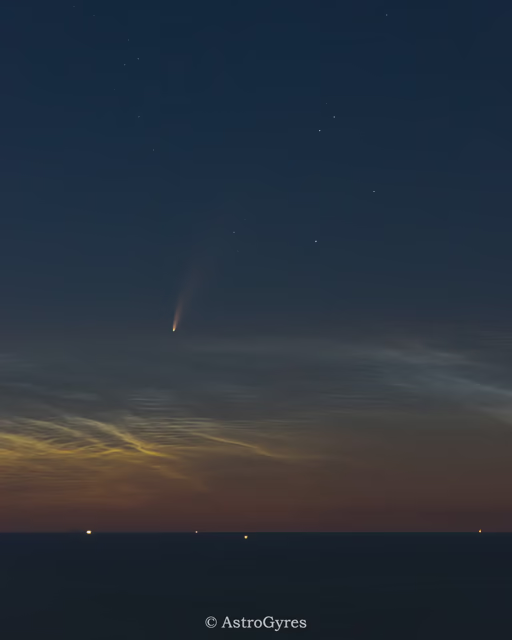
Comet NEOWISE Rising Over the Adriatic Sea
Image Credit & Copyright: Paolo Girotti

Explanation: This sight was worth getting out of bed early. Just over four years ago, Comet C/2020 F3 (NEOWISE) rose before dawn to the delight of northern sky enthusiasts awake that early. Up before sunrise on July 8th, the featured photographer was able to capture in dramatic fashion one of the few comets visible to the unaided eye this century, an inner-Solar System intruder that has become known as the Great Comet of 2020. The resulting video detailed Comet NEOWISE from Italy rising over the Adriatic Sea. The featured time-lapse video combines over 240 images taken over 30 minutes. The comet was seen rising through a foreground of bright and undulating noctilucent clouds, and before a background of distant stars. Comet NEOWISE remained unexpectedly bright for over a month, with its ion and dust tails found to emanate from a nucleus spanning about five kilometers across.

https://science.nasa.gov/image-article/apod-2026-september-13-comet-neowise-rising-over-the-adriatic-sea/ #apod

Comet in the sky low to the horizon above the clouds. — Open animated image attachment ⁨1⁩ of ⁨1⁩
Comet in the sky low to the horizon above the clouds.GIF

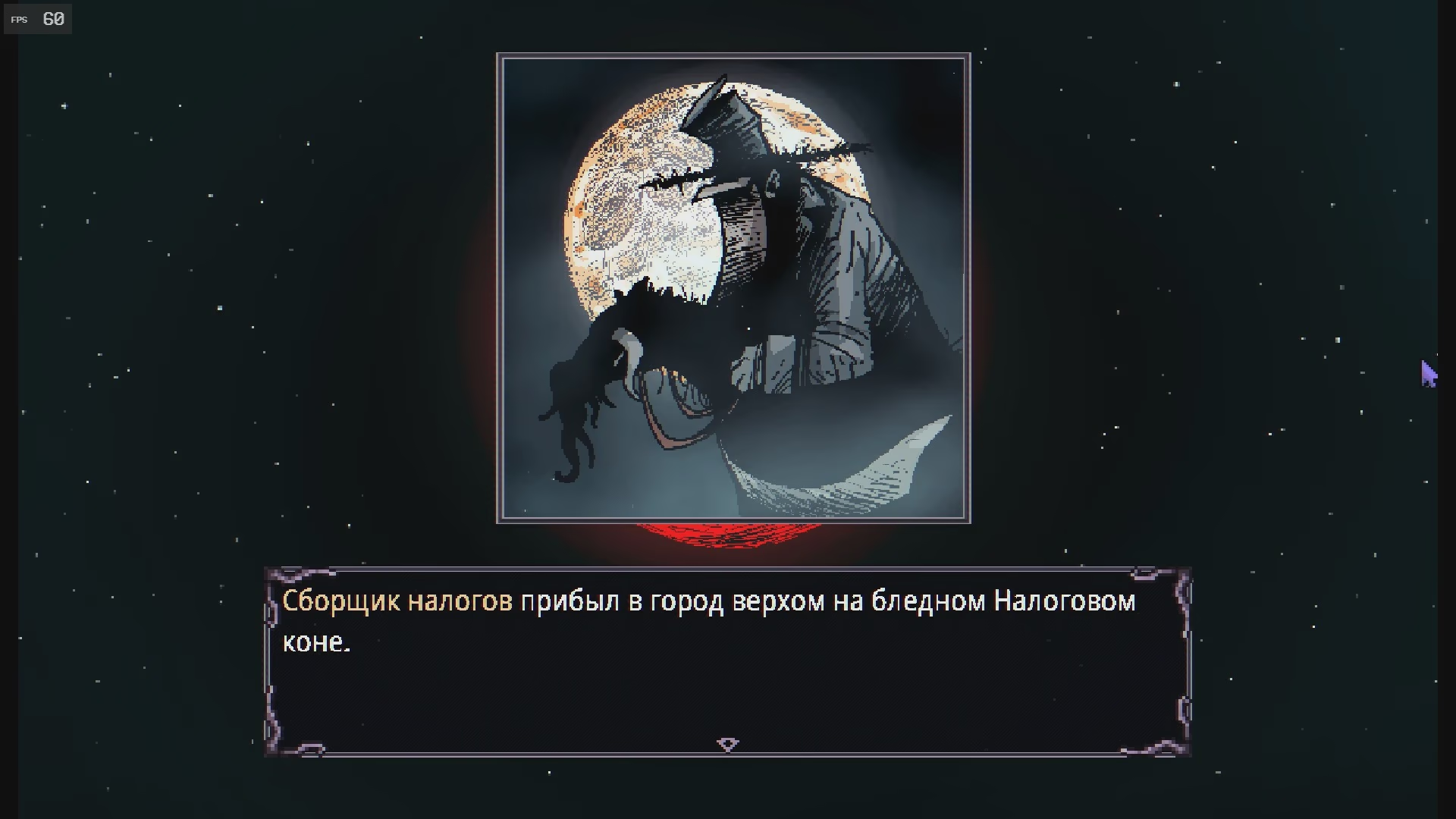
...БГ3 выкинула из коопа спустя 7 часов 25 минут игры с сообщением, что время подключения к серверу истекло. Штош, теперь мы знаем время, после которого игра скажет "да вы охуели, пора жрать и спать"

sad axolotl :capybara_heart: boosted

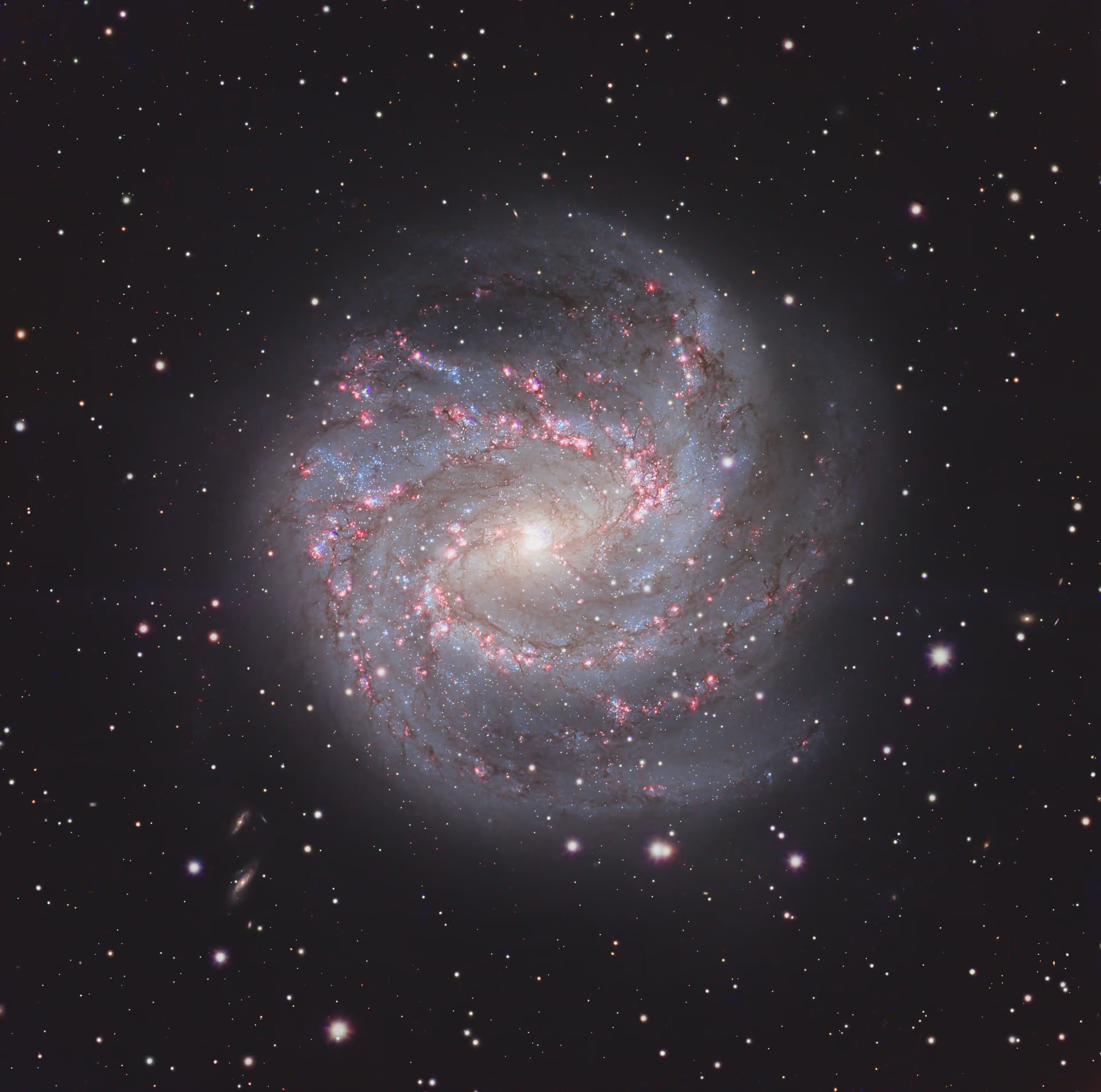
M83: The Southern Pinwheel
Image Credit & Copyright:: Aldo Zanetti

Explanation: Beautiful and bright spiral galaxy M83 lies some twelve million light-years away, near the southeastern tip of the very long constellation Hydra. Prominent spiral arms traced by dark dust lanes and blue star clusters lend this galaxy its popular name, the Southern Pinwheel. Still, reddish star forming regions that dot this cosmic pinwheel's spiral arms have suggested another nickname, the Thousand-Ruby Galaxy. A mere 40,000 light-years across, smaller than the Milky Way, M83 is a member of a group of galaxies that includes active galaxy Centaurus A. In fact, the core of M83 itself is bright at x-ray energies, showing a high concentration of neutron stars and black holes left from an intense burst of star formation. This sharp, groundbased telescopic view also features foreground Milky Way stars and distant background galaxies.

https://apod.nasa.gov/apod/ap260911.html #apod