This free font can trick AI scrapers into swallowing gibberish instead of your content
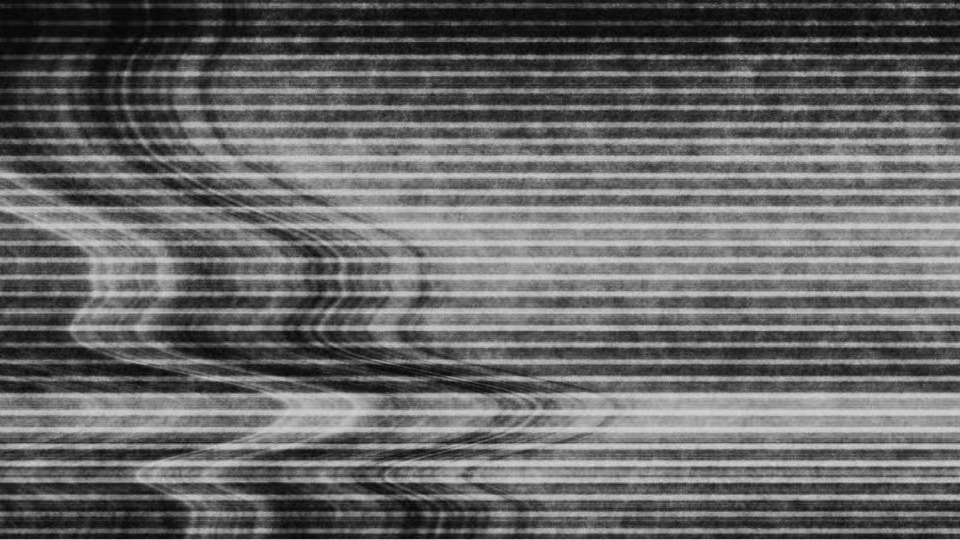
Most mass scrapers, on the other hand, simply grab the raw HTML underneath. ShieldFont exploits this difference through an automated process called OpenType glyph substitution.
That said, because the whole defense rests on scrapers reading code rather than screens, taking a screenshot of a shielded page and running OCR on the image can still recover the real words.
Screen readers used by blind readers also work from the code, so they read the decoys aloud. ShieldFont ships with a beta feature that provides those readers with the real text instead.
Flock misread license plates in 71% of the alerts it sent to police in one California town
In 2023 and 2024, Flock sent 1,427 alerts to the Roseville [CA] Police Department.
Roseville police found that Flock misread license plates in 71% of those alerts.
Max Isaacs, director of technology law and policy with the Policing Project at New York University’s School of Law, described Roseville’s misread data as “stunning.”
“A 71% misread rate is really beyond the pale,” he told Business Insider, referring to Roseville’s reported error rate for stolen and felony vehicle alerts. He added that “in the absence of concrete rules that directly address the problem of misreads, this technology is not safe to be deployed in communities.”
U.S President FCC faces blowback in attempt to police speech on broadcast TV: “Chilling message to all broadcasters: carry speech we don’t like at your peril.”
The Bayeux Tapestry: how optical techniques have let this artwork come home
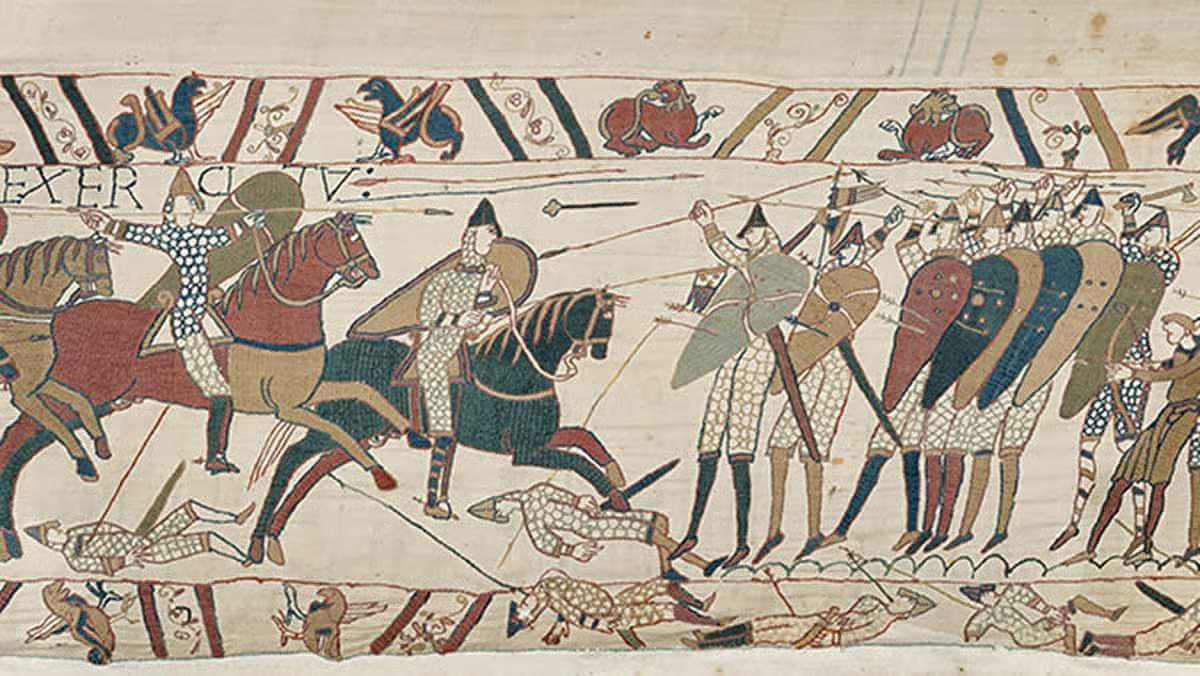
Researchers in France, led by Stéphane Le Mouélic from Nantes University, who originally did a PhD in astrophysics, have also used computer software to combine more than 440 overlapping 2D photos taken from multiple angles to create a detailed 3D model of the Bayeux Tapestry (J. Cult. Heritage 71 211).
It digitally “irons out” all the sags and wrinkles in the line fabric, recreating the original, “flat” tapestry and allowing the original physical shape of the artwork to be revealed for the first time. The 3D model can be viewed for free at the Bayeux Museum website, allowing historians, researchers and members of the public to study it without having to handle the delicate material.
Physics-based techniques have also allowed us to deal with the fact that parts of the fabric have been repaired over the last 900 plus years. Some of those repairs used non-authentic dyes and colours, while others covered up the original stitching. But using computer vision and image processing, threads that were added later can be subtracted digitally, providing a clearer, corrected view of what the original tapestry looked like.
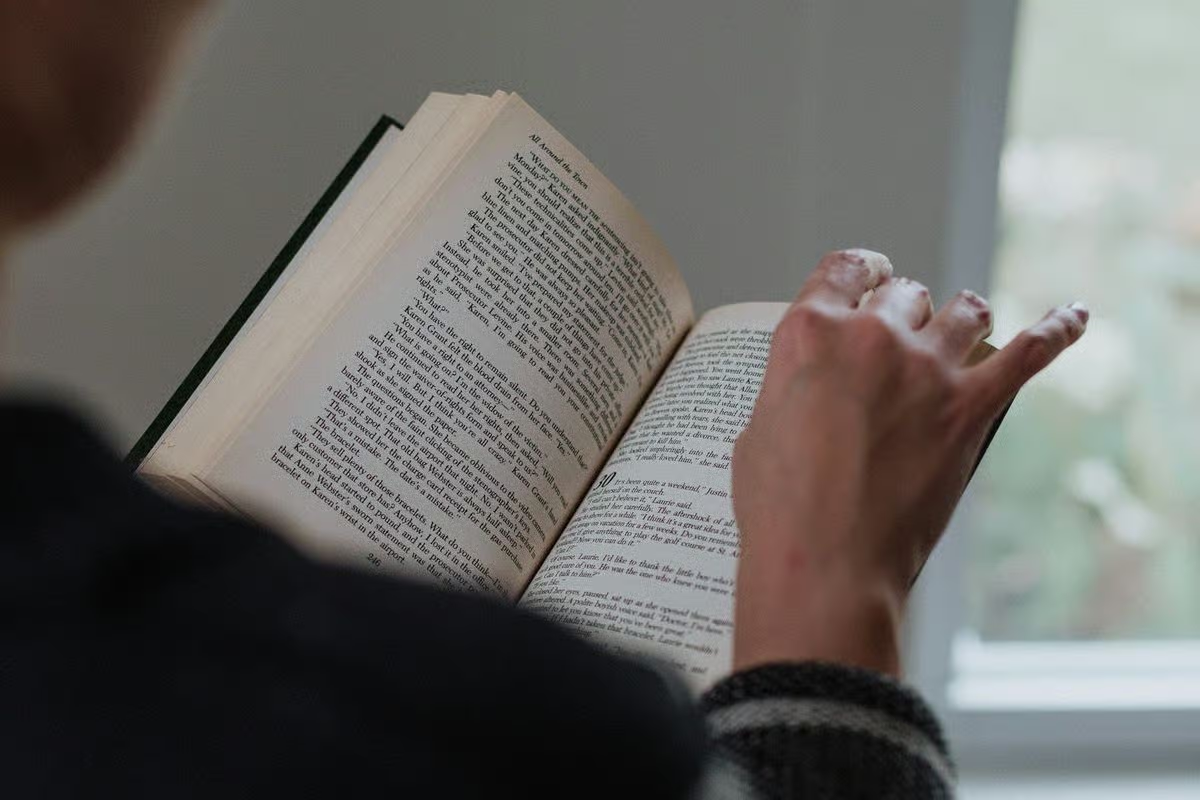
Company Offering Printed Books to Train AI Stops After 404 Media Coverage
Citing backlash, ISBNdb removed its webpages about training AI, denied ever buying, scanning, or selling a book for AI training, and said the site was a “test of market interest.”


 Consumer Rights WikiBMW Spider-Man in-car advertisingOn July 27, 2026, BMW began delivering a full-screen Spider-Man: Brand New Day movie advertisement to the dashboard Control Display (the car's main center screen...