U.S President FCC faces blowback in attempt to police speech on broadcast TV: “Chilling message to all broadcasters: carry speech we don’t like at your peril.”
The Bayeux Tapestry: how optical techniques have let this artwork come home
Researchers in France, led by Stéphane Le Mouélic from Nantes University, who originally did a PhD in astrophysics, have also used computer software to combine more than 440 overlapping 2D photos taken from multiple angles to create a detailed 3D model of the Bayeux Tapestry (J. Cult. Heritage 71 211).
It digitally “irons out” all the sags and wrinkles in the line fabric, recreating the original, “flat” tapestry and allowing the original physical shape of the artwork to be revealed for the first time. The 3D model can be viewed for free at the Bayeux Museum website, allowing historians, researchers and members of the public to study it without having to handle the delicate material.
Physics-based techniques have also allowed us to deal with the fact that parts of the fabric have been repaired over the last 900 plus years. Some of those repairs used non-authentic dyes and colours, while others covered up the original stitching. But using computer vision and image processing, threads that were added later can be subtracted digitally, providing a clearer, corrected view of what the original tapestry looked like.
Company Offering Printed Books to Train AI Stops After 404 Media Coverage
Citing backlash, ISBNdb removed its webpages about training AI, denied ever buying, scanning, or selling a book for AI training, and said the site was a “test of market interest.”
ASML shares plunge following reports of Chinese breakthrough in chip manufacturing. China has begun producing advanced chip manufacturing equipment, the very same that made ASML a major player
The US research enterprise too heavily centers on elite research institutions, and fails individual researchers with bold ideas, suggests the White House Office of Science and Technology in a new report. The office recommends sweeping changes to where federal funding is spent and how it should be awarded.
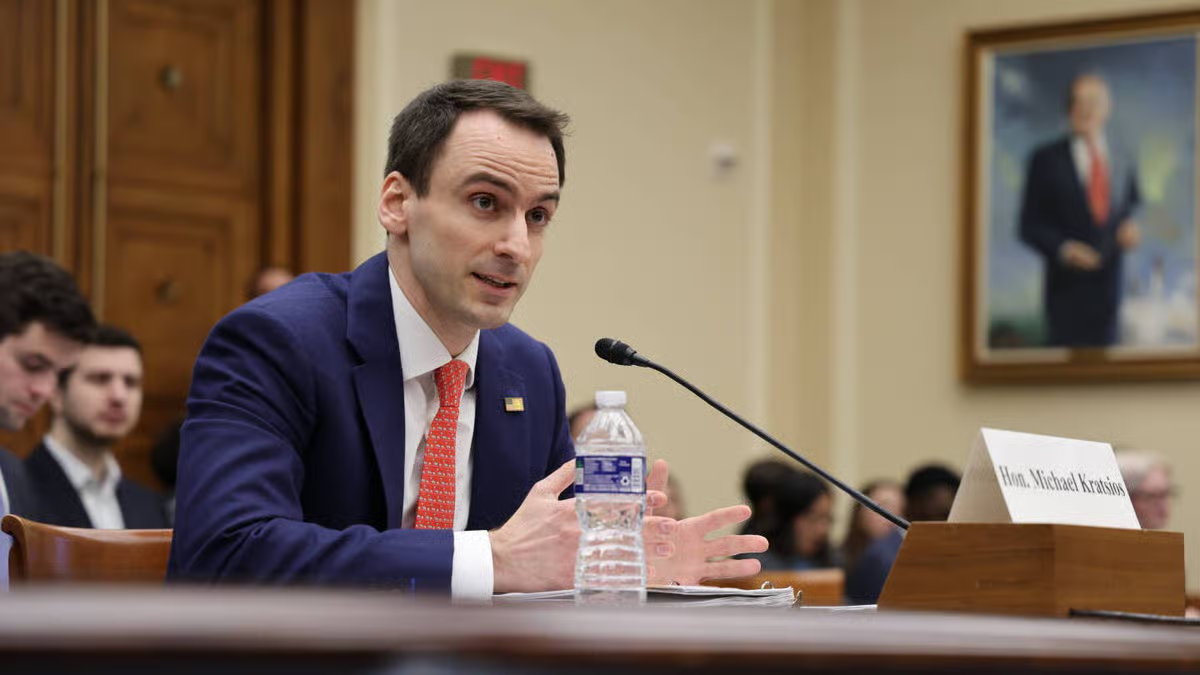
Released on July 21, the Science: A New Golden Age report seeks to update Vannevar Bush’s landmark 1945 report Science: The Endless Frontier for the modern era. In the report, OSTP Director Michael Kratsios argues that today’s scientific landscape — shaped by AI, global competition, and private-sector investment — requires a fundamental redesign of how the federal government funds research.
Also on July 21, Kratsios and White House Office of Management and Budget Director Russ Vought jointly published a memorandum on the Trump administration’s R&D budget priorities for fiscal year 2028. The memo instructs science agencies to incorporate the administration’s priorities into their forthcoming budget requests, as well as develop implementation plans within 90 days for a series of “R&D priority practices.” Those include:
Developing new research funding mechanisms;
Identifying and supporting top tech talent through, for example, early career and STEM-learning opportunities;
Boosting the “science of science-funding” to evaluate which programs have the greatest impact;
And collaborating with industry to drive greater private investment in R&D.
The memo directs agencies to rebalance their portfolios toward foundational research, and prioritize physical science over life science. Many of the administration’s priorities, including AI and nuclear fission, are dependent on computer science, physical science, and engineering, but the report notes that the latter two fields’ share of the federal research portfolio has declined over time, even as their strategic importance has grown.
This is a general view on the topic. I think open-source isn’t enough, we need also governance for the software we use, and create small pockets of freedom.
Exploring the "Dario and Amanda" Prompt | Alec Armbruster - 'Claude Opus 5 may have just leaked a trove of private 2024–2025 chat logs from Anthropic employees'
Either Claude Opus 5 just leaked a trove of private 2024–2025 chat logs from Anthropic employees (& general public) asking the AI to edit their personal letters, or it’s generating one hell of a hallucination. It’s almost certainly the latter. But read the examples and you might start second-guessing.
It leaves you wondering what exactly is going on with Claude Opus 5—and whether we’re looking at a hallucination, or a model trained on its own creator’s internal data.
Tim Cook sees Apple’s hybrid AI strategy as a ‘competitive weapon’: Apple emphasizes that much of its AI suite — Apple Intelligence — can be run on the devices themselves.


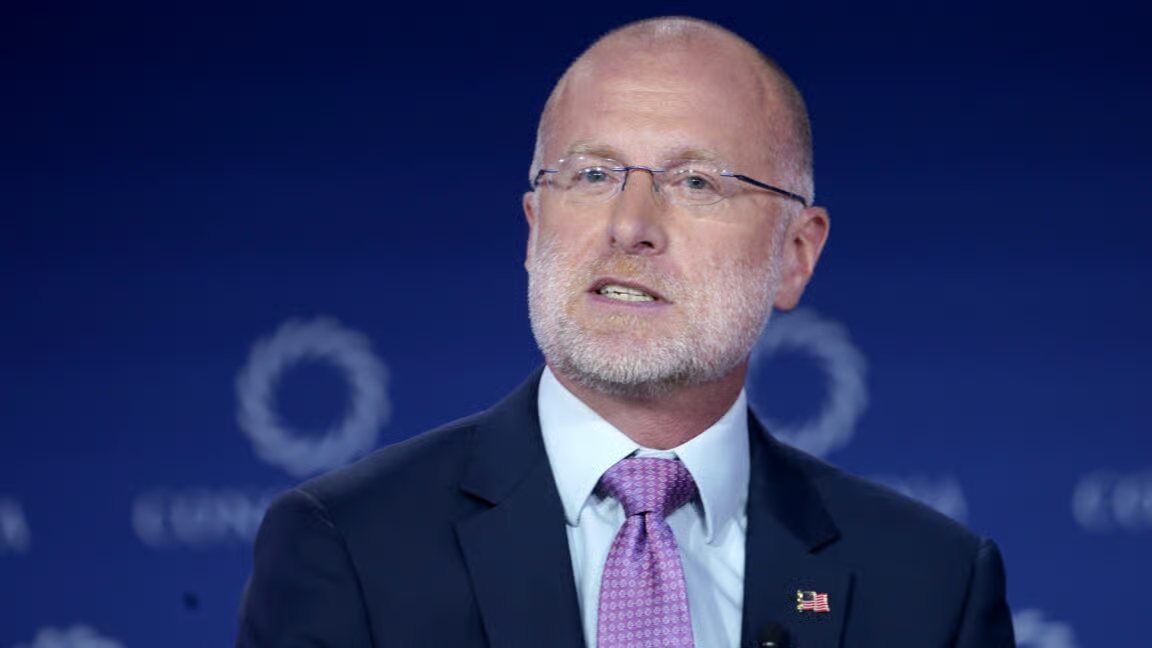 Ars TechnicaTrump FCC faces blowback in attempt to police speech on broadcast TVChilling message to all broadcasters: carry speech we don’t like at your peril."